
Cherise Chettiar - Chemical Engineering
 Year in School: 4th year
Co-op Employer(s): Geosyntec Consultants Inc.
How do you feel you have benefited from your experiential learning opportunity? My year working at Geosyntec was an incredibly valuable experience. I learned not only technical skills, but also greatly improved my soft skills. Since coming back, I've developed a better work-life balance with classes and the large amount of work associated with them. I've gotten much better at problem solving and troubleshooting when things aren't going smoothly, and it's been easier to identify and come up with solutions to problems (very transferrable skill!) I can also recall the practical applications of a lot of the concepts I had learned about in class from my time working, and it's fun to have conversations with professors about their different applications in the industry.
What is your biggest takeaway from your rotations? The industry is so vast. Coming into environmental consulting, I had no idea what I actually wanted to do as a chemical engineering student. There are so many different niches that I had no idea existed, and I am so grateful that I chose consulting as my first experience working as an engineer because it gave me exposure to so many different types of companies, employers, sites, projects, methodologies, and technologies. My biggest takeaway is that being on a Co-Op is primarily a learning experience, and that you shouldn't hesitate to explore if you want to.
What advice would you give to other students? A Co-Op is essentially an extended interview for both you and your employer. Make sure to talk to people, be curious, ask questions, and learn anything and everything you can! If you're not quite sure what you want to do yet, try to dabble in as many different things as you can at your company. Don't be afraid to reach out to people and ask for their time to have a little chat to learn about what they do. A Co-Op gives you a taste of what the working world is like - trust your skills, be confident in yourself, and make the best of it!
Lia Mironianski - Computer Engineering
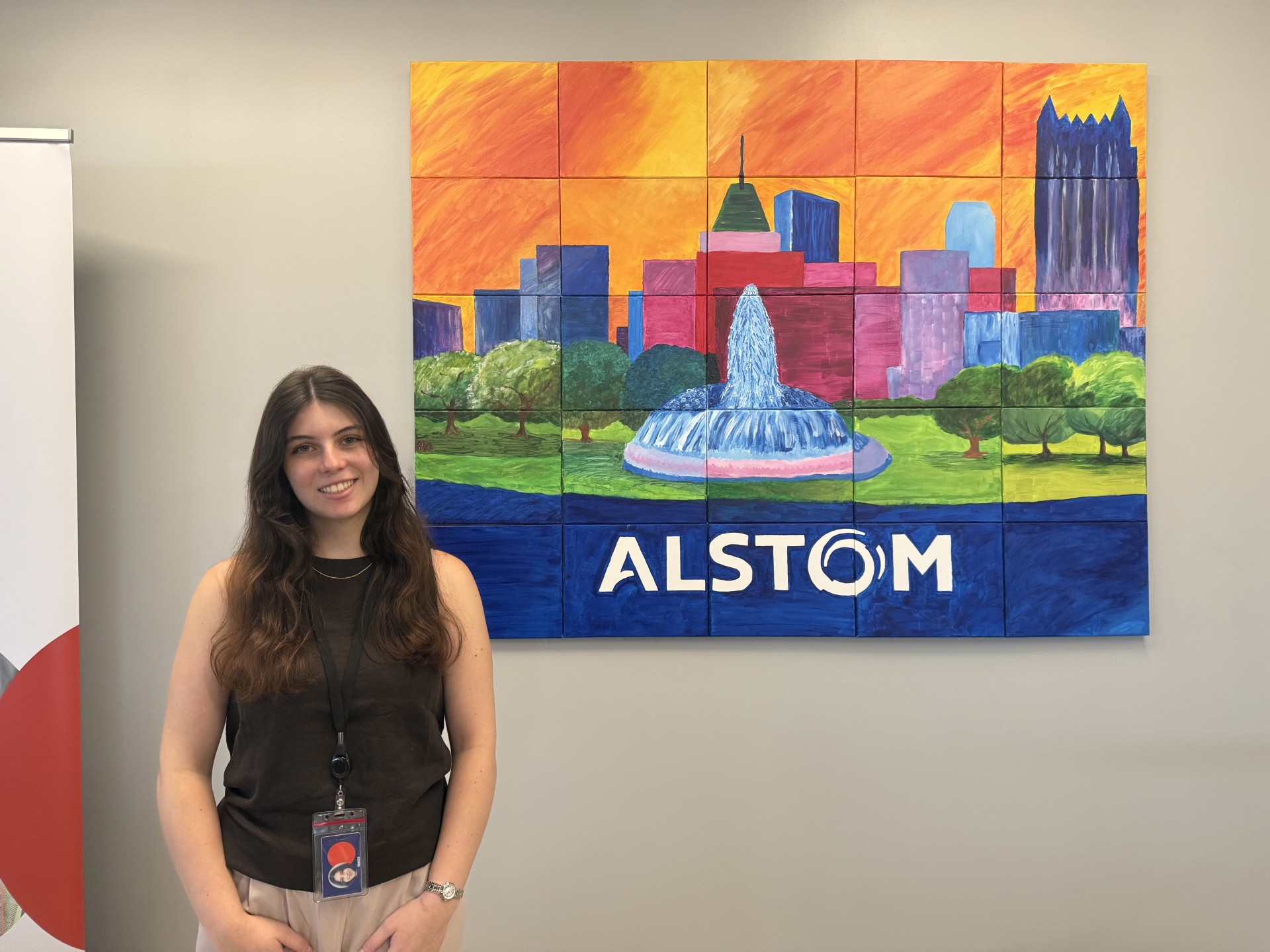 Year in School: Senior
Co-op Employer(s): Alstom, B&C Transit
How do you feel you have benefited from your experiential learning opportunity? My co-op experience has reinforced my interest in computer engineering and pushed me to keep going in my studies. I've sometimes struggled to stay motivated by classes alone, so getting real industry experience helped me see the reward that comes with the effort. Concepts from ECE 1140, a course all computer engineers here take where you work in a group to develop a train control signaling system, helped prepare me for the CBTC subsystems I worked with at Alstom. Beyond the technical side, I learned what the daily structure of office work is like and how the culture of industry differs from the classroom. Working alongside experienced engineers and at different companies showed me how the things I learned in class actually apply and gave me a clearer picture of the kind of work I want to pursue after graduation.
What is your biggest takeaway from your rotations? My biggest takeaway is that it's okay to be confused. In classes like Data Structures and Algorithms, you're solving problems where you write everything from scratch. Working on software that has existed for years is completely different. You have to understand code that people wrote way before you arrived and figure out how your piece fits into a much larger system. That was intimidating at first, but I learned the confusion doesn't last long once you start asking questions and give yourself time to figure things out.
What advice would you give to other students? Be confident in your work. Much of what you do as a co-op is the same work any entry-level engineer does, so trust that you belong there. And if you get the chance to work with more than one team or company, it's worth exploring. Every environment teaches you something new and helps you figure out the kind of engineer you want to be.
Leah Boyle - Civil Engineering
 Year in School: Senior
Co-op Employer(s): AECOM
How do you feel you have benefited from your experiential learning opportunity? I have felt countless benefits from my co-op experience thus far. One that impacted me the most is the confidence I have gained in myself, my education, and my knowledge. I have seen firsthand that the work I have put into my education and growing my professional skill set has prepared me to have an impact in the engineering field. The co-op structure allowed me to gain a more thorough understanding of company projects, allowing me to have a greater impact. I developed a deeper understanding of the workplace culture and how the concepts and skills I learn in the classroom translate into real-world applications. This experience has given me a deeper understanding of my field and will allow me to transition back into the classroom with greater confidence and a stronger sense of purpose throughout the rest of my education.
What is your biggest takeaway from your rotations? The biggest takeaway from my rotations has been gaining a better understanding of the different disciplines within civil engineering and how interconnected and collaborative they are within the engineering field. Throughout my projects, I worked alongside my own team as well as with the structures, traffic, geotechnical, and many more teams. While each class in the classroom setting focuses on a specific area of civil engineering, my rotations allowed me to see how the concepts I have learned in each class connect and impact one another in real-world projects. This experience has given me a broader perspective of engineering and has helped me better understand the importance of teamwork, communication, and collaboration within the field.
What advice would you give to other students? Do not be scared to ask questions! Although the first rotation can be slightly overwhelming, especially if it is your first time gaining real-world experience or meeting and working with a new team, do not let this discourage you from learning, asking questions, and building relationships with those who have years of experience within the field. Comfortability comes with time, but is it important to make an effort to put yourself out there, be inquisitive and make a meaningful impact on the people you meet and projects you take part in. Take advantage of every opportunity to learn from those around you, even if it means stepping outside of your comfort zone. The more you engage with your team and the work you are doing, the more confident and comfortable you will become. Ultimately, being willing to ask questions, learn from others, and put yourself out there will help you stand out and navigate the professional world with greater ease and confidence.
Alexander Briglia - Mechanical Engineering
 Year in School: Senior
Co-op Employer(s): Bechtel Plant Machinery, Inc. (BPMI)
How do you feel you have benefited from your experiential learning opportunity? I think I benefitted from getting out of the classroom and applying concepts learned in school to real world engineering problems. During my projects, I applied concepts learned in Statics and Mech Design and went far beyond concepts learned as well. Having the classroom background contributed to my ability to work on projects and have the proper context to expand my knowledge and ask good questions. I learned many advanced concepts in structural mechanics and finite element analysis and learned what it truly means to complete an analysis using FEA. Working with FEA everyday and working on a long-term project gave me insight into how engineers make, validate, and complete a finite element analysis. I also learned about appropriate presentation of technical results through multiple presentations to different stakeholders of the project, along with technical reports to Naval Reactors.
Apart from technical work, I also learned about the day-to-day roles of engineers, especially when it comes to addressing emergent problems. Although it was not my main task, production support work for reactor components was what I ended up doing most and is where I got much more experience in working with both engineers and suppliers, along with providing accurate and concise justification for acceptance of components. Through working with engineers in my section, I learned more about how to appropriately interact with other engineers and suppliers, and how to best assist production engineers in justification of acceptance for their components.
What is your biggest takeaway from your rotations? Teamwork and self-initiative in interacting with others is critical. Coming into a structural analysis role at BPMI, I relied heavily on other engineers to learn about concepts in structural mechanics, and how to use important software such as ABAQUS and post-processing. At first, it was hard to learn so much information, but part of becoming a good engineer is taking the time to struggle through work and make mistakes. I made many mistakes, but because I interacted with my team and got feedback from experienced engineers, I learned how to correct my mistakes and prevent them from happening again.
What advice would you give to other students? I would recommend getting out of your comfort zone and trying to talk and work with as many other engineers as possible. During my rotations, I noticed that when I did not collaborate with other engineers, my learning slowed. However, as I developed as an engineer, my work increasingly relied on communicating and talking with other engineers, and this allowed me to form connections with them for the future. It became much easier to go to engineers and ask for tasks or to ask for help, since I completed excellent quality work and they trusted my input. Communication with other engineers is integral to all work done in engineering, since you are almost always relying on input from other engineers, or need to give input to another engineer so they can complete a task. When I first started my co-op, I was much more sheltered, but after seeing the importance of communication in completing high-quality work, I made much more effort and grew significantly as a team member and communicator. Talking with those you work with helps you complete better quality work and ultimately makes you a better engineer.
Josh Beres - Bioengineering & IPDE Certificate
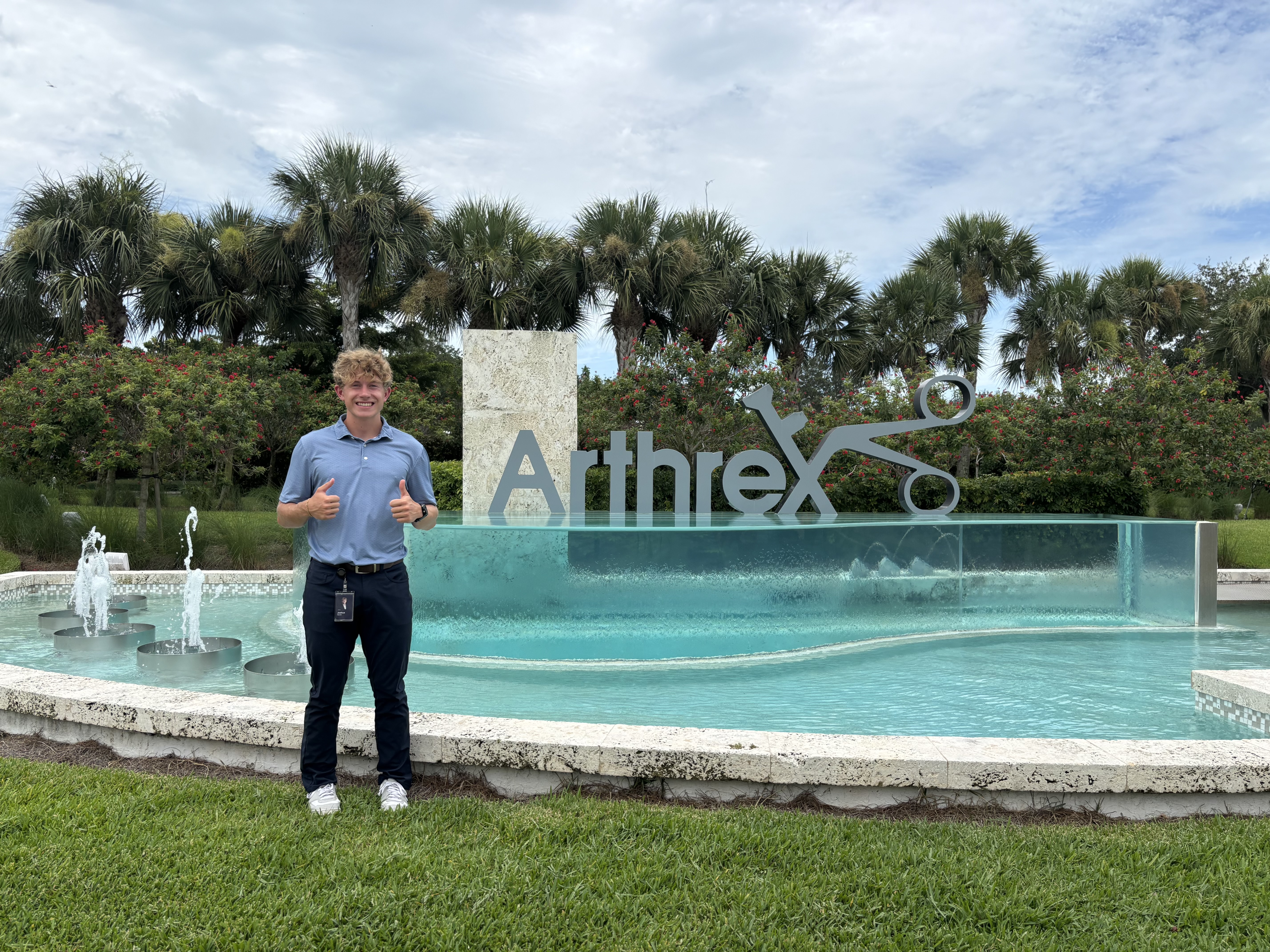 Year in School: Senior (4th)
Co-op Employer(s): Arthrex Inc.
How do you feel you have benefited from your experiential learning opportunity? Co-ops and internships are one of the best ways to gain real-world experience during college. They help you discover what you don’t want to do for the rest of your career, and hopefully what you do want to do. Through my co-ops, I realized that I want to begin my career in product development, where I can prototype, test, and help bring new ideas to life. Working on real products with real impact has strengthened my critical thinking and engineering skills. I also learned the importance of working on a team, understanding what others expect from you, and finding ways to make a meaningful contribution. One of the most important things I have done as a co-op is to learn as much as you can from the people around you. Your managers and coworkers have years of experience, and asking them questions is a great way to learn.
What is your biggest takeaway from your rotations? My biggest takeaway has been seeing how differently companies operate and realizing what type of work environment I want to be part of. Experiencing multiple co-ops also helped me narrow down the direction I want to take my engineering career after graduation. There are a wide range of career paths, and spending four to six months in a role is a great investment in figuring out which type of work you want to be a part of.
What advice would you give to other students? Co-ops and internships are extremely competitive, so don’t just throw out hundreds of resumes blindly. Be intentional and show genuine interest in the company. Take the time to connect with employees, alumni, or recruiters through email or LinkedIn, ask thoughtful questions, and build relationships before you apply. Dig deep to find those contacts (sometimes it’s impossible) because the connection makes all the difference in getting an interview. During the interview, be yourself and let your passion for engineering show. Also, ask to be involved in meaningful projects when you inevitably get bored. It’s a great way to challenge yourself, make use of your time, and it’s a good look if you want to be rehired post graduation.
Madison Salvo - Chemical Engineering
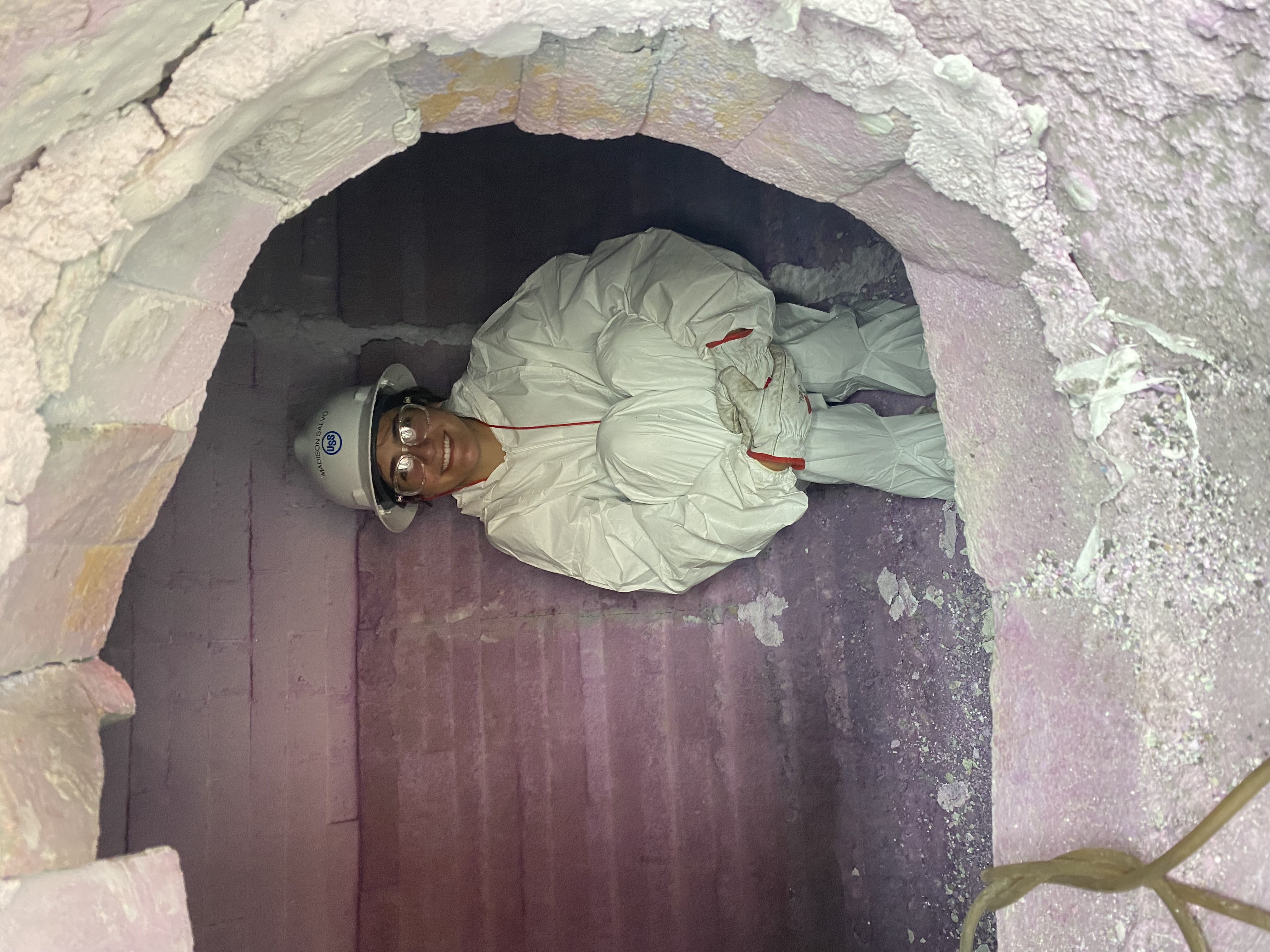 Year in School: Fifth Year, December 2026
Co-op Employer(s): United States Steel Corporation
How do you feel you have benefited from your experiential learning opportunity? I have benefited from the co-op program in numerous ways; however, the greatest benefit has been the significant personal and professional growth I experienced throughout my rotations. Working in different environments each semester allowed me to develop strong communication skills by interacting with a wide range of audiences, including coworkers, managers, and contractors. These experiences strengthened my ability to collaborate effectively with diverse teams, which enhanced my teamwork and leadership skills in the workplace and in the classroom.
What is your biggest takeaway from your rotations? My biggest takeaway from my co-op rotations was applying in-classroom learning to industrial processes, bridging the gap between theory and practice. It was fascinating to see the similarities and differences between classroom content and the problems directly related to industry. This concept was a huge learning curve for me, but it ultimately shaped me into becoming a better engineer.
What advice would you give to other students? My advice that I would give to other students that are taking advantage of the co-op program is to come into each rotation with an open mind. The first rotation can be overwhelming, but as you continue through the program, you become more comfortable asking questions and begin to form relationships with your colleagues. Forming these relationships allows you to open up to your coworkers and express your wants and needs as you finish your rotations.
Holden Guibao - Material Science & Engineering
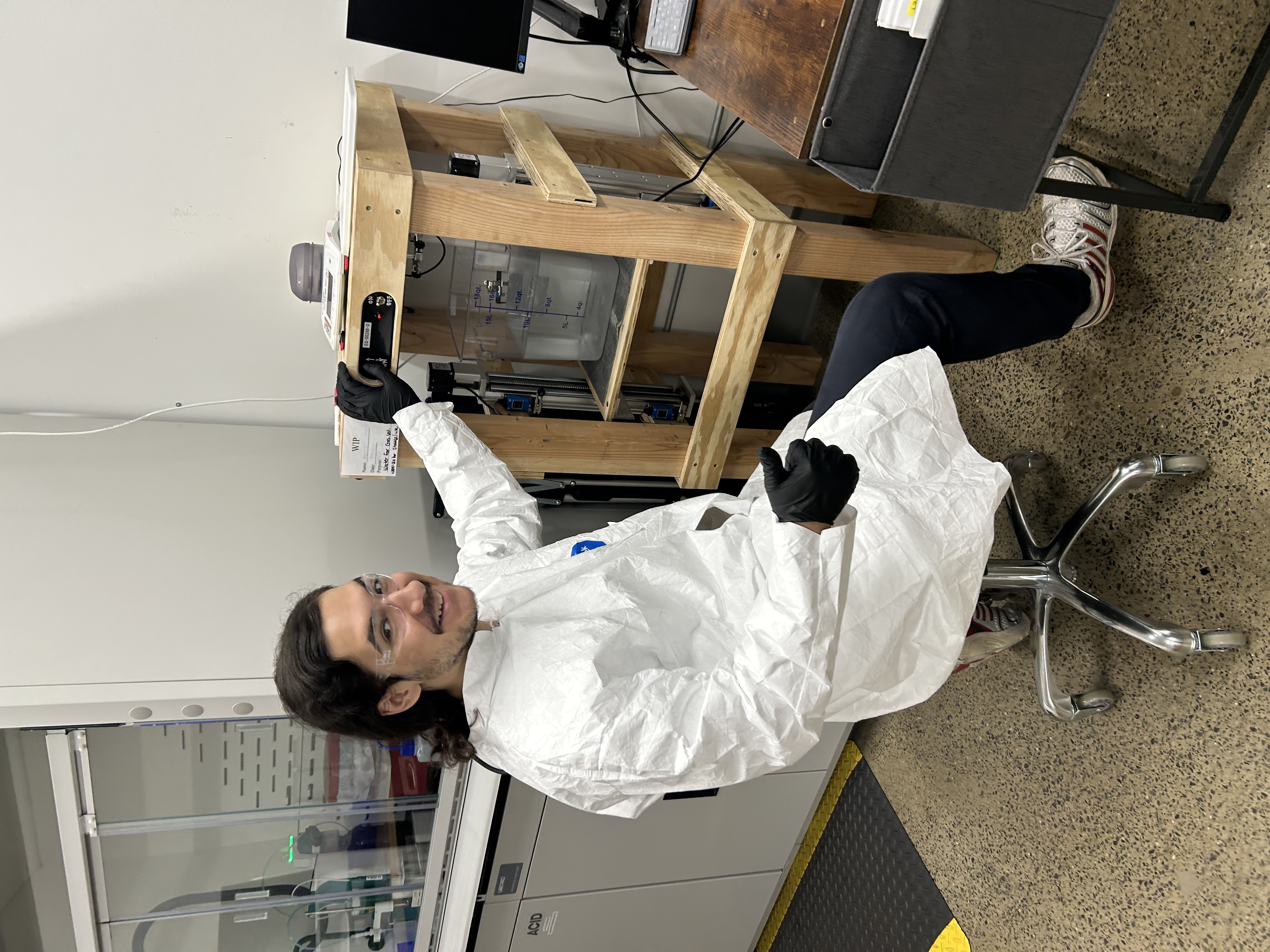 Year in School: 5th
Co-op Employer(s): Stratus Materials
How do you feel you have benefited from your experiential learning opportunity?
This opportunity benefited me greatly in developing my skills related to my degree. A lot of my past jobs involved me using my engineering skillset but not necessarily my degree. Working at Stratus, I have been able to relate and expand upon the content I have learned from my classes which has been monumental to my professional development.
What is your biggest takeaway from your rotations?
My biggest takeaway would be the exposure I’ve had to the area of interest that led me to choosing MSE: energy materials. My prior work experience has definitely shaped my work ethic and skills so to finally break into that area and develop my skills further has been truly monumental.
What advice would you give to other students?
Don’t be afraid of a project because of the challenge level. Coming into this, I did not have the most direct work experience but my ability to apply myself and ask questions really allowed me to excel in my co-op, learn new skills and rise above obstacles.
Andreas Forand - Industrial Engineering
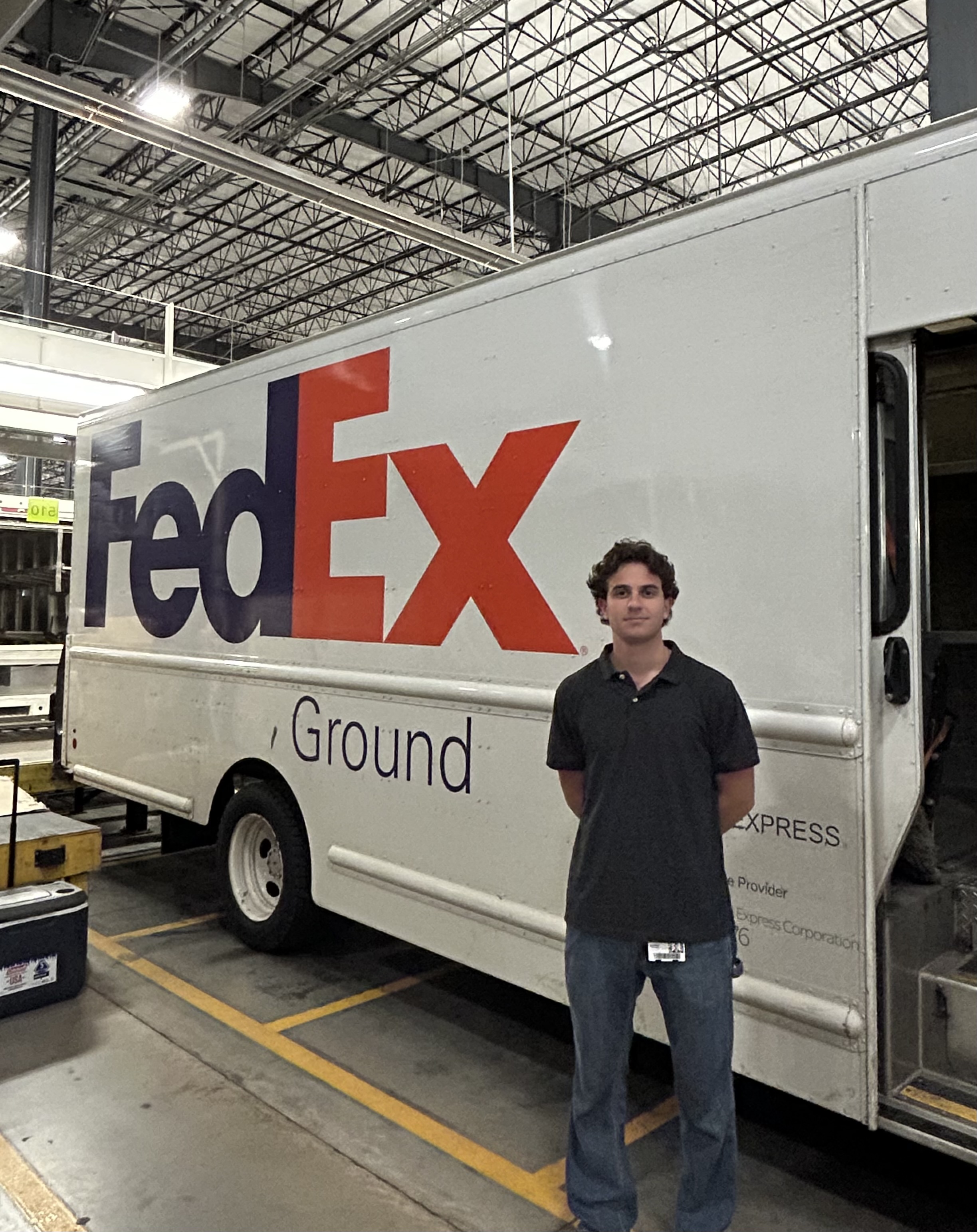 Year in School: Senior
Co-op Employer(s): FedEx
How do you feel you have benefited from your experiential learning opportunity?
This experience reinforced my undergraduate education by allowing me to solve real problems for a company. Compared to a 3-month internship, the co-op gave me a total of 12 months to contribute more thoroughly to projects and to familiarize myself with the operations of a company. I gained confidence and the ability to immediately make an impact in a full-time position.
What is your biggest takeaway from your rotations?
My biggest takeaway is experiencing the versatility of an Industrial Engineering undergraduate education. Coming into my co-op, I was familiar with manufacturing, supply chain, statistics, and data analysis; factors in nearly every company's route to making money. During my experience, I saw real examples of how these factors affect a company, thus strengthening the connection between my education and a career.
What advice would you give to other students?
You must ask questions to professors, older students, advisors, and university sources such as the office of Experiential Learning and Professional Engagement (ELPE). The path to landing a career in something you love is far too complex to try and figure out by yourself. And although it may be tempting, avoid asking your favorite Gen AI Chatbot for career advice- ask a real person! They're the ones with first-hand experience and who want what is best for you!