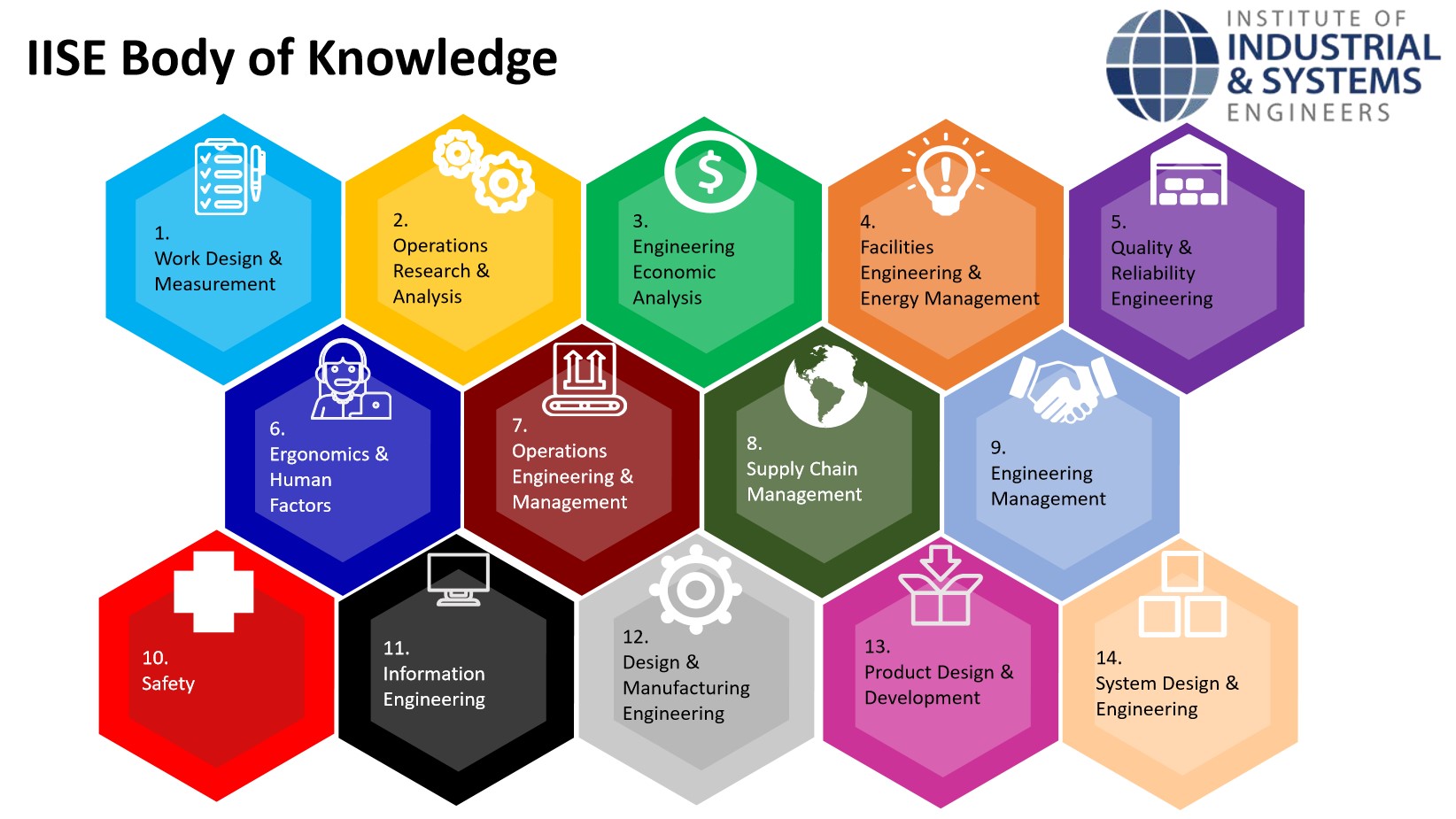
What IEs Do


Industrial and systems engineering is about choices. Other engineering disciplines apply skills to very specific areas. ISE gives practitioners the opportunity to work in a variety of businesses...The most distinctive aspect of industrial and systems engineering is the flexibility it offers. Whether it's shortening a rollercoaster line, streamlining an operating room, distributing products worldwide, or manufacturing superior automobiles, these challenges share the common goal of saving companies money and increasing efficiencies.
As companies adopt management philosophies of continuous productivity and quality improvement to survive in the increasingly competitive world market, the need for industrial and systems engineers is growing. Why? They are the only engineering professionals trained specifically to be productivity and quality improvement specialists.
Industrial and systems engineers figure out how to do things better. They engineer processes and systems that improve quality and productivity. They work to eliminate waste of time, money, materials, energy and other commodities. This is why many ISEs end up being promoted into management positions.
Institute of Industrial & Systems Engineers
Industrial engineers make processes better in the following ways:
- More efficient and more profitable business practices
- Better customer service and product quality
- Improved efficiency
- Increased ability to do more with less
- Making work safer, faster, easier, and more rewarding
- Helping companies produce more products quickly
- Making the world safer through better designed products
- Reducing costs associated with technologies
(Source: IISE)