
Pitt Prototype Puts Potholes on Notice
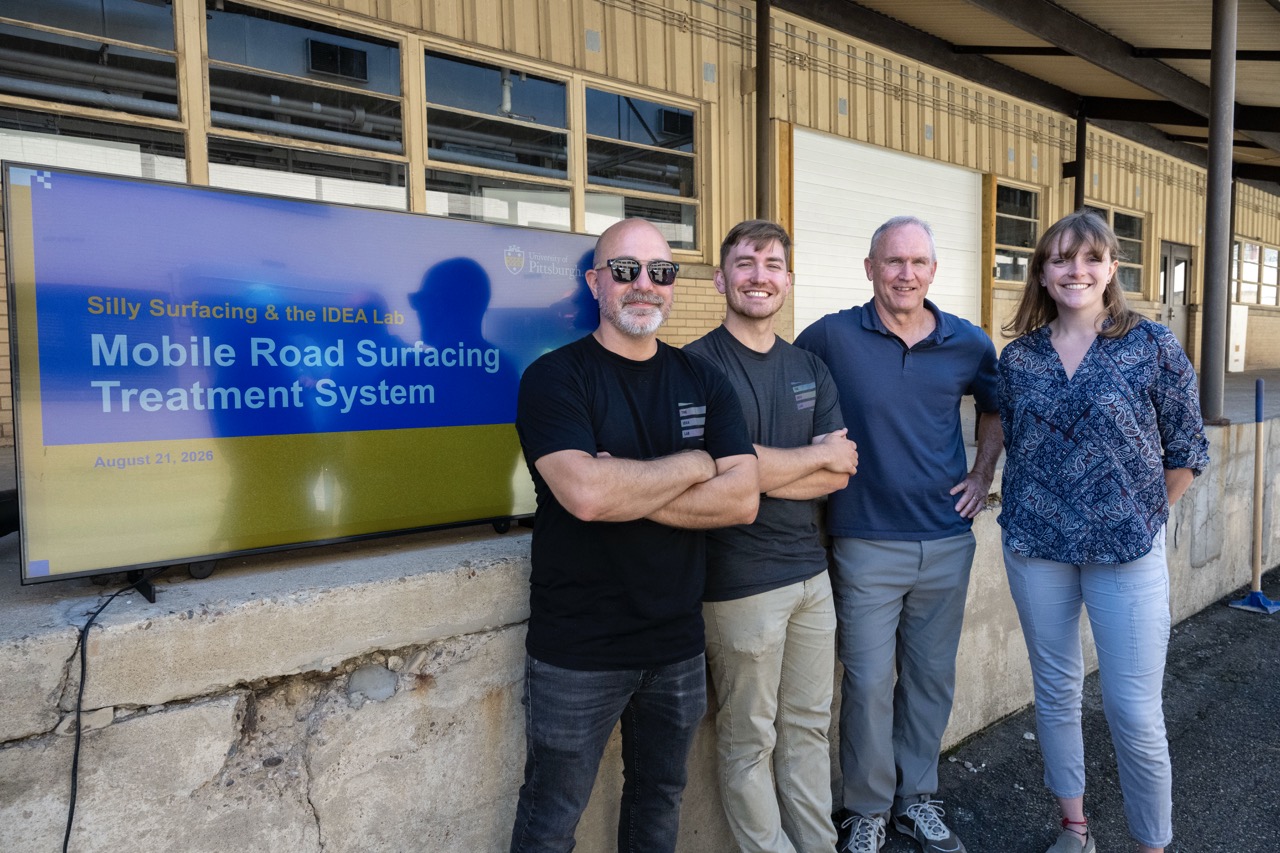
For Pittsburgh drivers, city officials, and repair crews, potholes are a seemingly endless source of frustration. For Keith and Lynda Giuliani and David Dietrich, that frustration sparked an idea: Pittsburgh has plenty of potholes but also a thriving robotics industry and universities with strong engineering programs. Could they bring the two together and build a pothole-filling robot?
To find out, the team launched startup Silly Surfacing and in 2024 filed for a patent to develop a mobile road surface treatment system. The company then began collaborating with the IDEA Lab at the University of Pittsburgh Swanson School of Engineering to design and prototype this pothole-filling robot. With support from technology accelerator Innovation Works’ Robotics Factory, the IDEA Lab has brought the company’s vision to life.
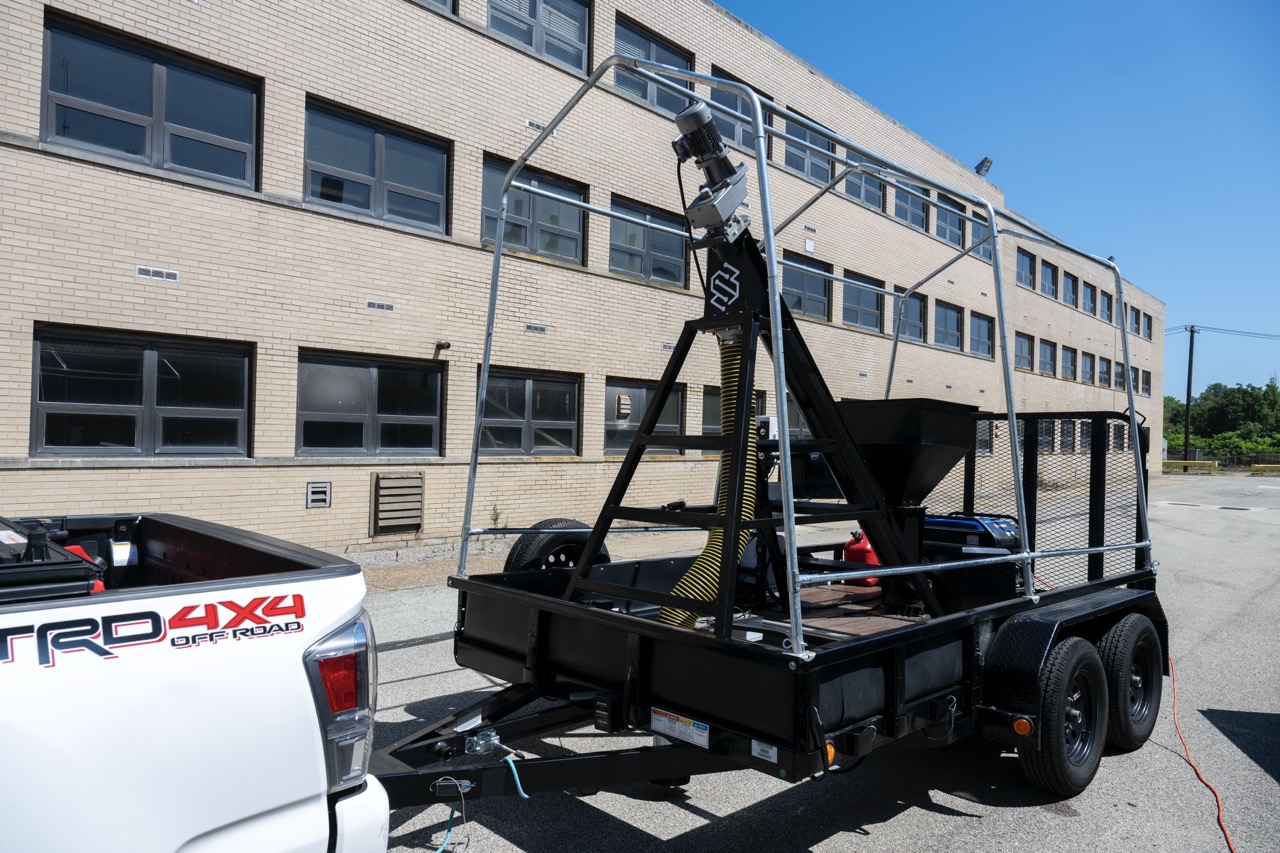
On Friday, August 21, Silly Surfacing’s patent-pending robot demonstrated its ability to 3D scan, map, and fill a pothole at full scale. The demonstration marked a major step toward turning the company’s unconventional idea into a practical tool for road repair.
“Potholes produce billions of dollars in damages worldwide,” said Lynda Giuliani, president of Silly Surfacing. “That’s what got us sketching out this idea on a cocktail napkin in the first place. We’ve been so proud of how all this came together.”
From idea to proof of concept
In 2021, William (Buddy) Clark, professor of mechanical engineering and materials science and director of the Innovation and Entrepreneurship Program, launched the IDEA Lab, a design prototyping studio within the Swanson School. Today, the lab is directed by Kevin Bell, associate professor of bioengineering, who oversees its work connecting students, staff, and researchers, tapping into their expertise and creativity to design and engineer new products for external clients and Pitt researchers.
The lab employs eight to twelve paid student interns who work full time during the summer break and part time when classes are in session. These students gain invaluable experience at every stage of the design and prototyping process.
When Silly Surfacing approached the IDEA Lab about developing a robot, the team of Brandon Barber, design, innovation, and outreach coordinator; Amelia Gordon (BS MEMS ’22, MS BioE ’24), research engineer; and Daniel Yates (BS MEMS ’19), research engineer, as well as 16 student interns, set out to understand the problem and develop the technology.
The student interns involved in the project included Ethan Bell (MEMS), Simon Moak (MEMS), Andrew Seltz (MEMS), Lauren Beck (BS MEMS ’25), Natalie Ceccarelli (BioE), Elyse Chess (BS ECE ’26), Cole Hansen (BS ECE ’26), Anil Siva Kumar Mekkala (MSMPE), Paul Sadofsky (BS ECE ’26), Aidan Lefebvre (BS ECE ’26), Ariana Barsotti (ECE), Joe Layton (MEMS), Ricardo Rojas (MEMS), Miles Rosas (MEMS), Saket Varanasi (ECE), and Matthew Zoschg (ECE).
“Before building anything, we created a concept development report,” said Yates. “Our student interns searched for answers to questions like, How could we best move asphalt? What type of computer vision could we use? What hardware would we need?”
The team turned to Pitt’s Lev Khazanovich, professor of civil engineering, to learn more about asphalt and ways to repair potholes. They reached out to Ahmed Dallal, associate professor of electrical and computer engineering, for advice on computer vision and machine learning algorithms. One intern began observing and interviewing road crews repairing Pittsburgh streets.
After completing their report, the IDEA Lab developed a technical proof of concept. “We wanted to see if we could basically use a large 3D printer,” Yates said. “We developed a system with CNC gantry parts, an actuated nozzle that would spray water, and computer vision.”
Building a full-scale prototype
With a proof of concept, Silly Surfacing applied to the Robotics Factory’s Accelerate Program, which provides startups with $100,000 in grant funding as well as mentorship and access to state-of-the-art labs.
With the grant, the company contracted with the IDEA Lab to build a full-scale prototype. “It was a great opportunity to connect Pitt’s IDEA Lab with the Robotics Factory,” said Keith Giuliani, founder and CEO of Silly Surfacing.
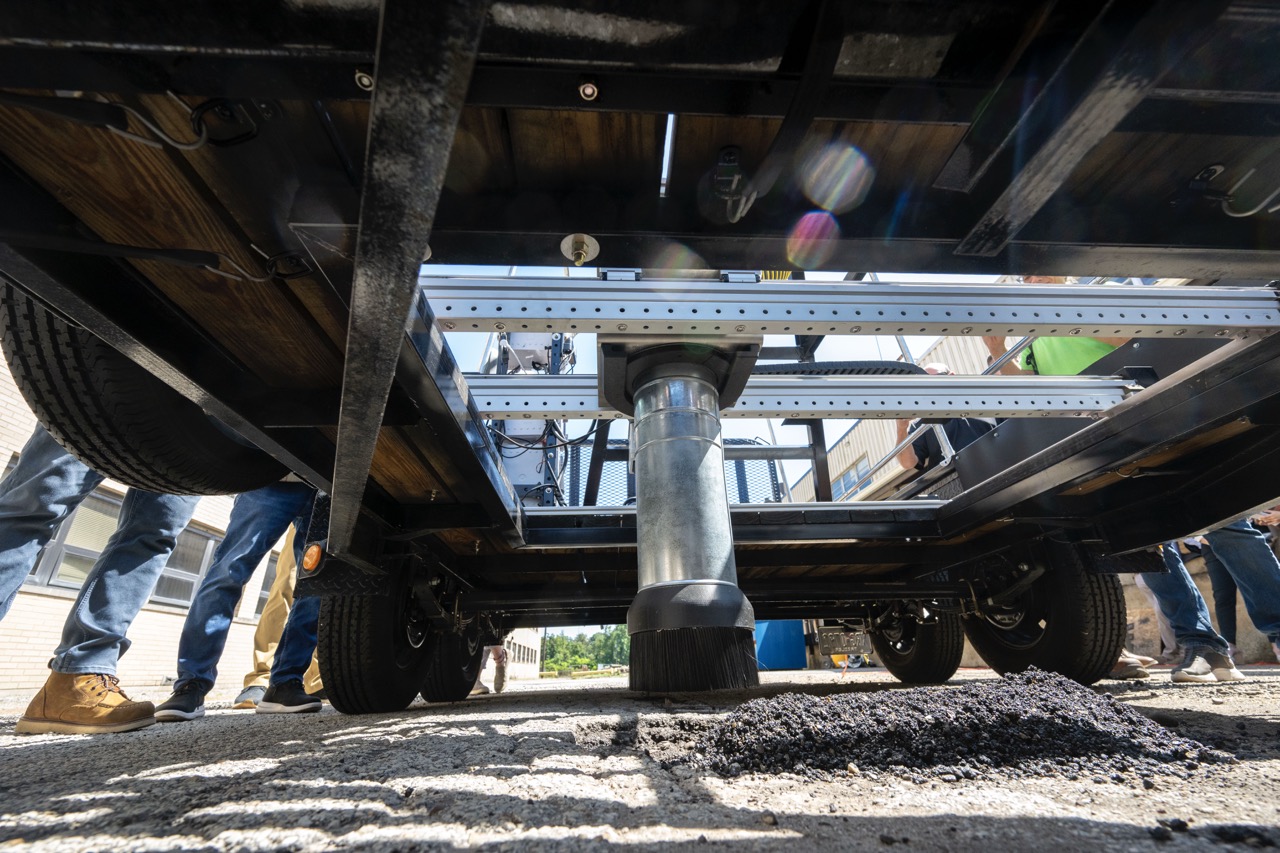
The team transformed a trailer into a mobile system platform. “We have a hopper for the asphalt, which is driven by an auger to tubing that is moved by the gantry as it fills the pothole,” Gordon said. “The system uses a time-of-flight camera, which measures distances by bouncing a light beam off a surface and back. We developed algorithms to map the hole and determine how much asphalt to use and the path to accurately fill it.”
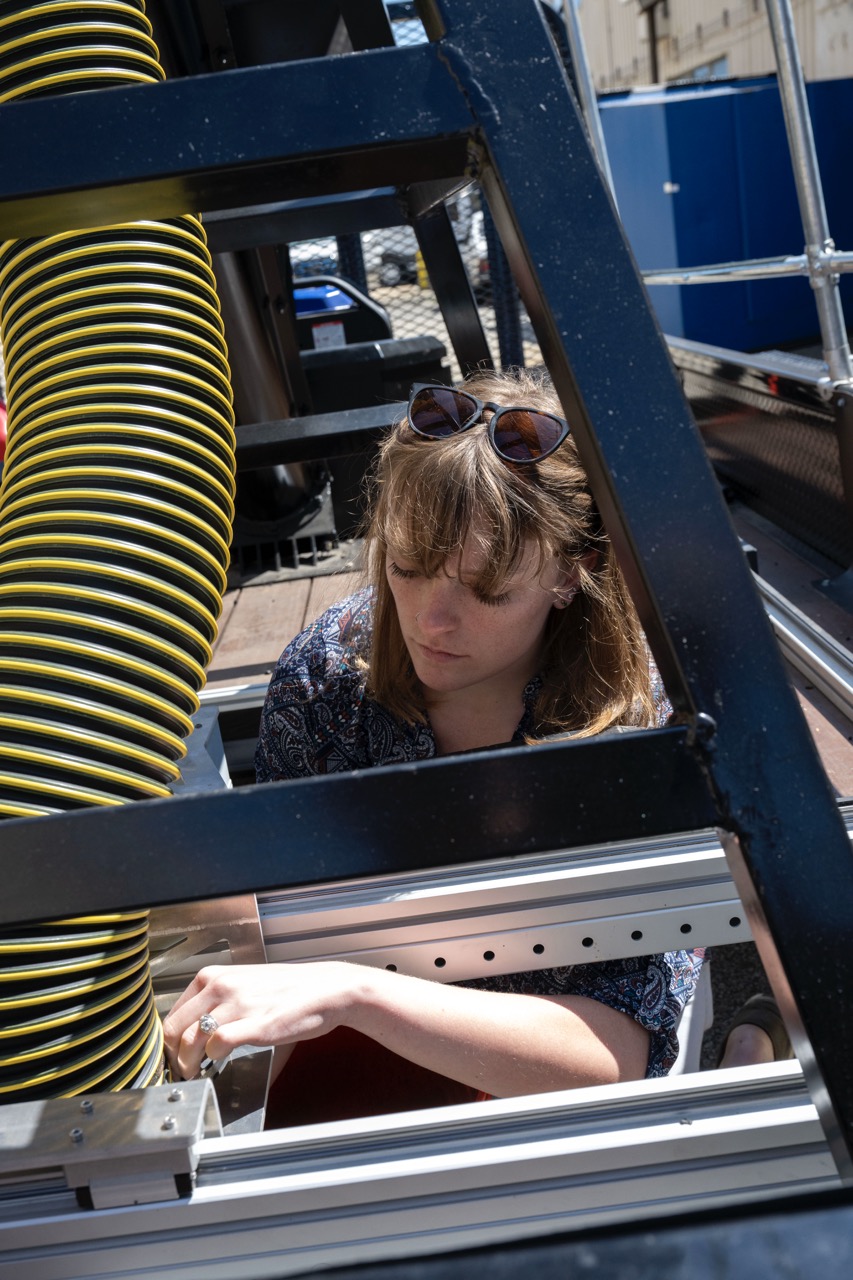
Added Barber, “Our team designed and built this system in our labs in Benedum Hall as well as the shop at the Robotics Factory. It was a collaborative effort.”
Jane Joseph, director of communications and community development at Innovation Works, said, “Pitt students had access to our prototyping lab in Lawrenceville and had their hands in a multitude of different equipment designed to establish robotic prototypes. They came twice a week, and it was wonderful to have them get hands-on experience while they’re still in school.”
Demonstrating the technology
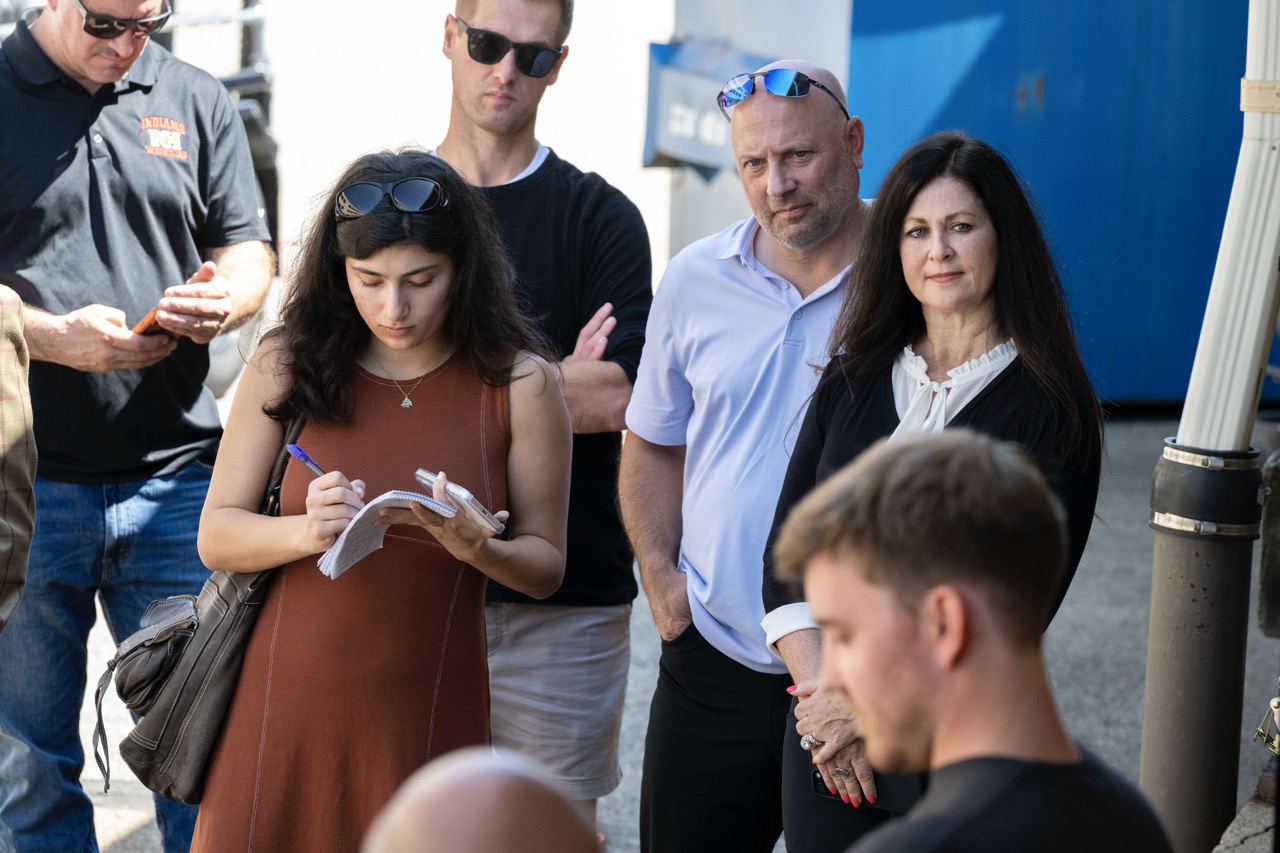
On a sunny Friday afternoon, Silly Surfacing held the first public demonstration of its technology at the University of Pittsburgh Applied Research Center (U-PARC) in Harmar.
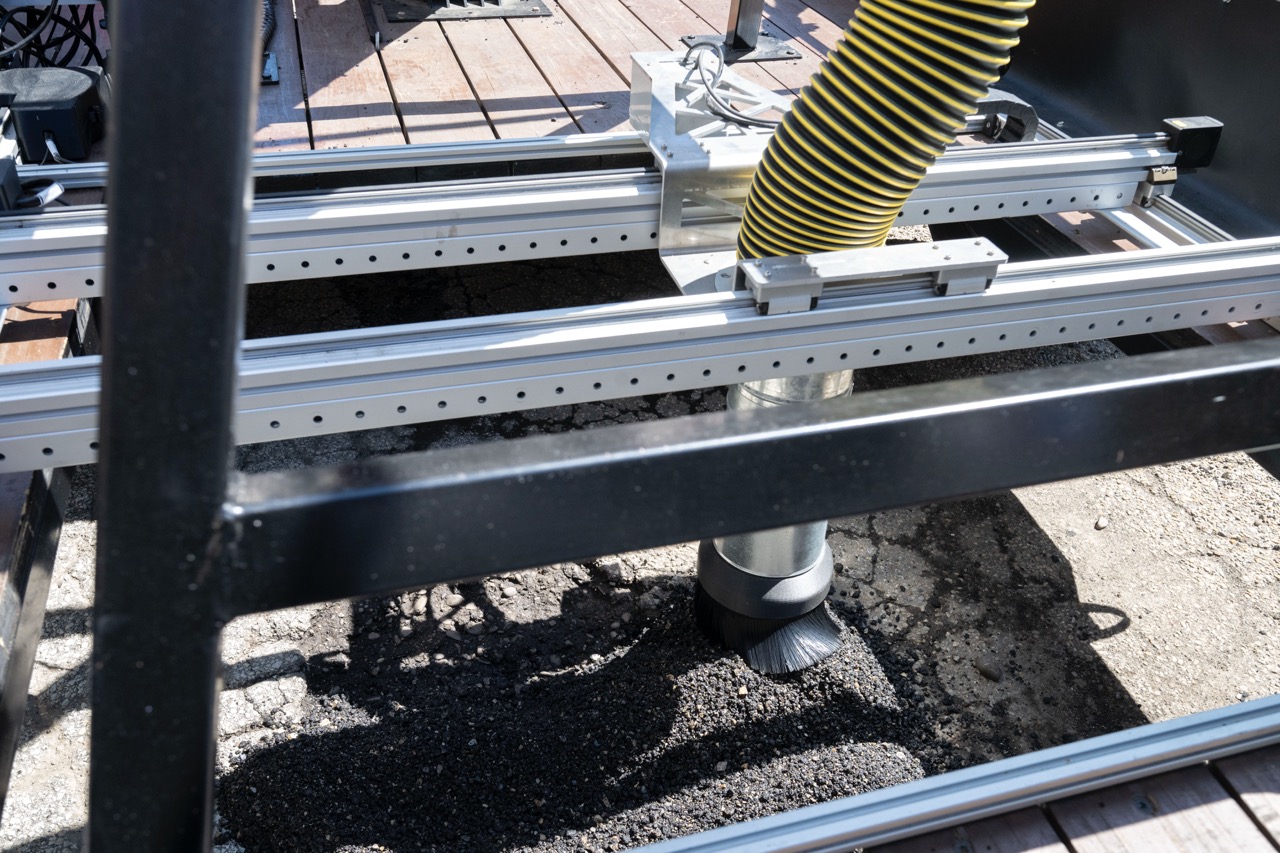
The IDEA Lab pulled the trailer over a pothole, which the camera scanned, relaying dimensions to the software they’d developed. After the system mapped a flight path and calculated the amount of asphalt, the auger came to life and the tube, guided by the gantry, filled the hole with cold asphalt.
“We successfully demonstrated the baseline of the technology we need to realize our vision,” said Keith Giuliani. “We plan to develop technology so the robot can clean and pretreat a pothole and even post-treat it and tamp it down.”
Pothole repair is only the beginning. The team’s next goal is to automate more of the process, including preparing the damaged pavement and compacting the asphalt after it is placed.
“We want it to move with traffic and repair potholes as it goes,” Giuliani said. “That is the vision.”