
Uncovering the Right Combinations
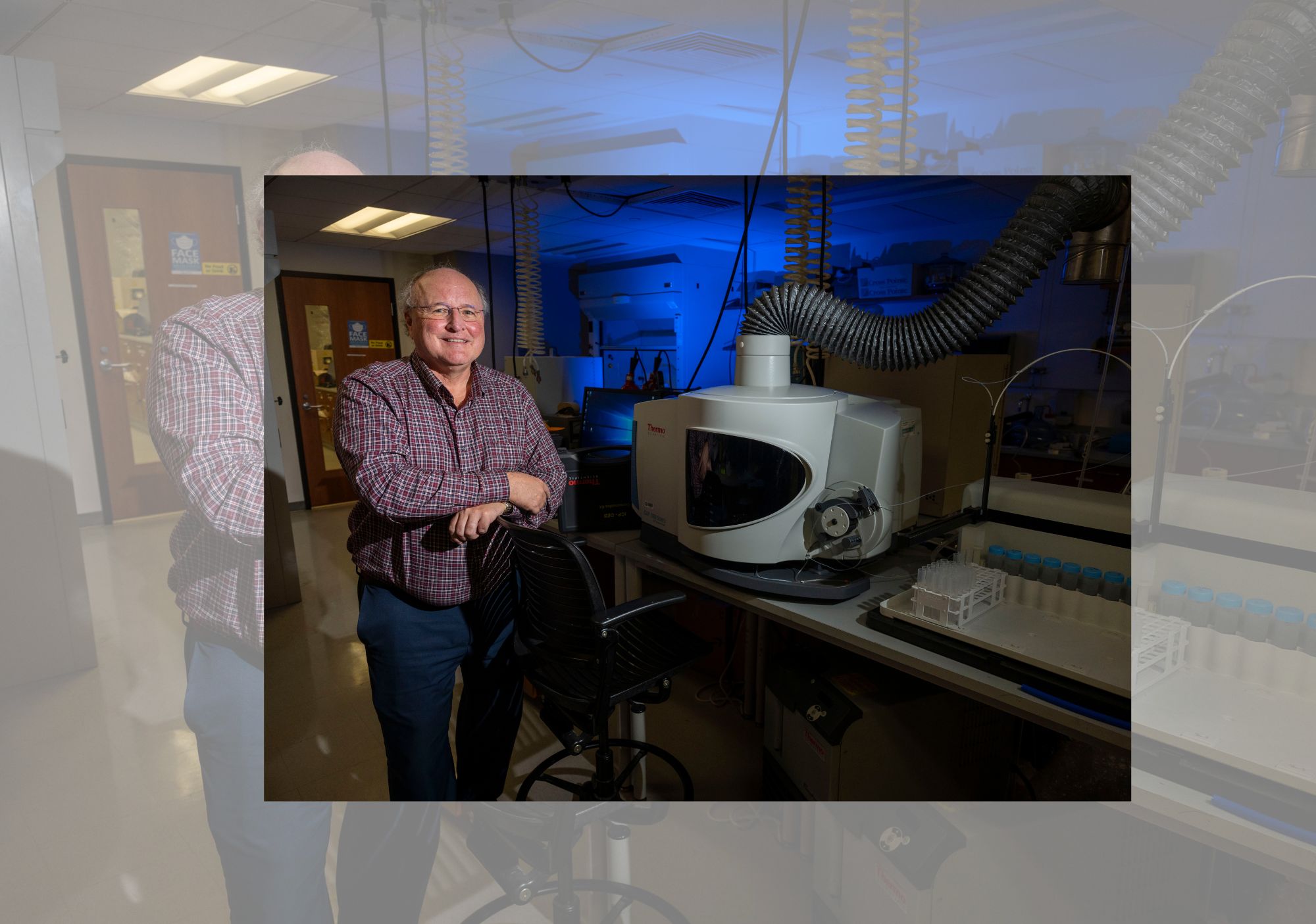
The University of Pittsburgh’s Brian Gleeson understands the power of properly combining elements to create something strong and enduring. Since his graduate studies in Ontario, Canada, he has been researching alloys and their ability to withstand harsh conditions.
While countless hours in the lab have honed Gleeson’s ability to assess and develop robust materials, his leadership roles have revealed a unique capacity to bring out the best in engineering faculty, staff, and students.
For the past 12 years, Gleeson, who is the Harry S. Tack Chaired Professor of Materials Science, has served as the Mechanical Engineering and Materials Science (MEMS) department chair. This past summer he stepped down to return to the faculty, but his passion for research and for supporting the program continues to leave an indelible imprint on the Swanson School of Engineering.
A career that has crossed continents
Born and raised in London, Ontario, Canada, Gleeson excelled at math and science and was drawn to engineering. He earned his BS and MS in Materials Science and Engineering (MSE) at the University of Western Ontario in his hometown of London before receiving his PhD in MSE from UCLA.
“It was there,” Gleeson said, “that I got my first taste of California living and figured I’d keep heading south.”
Head south he did, all the way to Australia, where from 1990 to 1998 he served as a postdoctoral researcher and then a faculty member at the University of New South Wales in Sydney.
Although he loved Australia and became a citizen, he was far from home. While on sabbatical in the US, Gleeson applied for and then accepted a faculty position at Iowa State University.
Two years later, he was appointed Director of the Materials and Engineering Physics Program at the Ames National Laboratory, a U.S. Department of Energy lab focused on materials innovation.
“It was a large program,” Gleeson remembered. “It gave me my first experience in administration, working with a diverse group of individuals.”
Serving the department

In 2007, Pitt recruited Gleeson to serve as the Harry S. Tack Chaired Professor, where he would continue to lead through his research into the high temperature oxidation and corrosion and degradation of materials. Pitt had a longstanding reputation as a leader in the study of high-temperature corrosion, with eminent faculty like Fred Pettit, Gerald Meier, and Neil Birks.
A year later, Gleeson was again pulled toward administration as the inaugural director of Pitt’s Center for Energy, a transdisciplinary initiative to advance energy research. A top accomplishment was helping the Center secure a $22 million grant from the RK Mellon Foundation.
In 2014, he was offered a new administrative position, as the MEMS chair. “It was an honor to be selected. I've always believed in the importance of faculty serving the department.”
Said Ed Eckert, BS MSE ’76, President of Apogee Technology, Inc. and who sits on the MEMS Visiting Committee, “I’ve worked with many people with strong academic acumen and then with others who have strong leadership skills. You don’t always find people who exemplify both qualities like Brian. For Brian, finances and research are a means to facilitate teaching, not the converse.”
Brendan Connolly, PhD MEMS ’16, Vice President of Steelmaking Technology at ELLWOOD Quality Steels and also a Visiting Committee member, added, “Brian has been an incredible advocate of the MEMS department, the students, the Swanson School, and Pitt.”
Under Gleeson’s leadership, the MEMS Department experienced significant and sustained growth across all major metrics. Today, MEMS is the largest Swanson School department, with approximately 650 undergraduate students and over 200 graduate students in mechanical engineering, materials science, and engineering science.
Through strategic faculty recruitment, Gleeson expanded and strengthened the department’s research portfolio, establishing recognized expertise in emerging and high-impact areas such as energy, quantum computing, computational engineering, and functional materials, while continuing to support and enhance existing research strengths. Notably, the department’s annual research expenditures—an indicator of external funding from government and industry—have increased by 413% since he was appointed department chair, reflecting both the department’s rising national prominence and the success of its faculty.
Leading with integrity and heart
“One of the most exciting and important responsibilities as chair is hiring and developing young faculty,” Gleeson said. “You have to facilitate, and you have to cheerlead.”
In 2022, Zachary Harris, assistant professor of materials science, came to Pitt from the University of Virginia in part because of Gleeson. “There are two things I value most about Brian: his honesty and his overall character. I accepted this job because I felt like Brian had my success at heart. His actions have proved true since I’ve started here.”
As Michele Manuel, the U. S. Steel Dean of the Swanson School, said, “Brian has imbued a deep sense of trust throughout the department, which is reflected in the continuous, upward trajectory of productivity at every level.”
“Our department covers three distinct fields,” said Harris. “Brian has done a great job managing such a diverse group of people.”
Gleeson’s approach, his ability to find consensus and to help others thrive, extended beyond MEMS faculty.
“Brian always took care of the staff and recognized them,” said Michael McConegly, the department administrator for MEMS. “He always provided time for us and kept his office open, even at the expense of his own research.”
McConegly, with his unique window into the department, has been especially impressed with Gleeson’s steadying influence. “Brian guided us through Covid and through leadership changes, providing strong leadership and support that kept the department together.”
Focusing on what matters most
Before the start of each school year, Gleeson would show the MEMS faculty what the students pay in tuition. “It’s important that we never lose sight of what matters most at Pitt: the students.”
Gleeson’s commitment to students and their ability to thrive at Pitt is reflected in his leadership in establishing the Student Advisory Board, formed in 2020 to give voice to underrepresented students in MEMS.
“It started with me and the student representatives meeting regularly, but then it grew,” said Gleeson. “It had faculty participation and became very productive. Through the dialogue you can start to appreciate how there are barriers.”
“It’s important to engage with students and ensure that they're being looked after,” he added. “Student organizations and clubs build community.”
In addition to these groups, Gleeson was always willing to help individual students reach their potential, as Scott McElhinny, BS MEMS ’23, discovered during his senior design capstone with two fellow students.
“For the project,” McElhinny said, “we were helping develop an efficient, inexpensive combustor for home heating and power generation systems. It was like a jet engine.”
After graduation, Gleeson helped the three students set up in the subbasement of Benedum Hall to test the system. “This was after graduation, when he had no obligation to help us. But he understood the value of letting us run the system and learn through the testing process,” McElhinny added. “We had an afterburner going, with flames shooting out the back, and he made sure we had everything we needed to safely test and troubleshoot it.”
For McElhinny, who now works at Aerotech, a precision automation and control company, the experience has had a profound impact: “Getting to test and prove the device worked changed how I approach problems and has shaped how I take on large projects, which I do all the time now.”
Returning to research
Since stepping down, Gleeson has been, in his own words, “Decompressing.”
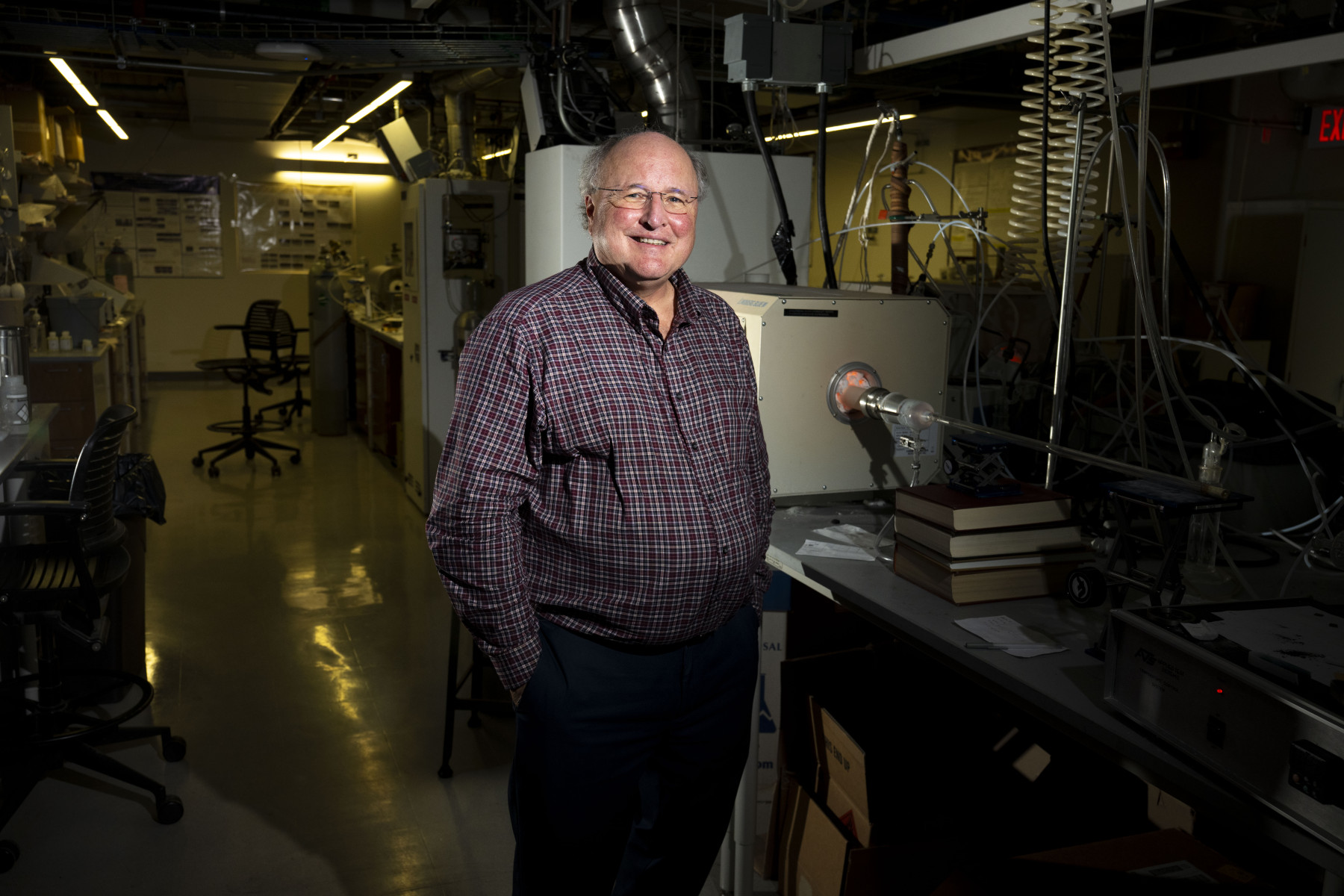
That doesn’t mean slowing down. The research he started in Ontario fascinates him as much today as it did then. “It’s quieter here in my new office on the eighth floor. I can give more of my attention to the literature, and there are new papers to be written.”
And service to his research community to be done. Gleeson directs the High-Temperature Corrosion Testing Laboratory at Pitt and serves as the Editor-in-Chief of the journal “High Temperature Corrosion of Materials.”
For his contributions, a 2024 Material Science and Technology conference held a special international symposium in his name.
Gleeson’s passion for discovery has taken him around the world and back and has garnered him numerous accolades. Whether developing resilient alloys or guiding a thriving department, he has a rare ability to uncover the right elements for success.