
Who Says Concrete Can’t Float

The sight of canoes on the muddy banks of Tygart Lake, in West Virginia, may have seemed unremarkable, but upon closer inspection these were no ordinary canoes. They were made of concrete, constructed and intricately decorated by the university students about to race them.
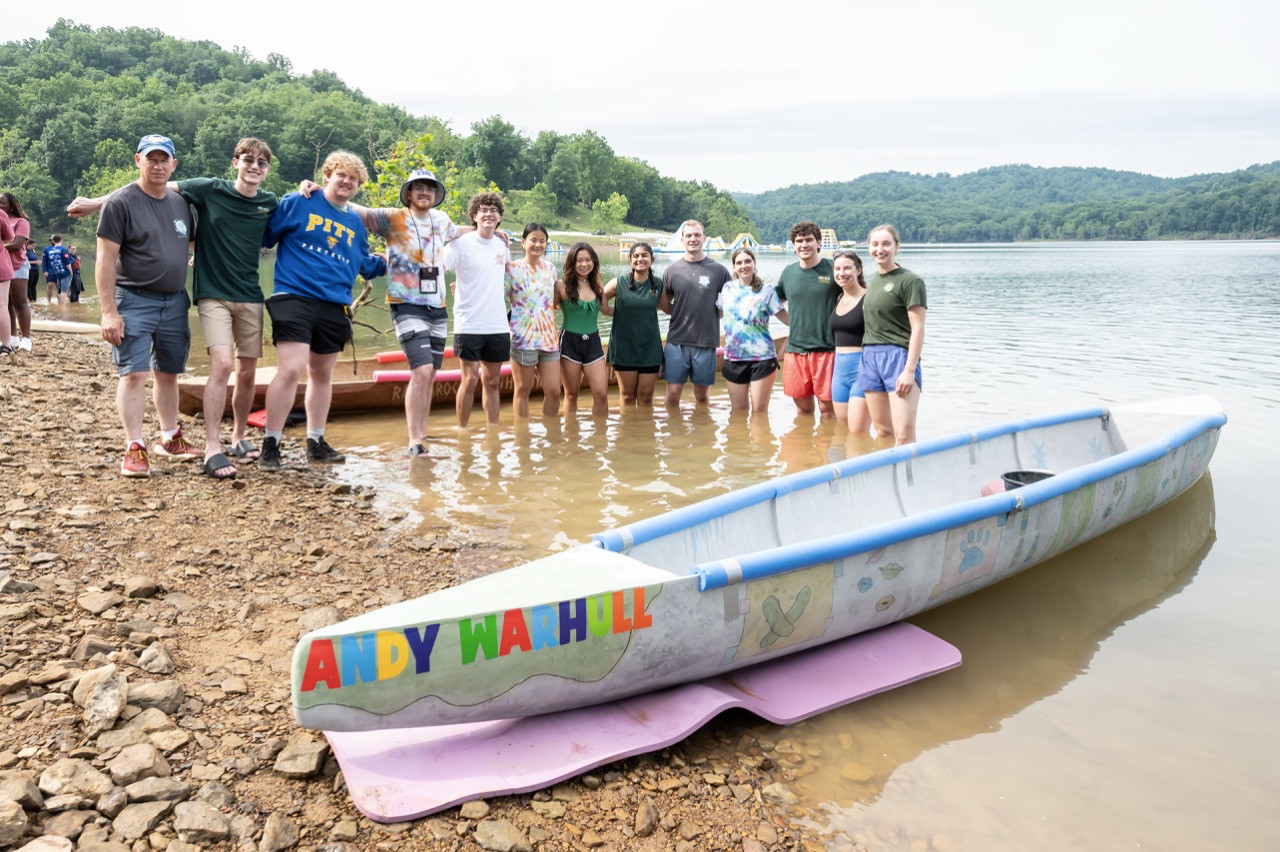
For the University of Pittsburgh Swanson School of Engineering’s American Society of Civil Engineers (ASCE) student chapter, the 2026 National Concrete Canoe Competition on Friday, June 26, was their first chance to compete at nationals, the result of years of fine tuning their mix and design, learning to row together, and most importantly, solving problems as a team.
Making concrete float
"Concrete is almost synonymous with civil engineering," said Mae Cook, president of Pitt’s ASCE student chapter. "Civil engineers essentially figure out how to use concrete in a variety of applications, and instead of buildings and roads, we're building a canoe."
Although the challenge has inspired ASCE student chapters since the 1960s, it wasn’t until 1988 that concrete canoe races were officially sanctioned. The event has become popular at the symposia, which feature challenges in bridge building, surveying, and problem solving. Today, the National Concrete Canoe Competition draws teams from around the world and across the country.
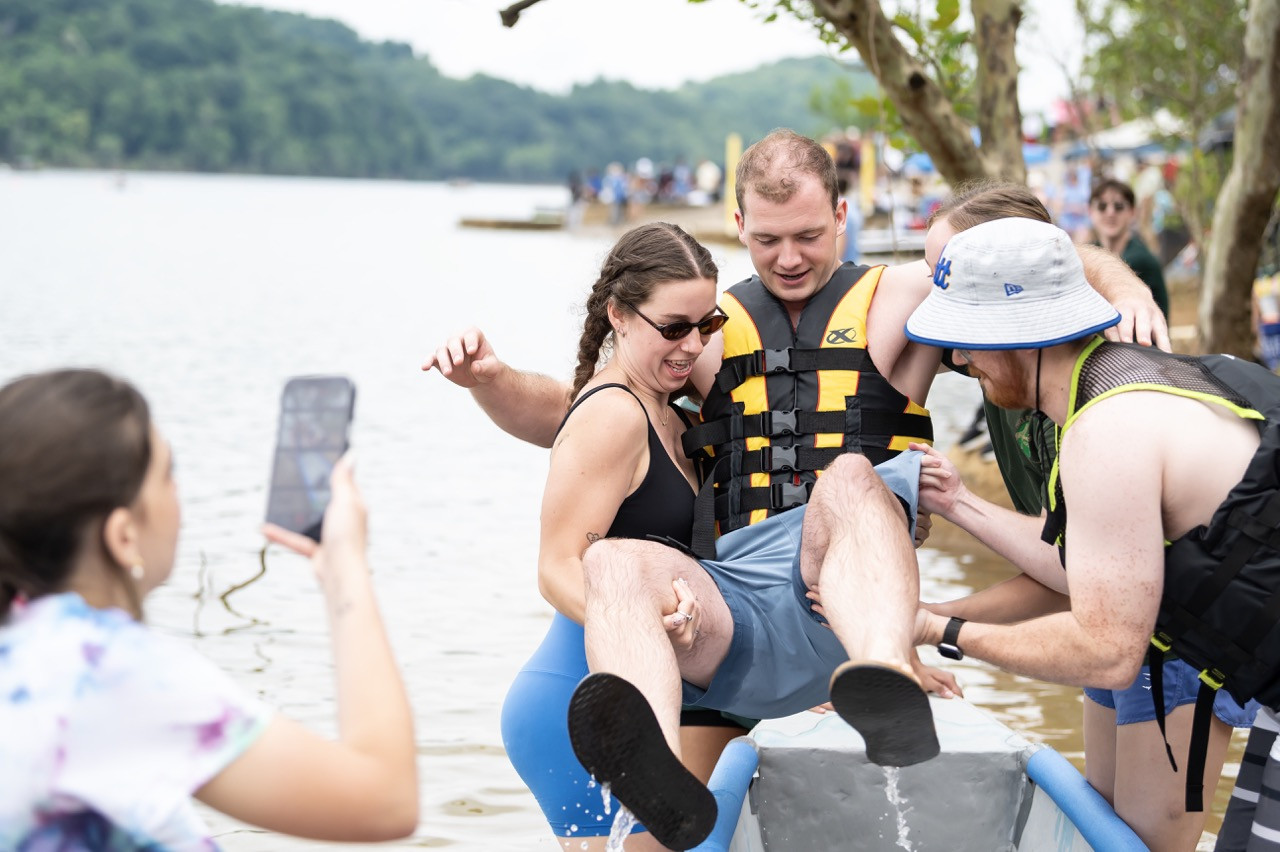
“It’s a commitment and a team effort,” said Cook. Pitt’s team splits responsibilities across mix design, construction, project management, aesthetics, and of course the actual rowing. Everyone comes together to lift the unwieldy boat.
Finding the right mix
Essential to a concrete canoe is finding the right mix of concrete. For Pitt’s team, that process is ever evolving. Over the years, they have compiled what Amelia Kuzneski (BS CEE ’26), last year’s mix co-lead, calls “a big messy Excel sheet” that has become a comprehensive calculator used to determine the mix.
“Improving upon our mixes from previous years, we were finally able to figure out the combination that got us here [nationals],” said Sanjna Goyal, the mix design captain this past year. “Our main goal was to decrease the density, which is why we added Poraver. I like to think of it as glass popcorn — it’s a super light material that helps fill space without adding weight. To help maintain strength, we still use Portland cement but also incorporate silica fume, fly ash, and Re-Act 4, which are sustainable cement replacements. Additionally, acrylic fibers help with holding our concrete together and further strengthen the mix.”
The team tests as many as 12 to 13 mixes, compressing and pulling apart concrete cylinders to gauge its strength. They test its slump, or how much it will droop before hardening.
Kuzneski, an environmental engineer, has applied her learning to help produce a mix with a smaller carbon footprint. “Concrete is not very sustainable, at least not the production process,” she said. “We try and do good to the environment. Half our boat is probably some form of recycled glass.”
Building a canoe
After the team settles on its mix, the construction leads organize the pour, utilizing a CNC company to cut a mold out of Styrofoam, which arrives in three pieces. Then comes the fun.
“Everyone comes in at 6:00 a.m., and we fit the pieces together and make sure everything is lined up. We line it with epoxy, so the concrete won’t stick,” said Kuzneski, this year’s construction co-captain along with Greg Herbst (BS CEE ’26). “Everyone gets to trowel, though we end up using our hands a lot.”
Between layers, the team adds mesh to reinforce the concrete and help the canoe keep its shape. For increased buoyancy, they fill caps in the fore and aft with foam and then apply more concrete. This year they added concrete ribs for increased strength. (Two years ago, the team dropped the canoe and had to duct-tape the stern to keep it together. They raced, but the boat capsized at the finish line.)
“This is the best one I’ve ever seen,” said Charles “Scooter" Hager, CEE Structures / Materials Technician at Pitt. He works in the Benedum Hall sub-basement and, as Cook said, “helps with literally everything we need, even teaching us how to row.”
The Andy War-Hull
Beyond questions of design and mix are the canoe’s name and its theme. At meetings, students share ideas, most with a nod to Pittsburgh, until one or two take hold. Last year, the team settled on the alliterative Monongahela Megalodon. Before that it was the Three Rivers Safari.
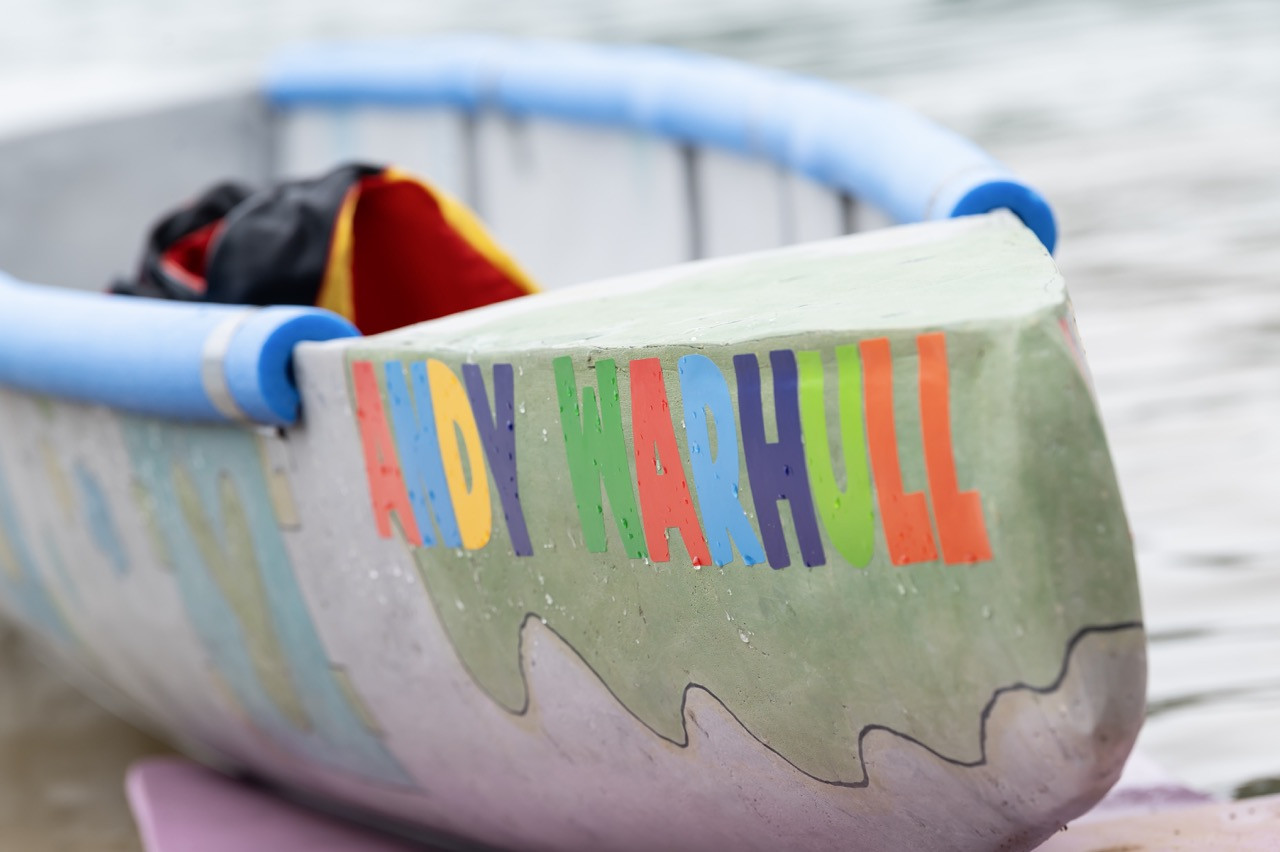
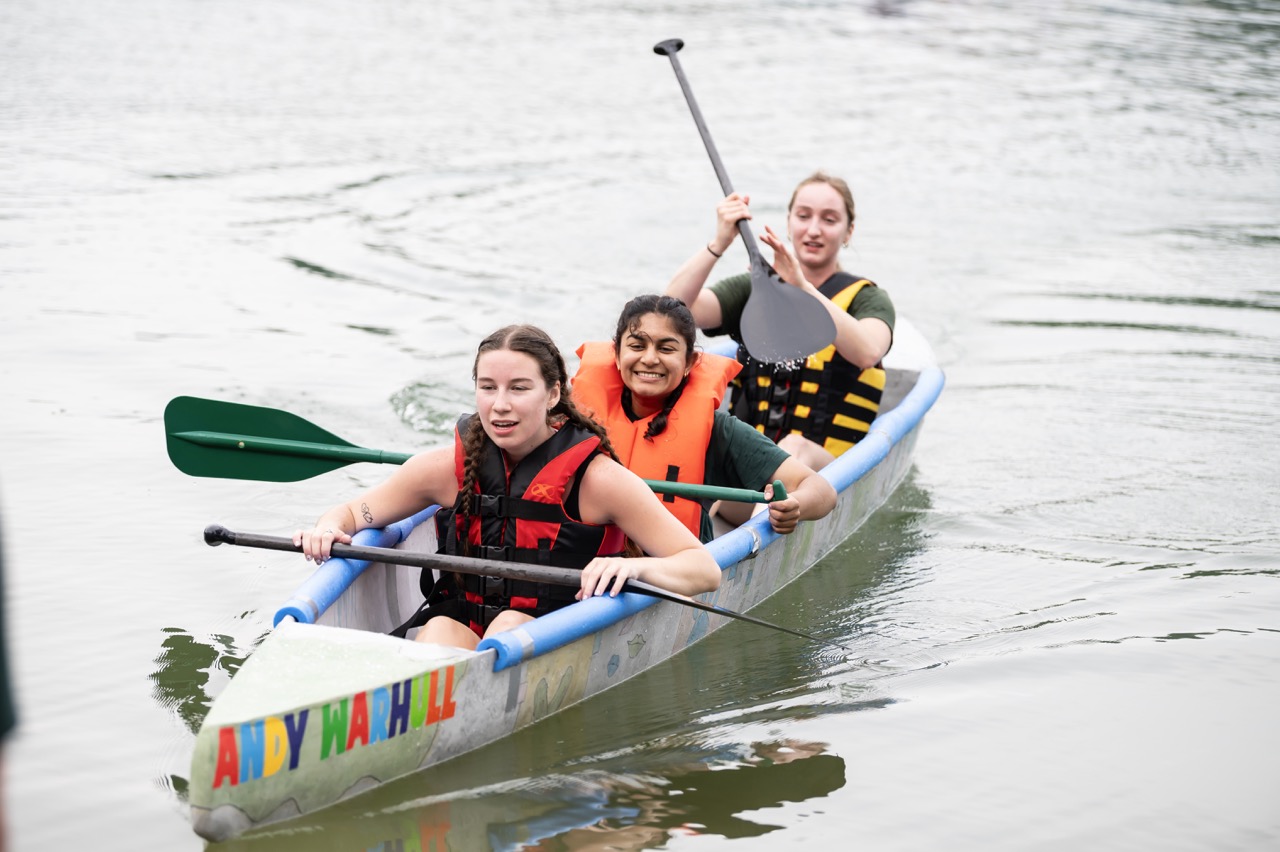
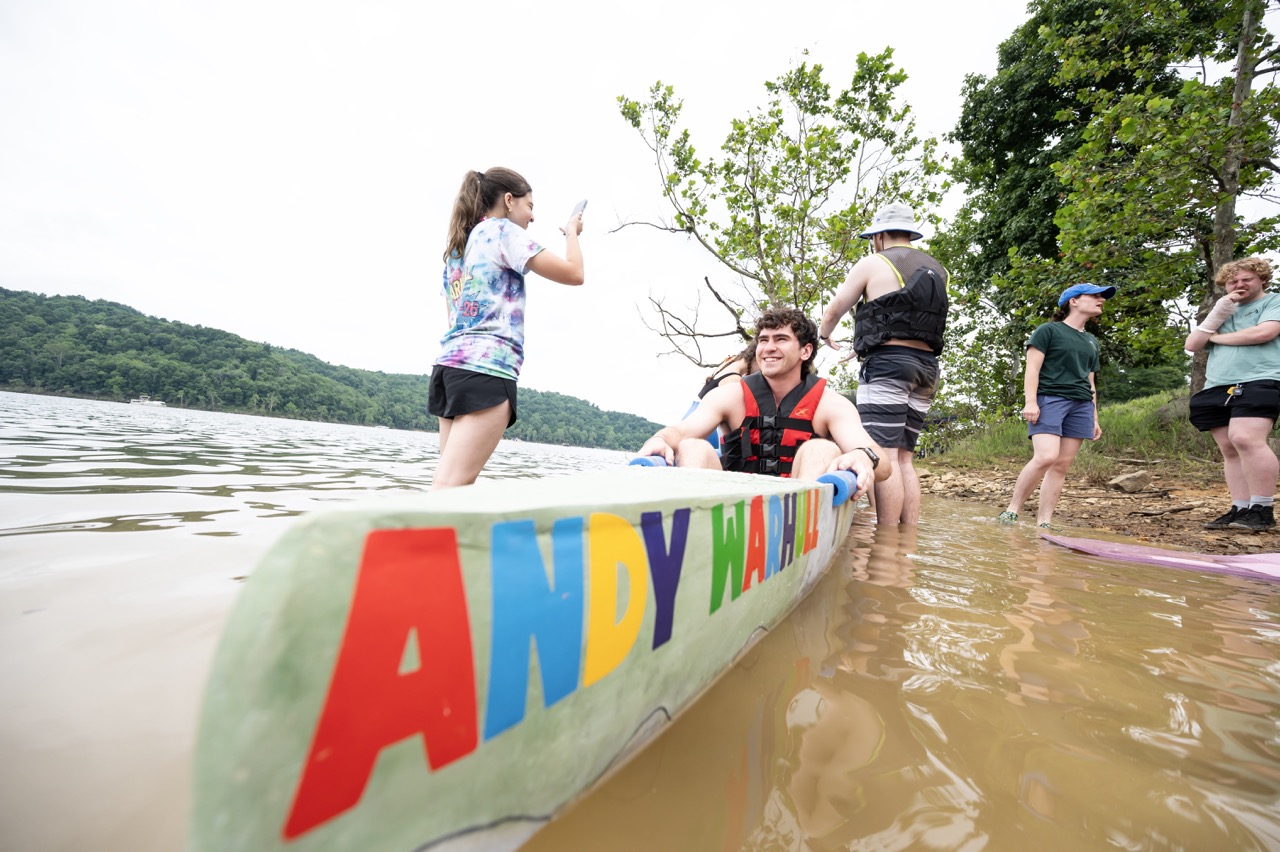
This year, they turned to one of Pittsburgh’s favorite sons: pop artist Andy Warhol. Punny names ensued, and the Andy War-Hull stuck. For artistic inspiration, team members took a guided tour of the Warhol Museum on Pittsburgh’s North Shore.
“After the canoe cured and we sanded it, the aesthetics team set to work, drawing designs in pencil before staining them into the concrete,” said Kayley Dorfman, an aesthetics co-lead and next year’s project management captain. “The team did everything by hand.”
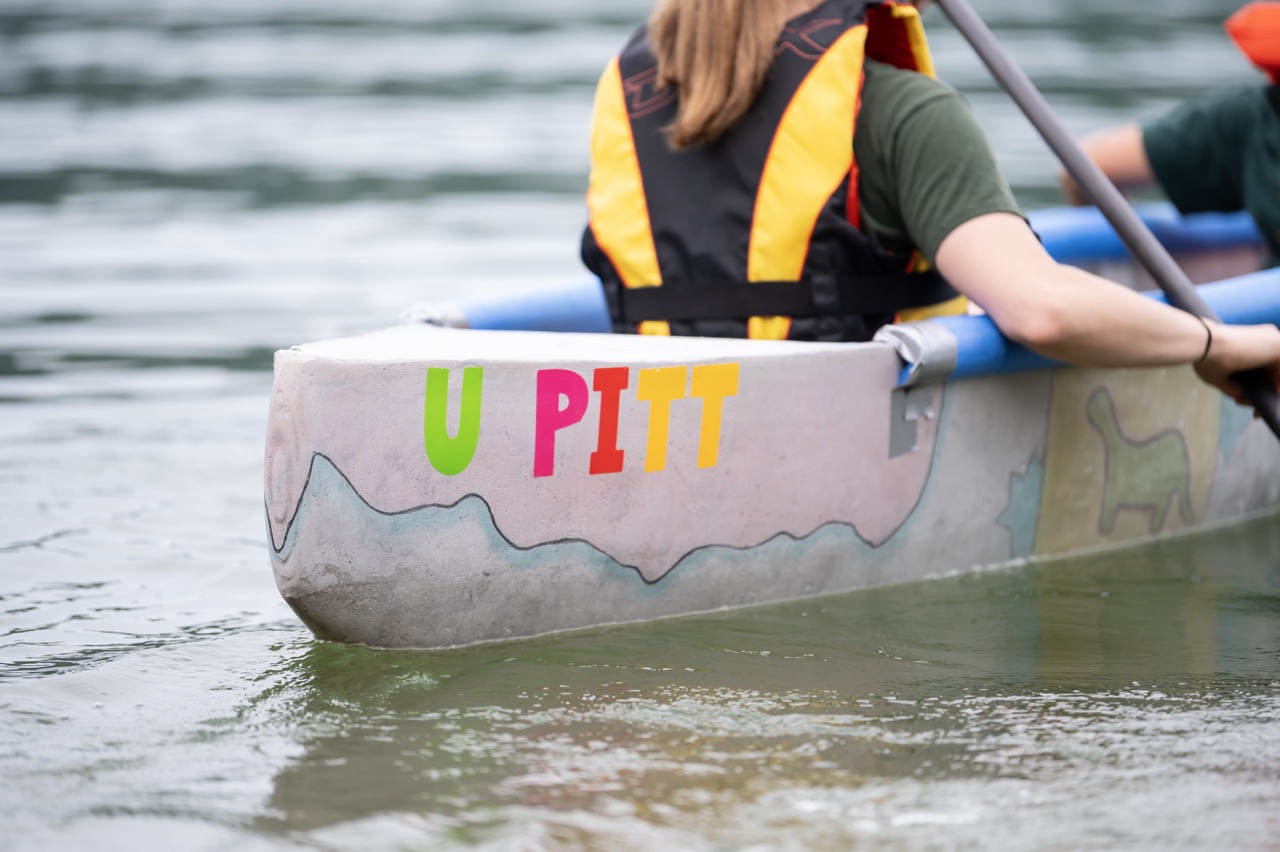
The boat is adorned with pickles, Heinz condiments, a banana, Marilyn Monroe lips, Dippy the Dinosaur, a panther paw, and the Cathedral of Learning.
Rowing a concrete canoe
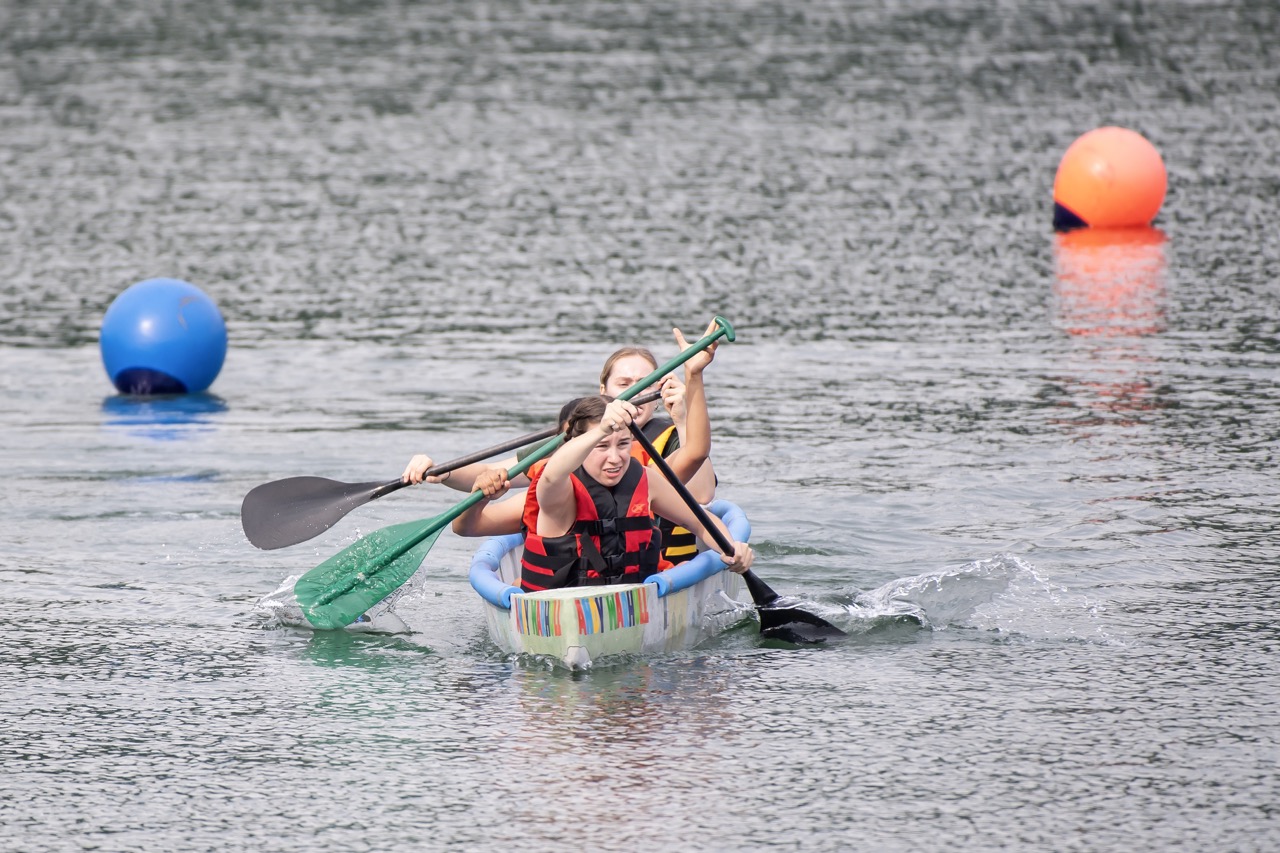
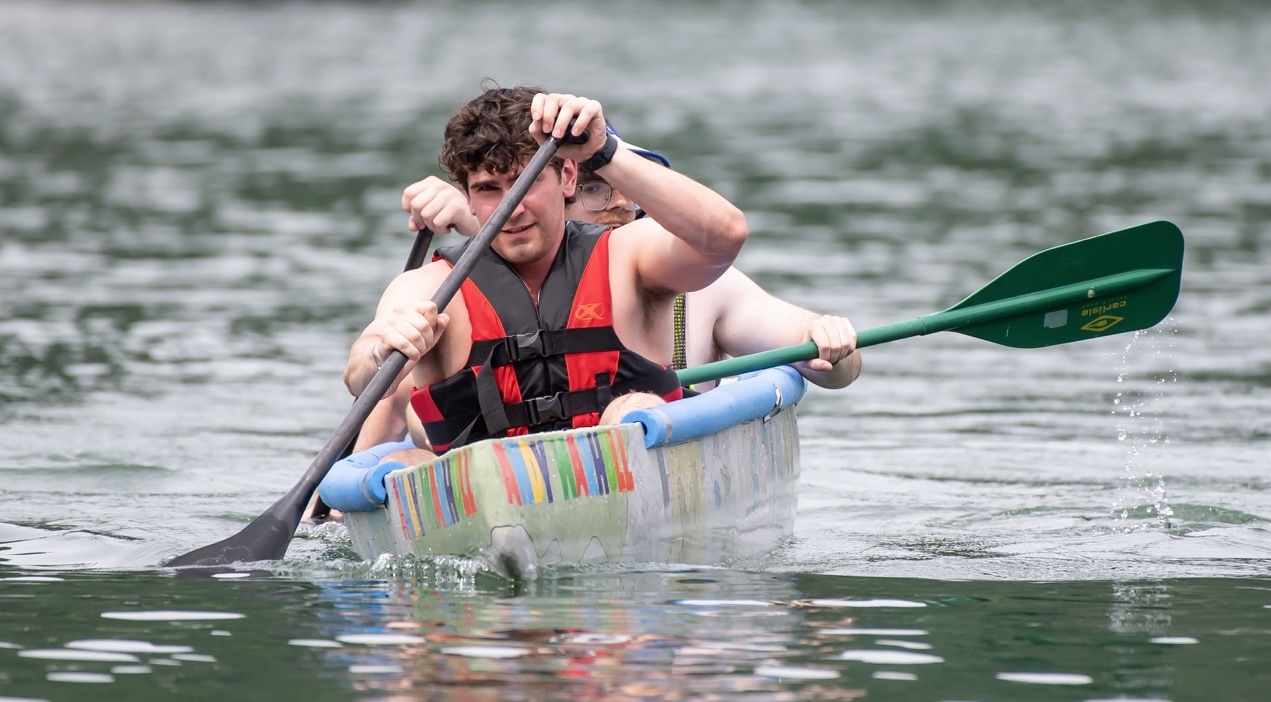
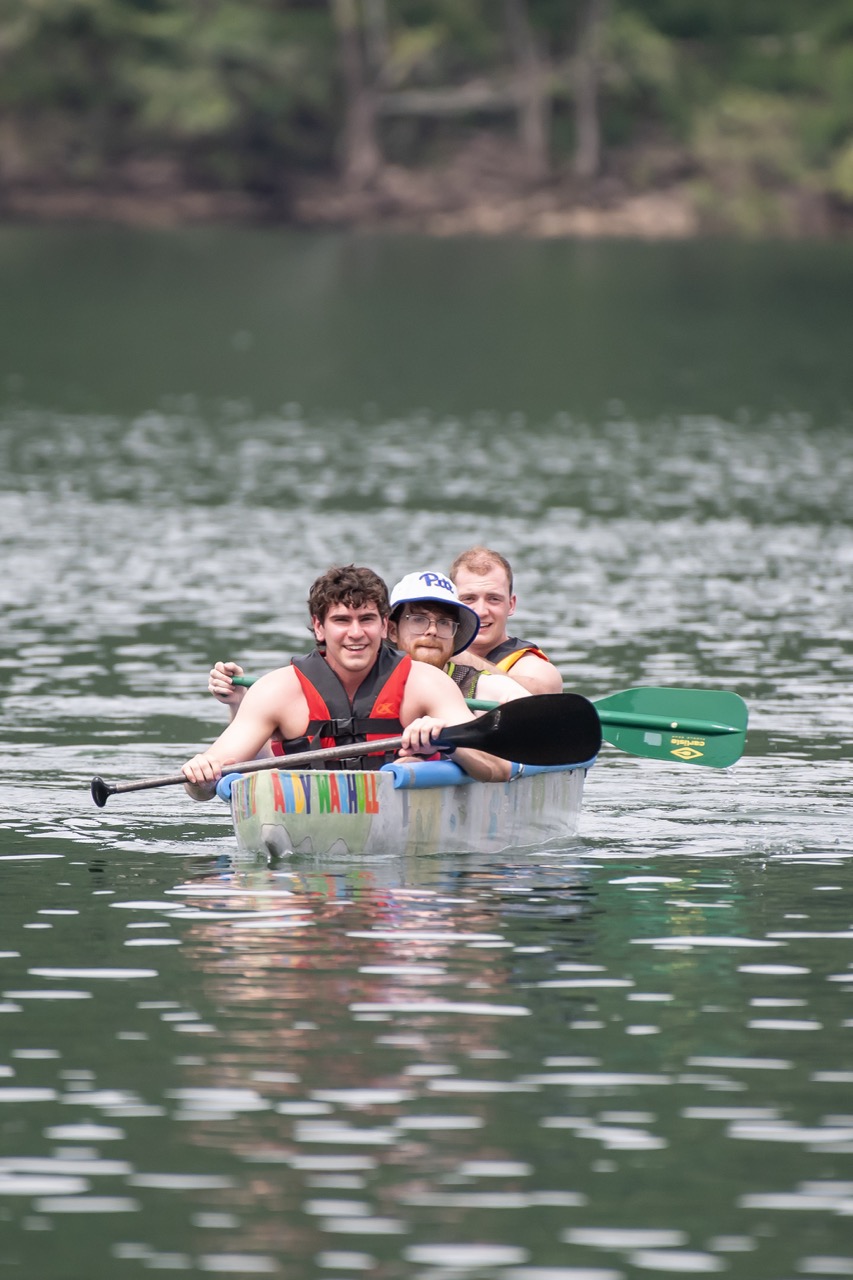
Constructing the canoe is a remarkable feat. Rowing in it isn’t particularly easy either. At 215 pounds and 17.5 feet long, the Andy War-Hull requires stamina and skill to weave through buoys in the slalom or to sprint 200 meters.
In previous years, the teams did little in the way of actual rowing practice. Experience was spotty, and the results weren’t always great.
Hager has set out to change that. He has a canoe and lives near the Ohio River. For the past 17 years, he has encouraged students to come and practice, and two years ago, they took him up on the offer. “That first practice, we just sent them out,” Hager said. “They got a lot of time on the water, just figuring out how to work together.”
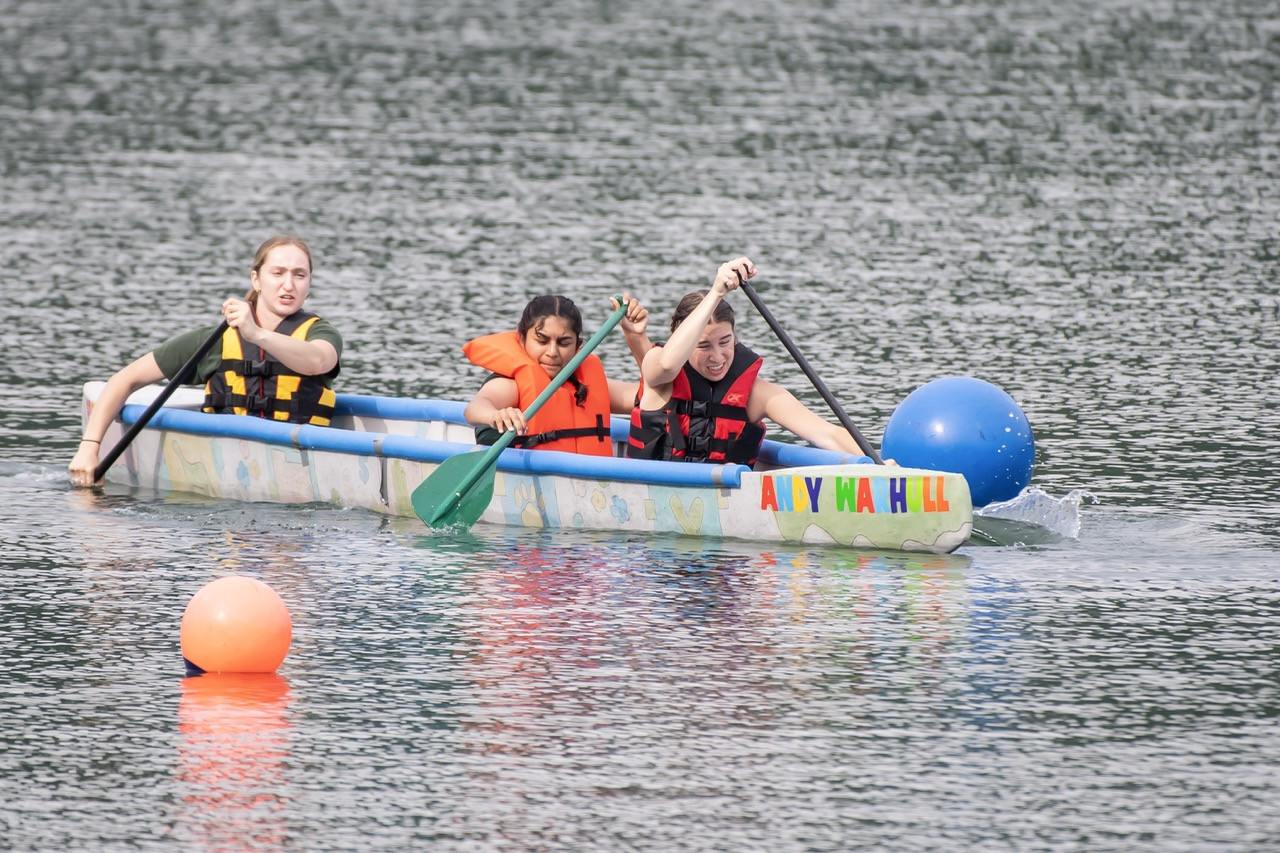
This spring, their teamwork and the rowing practice paid off. At the 2026 ASCE Mid-Atlantic Student Symposium in Johnstown, PA, Pitt’s Concrete Canoe team placed first overall, earning them the trip to the nationals.
Nationals
This year’s ASCE Civil Engineering Student Championships was held at Fairmont State University in Fairmont, West Virginia. Concrete Canoe teams from as far away as China, India, Quebec, Seattle, and San Diego brought their boats to nearby Tygart Lake State Park to compete.
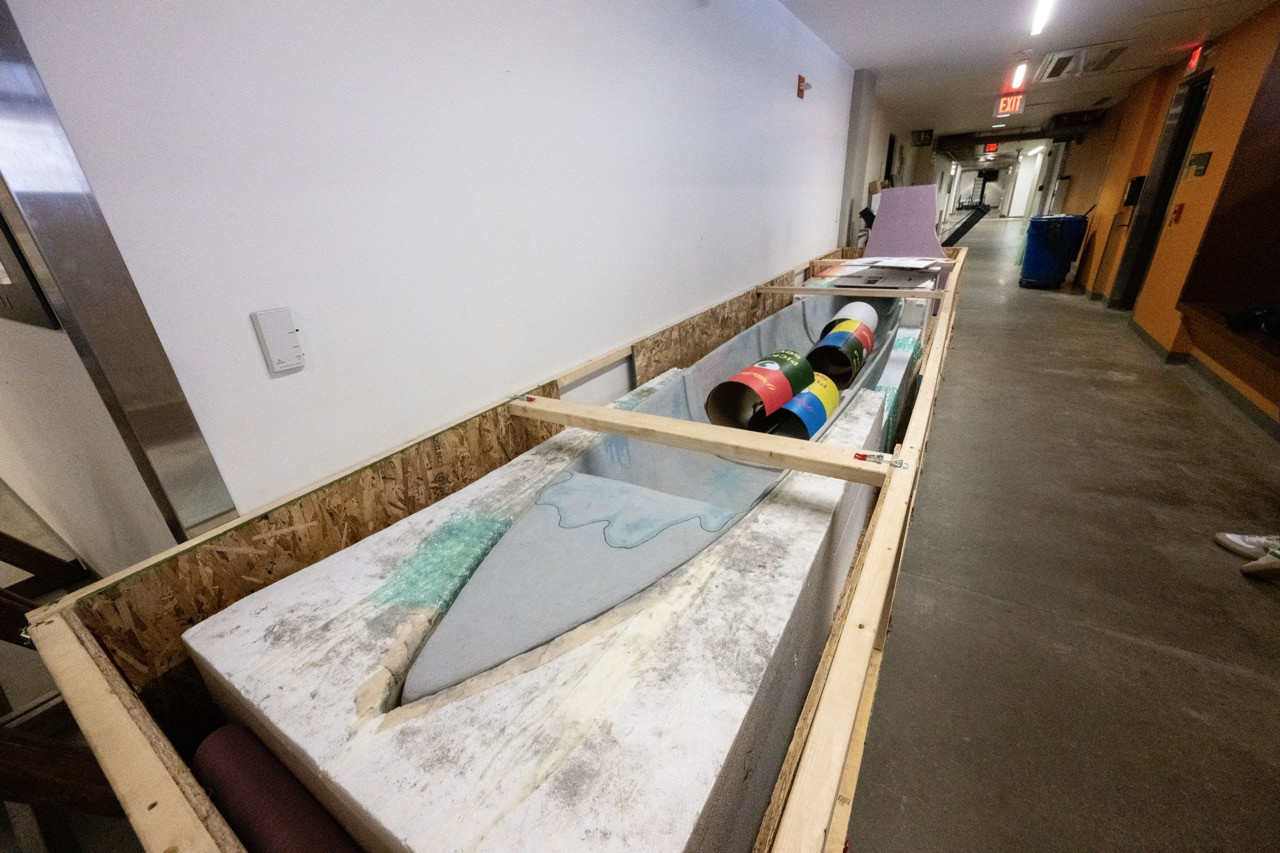
Pitt’s team rented a Penske truck, and Miles Hartlage, next year’s construction co-lead, drove the Andy War-Hull two hours south, maneuvering the winding roads to the state park. He parked amid a long row of trailers typically used for race cars, many emblazoned with university logos.
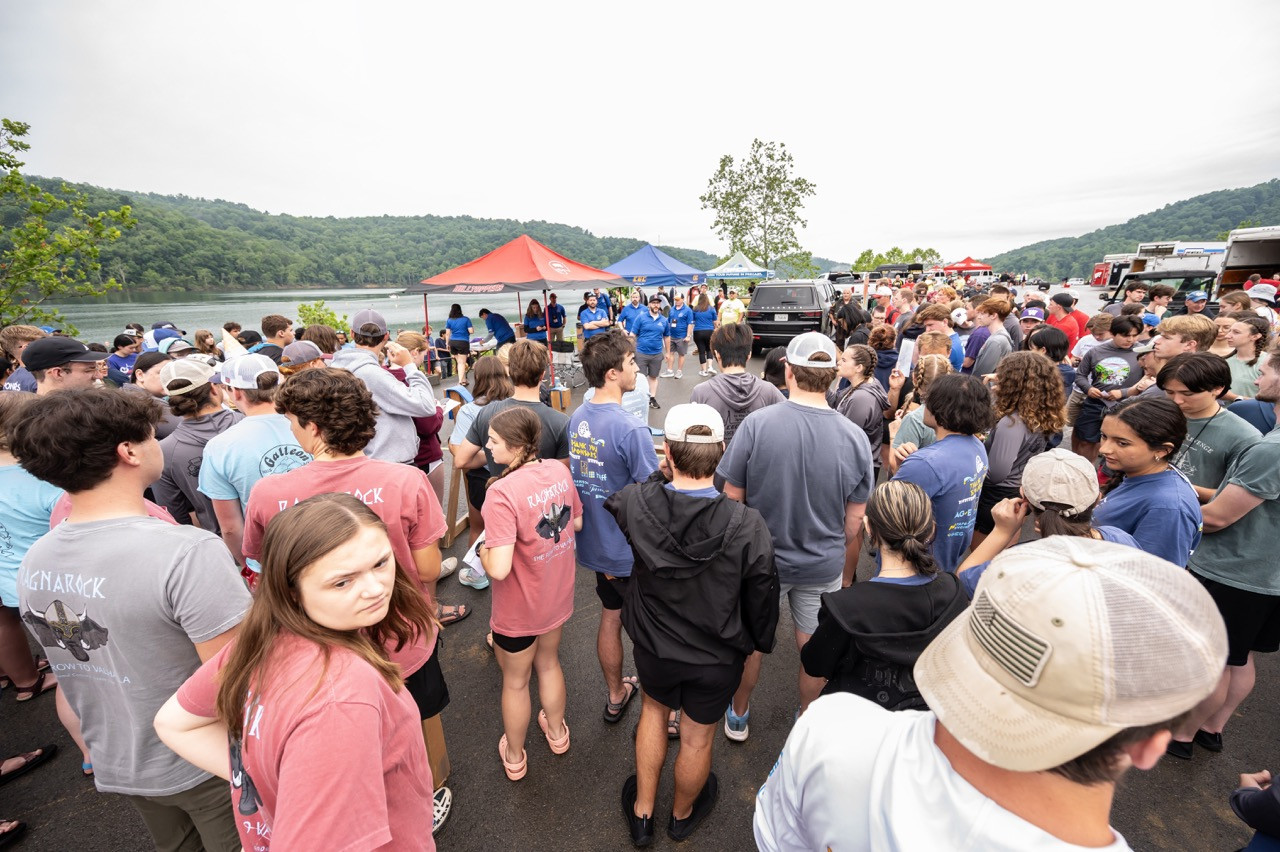
While a niche college event, Concrete Canoe has its own flair. Teams wore matching shirts, one team even matching party hats. Pitt’s team, during the regional competition, dressed as their boat’s namesake, donning silver wigs.
Members of one team walked the banks of the lake banging drums. Another team hoisted a cowbell the size of a garbage can and clanged it (a three-person endeavor) whenever their canoe set out to the starting line. Teams twirled ratchet noise makers.
The canoes themselves are amazing, ornately stained, with designs that tell stories of its university, city, or state. A few boats even had cement figureheads – a pelican, for instance – on the bow.
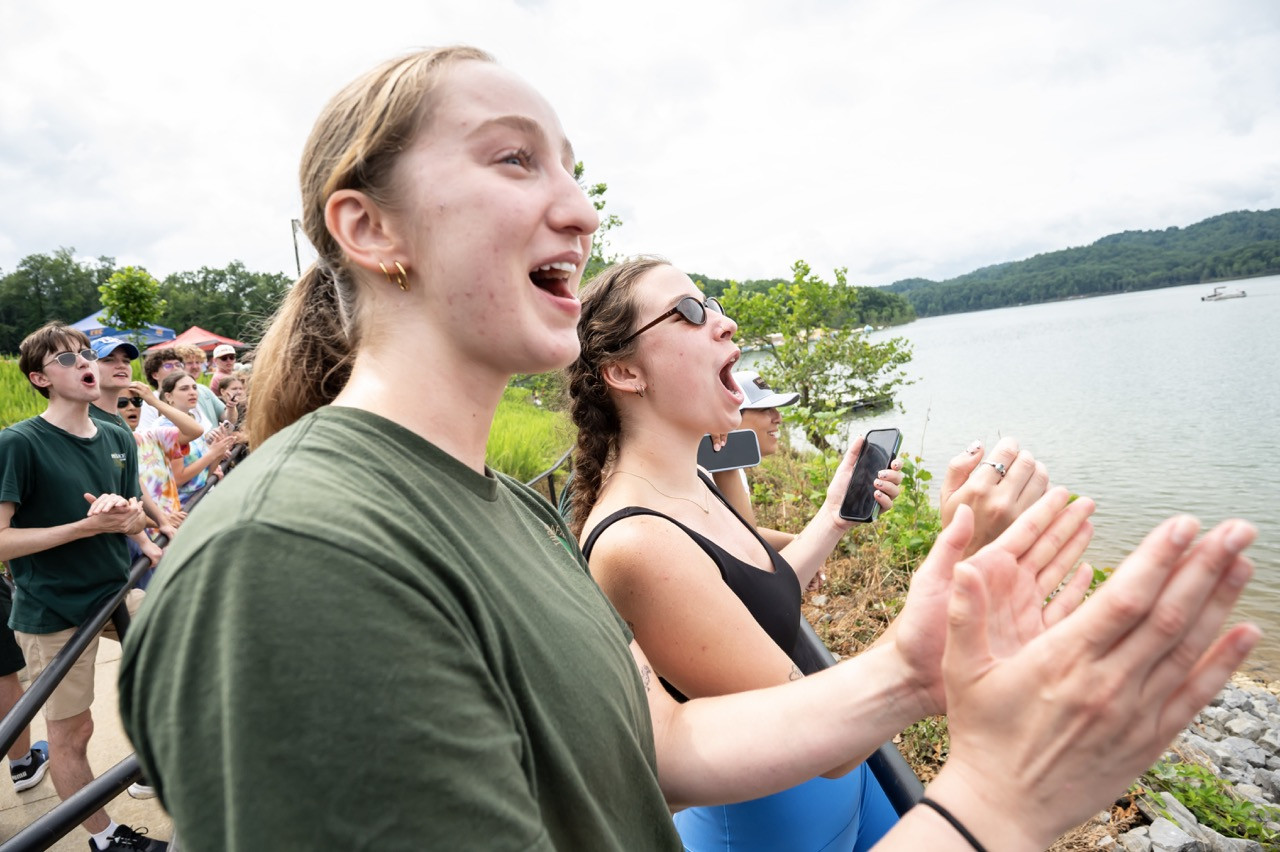
There are five events: women’s and men’s slalom, women’s and men’s sprint, and co-ed sprint. Boats are timed individually. As the rowers navigated buoys or frantically dug their paddles into the water to go faster, teammates and fans on the shore cheered them on and chanted their school’s name. They waved university flags. Everyone was having fun.
Beyond racing and the fun, the students gained practical experience that will help them after they graduate. Each team must develop an extensive proposal submitted to judges, which outlines details such as the cement mix, the design, the construction, and the cost. At the competition, students must pitch their canoe, selling judges on its merit and fielding questions. The canoe itself is rigorously tested and judged.
“The idea is that we are designing a concrete canoe that will be manufactured on a wide scale,” Cook said. "The canoe is a working prototype and the presentation is a business pitch. The racing is more for fun.”
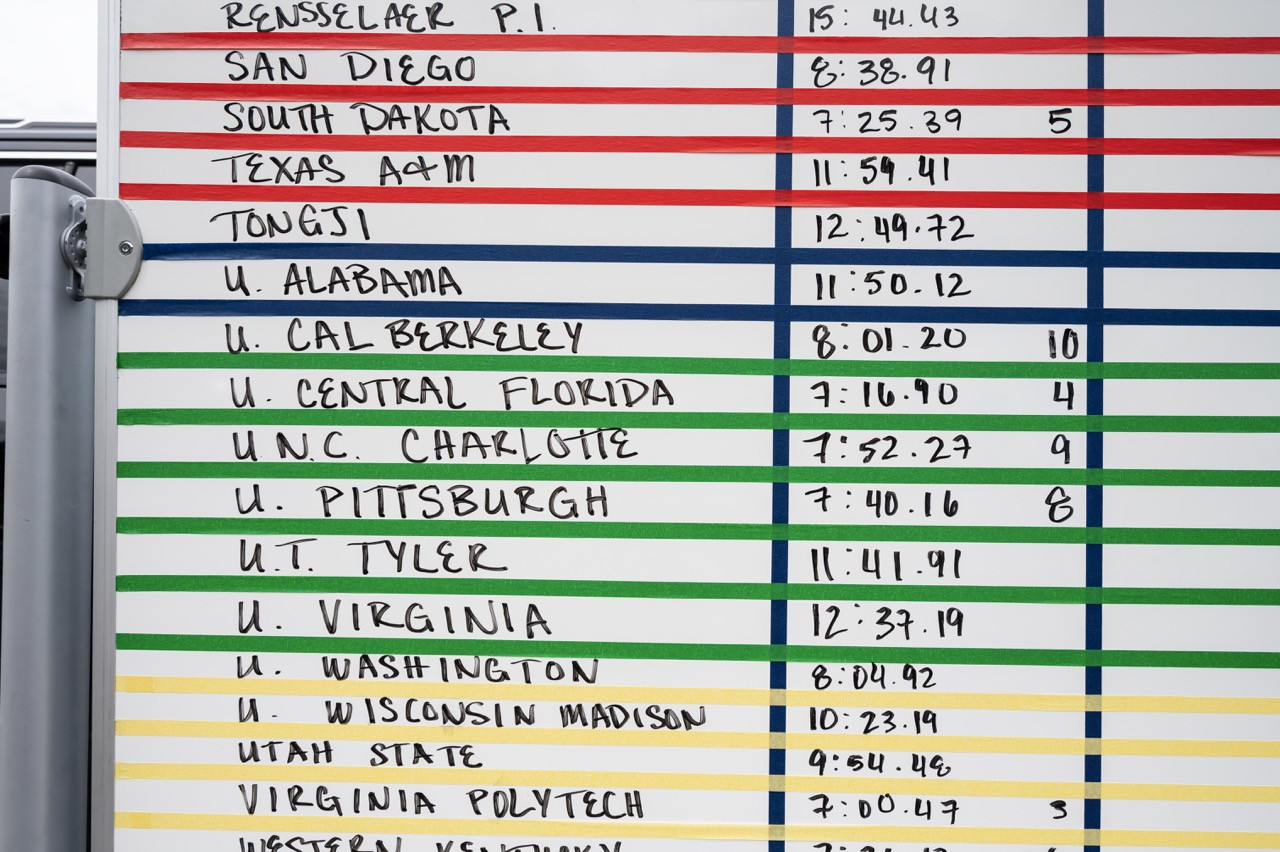
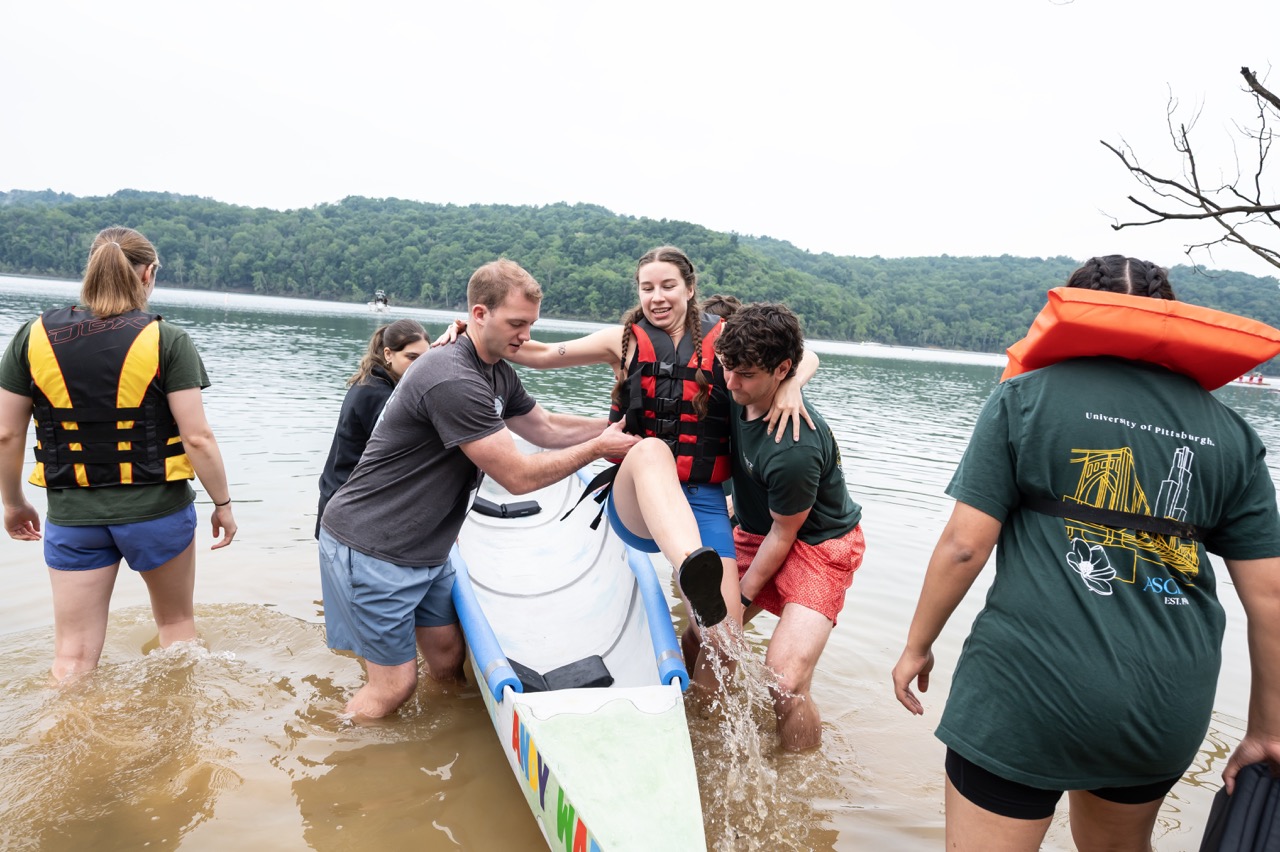
While Pitt’s team couldn’t repeat its regionals performance, for their first time at nationals, they held their own. Beyond the results, the team bonded, sharing snacks and stories, lifting members into and out of the Andy War-Hull, working together to navigate a complex slalom course. They met fellow engineers from far-off schools and talked with industry representatives eager to see what the students had created.
“I could not be more proud of them,” said Amir Alavi, the team’s faculty advisor and associate professor and B.P. America Faculty Fellow in the Department of Civil and Environmental Engineering. "It’s so rewarding to see how much heart the students put into this work. Concrete Canoe is not just about building and racing a canoe. It is about students learning to trust each other, solve problems together, and see that civil engineering is also about creativity, imagination, and teamwork,”
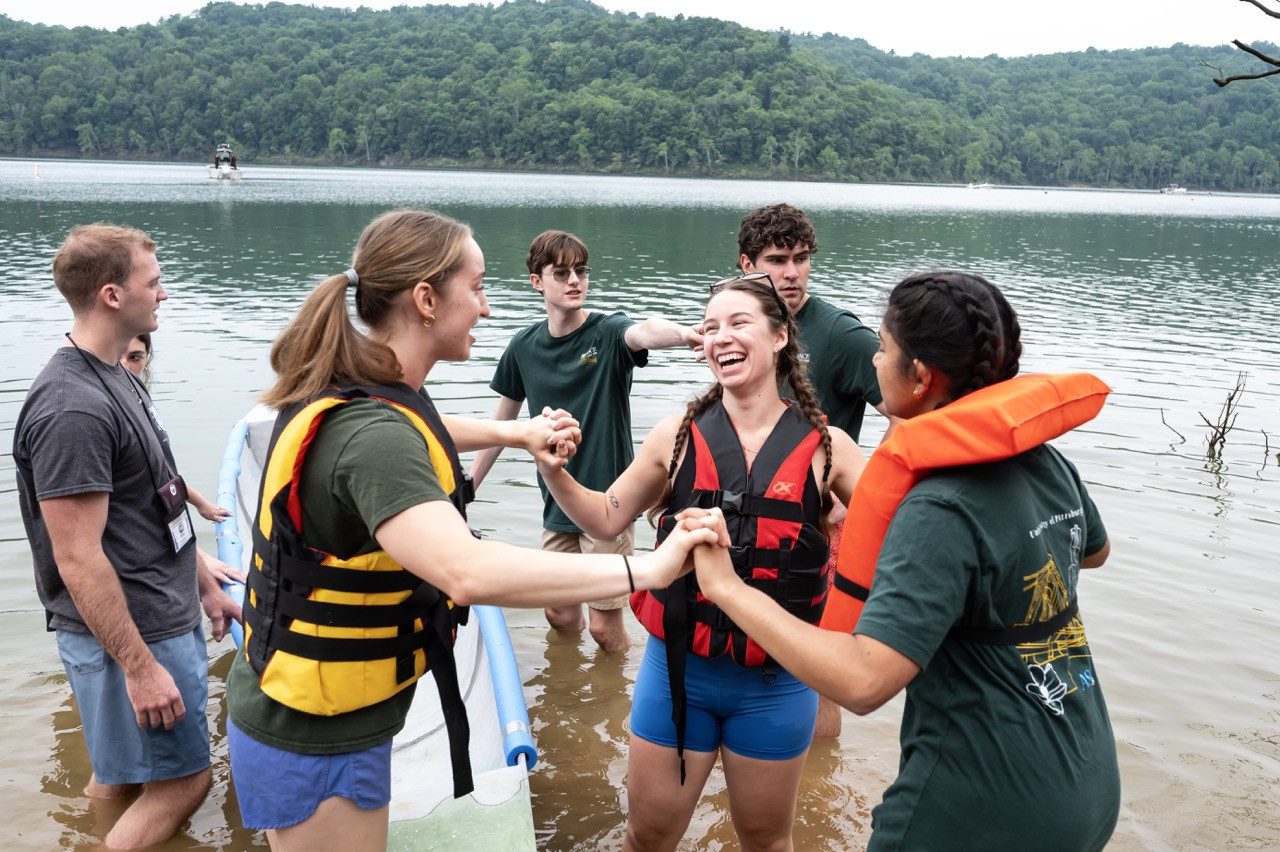
“Our department is close knit and supportive, and Concrete Canoe captures this spirit,” said Kate Volna (BS CEE ’26), project management captain this year. “Even though this was my last go round with Concrete Canoe, I’ll always be cheering them on.”
Our heartfelt thanks to the Coull family for supporting this student group through the James Molyneaux Coull and Carolyn Austin Coull Student Resource Fund.