Learning Machines
In the age of machine learning, AI, 3D printing, and CAD modeling, it is unsurprising that many engineers graduate from college without having used more traditional tools like a milling machine, lathe, or laser cutter. Yet machining tools like these are essential to the very solutions that the engineers will go on to design.
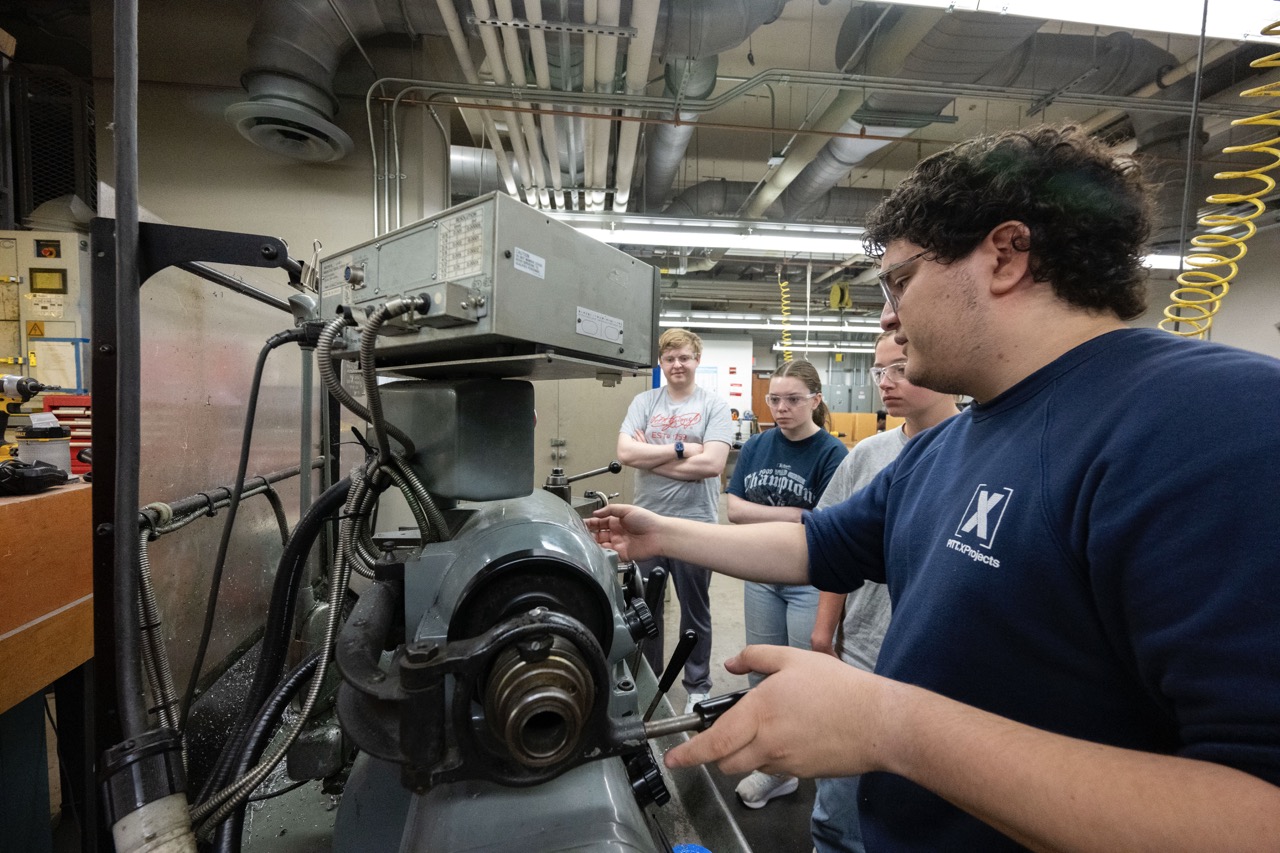
A course piloted this past summer and being taught this fall at the University of Pittsburgh Swanson School of Engineering was designed to change that. Led by former U.S. Marine Corps section leader and PhD candidate David Pabst (BS ME ’21, MS NE ’23), “Introduction to Manufacturing and Design” engages students to build a project using conventional manufacturing equipment like lathes and mills while learning how these tools influence design.
“When I was an undergraduate engineering student here at Pitt, I didn’t use the machine shop until my fourth year. I was looking for hands-on experiences,” said Pabst, who had previously studied machining through the Workshop for Warriors program. “This new course will give students the opportunity to build design skills and understanding of machining much earlier in their educational program.”
Making it in Benedum Hall
On the ground floor of Benedum Hall, the John A. Swanson Center for Product Innovation (SCPI, pronounced “skippy”), gives students, staff, and faculty access to bench tools, mills, lathes, 3D printers, a laser cutter, a welding table, and other equipment to build prototypes and develop new products.
“It’s a capable shop,” said Andy Holmes, who directs SCPI and built it in 1999. For 40 years, Holmes has worked as a machinist at Pitt and sees the value of building students’ comfort in machine shops. “For those students intrinsically interested, learning how to use these machines will make them better engineers.”
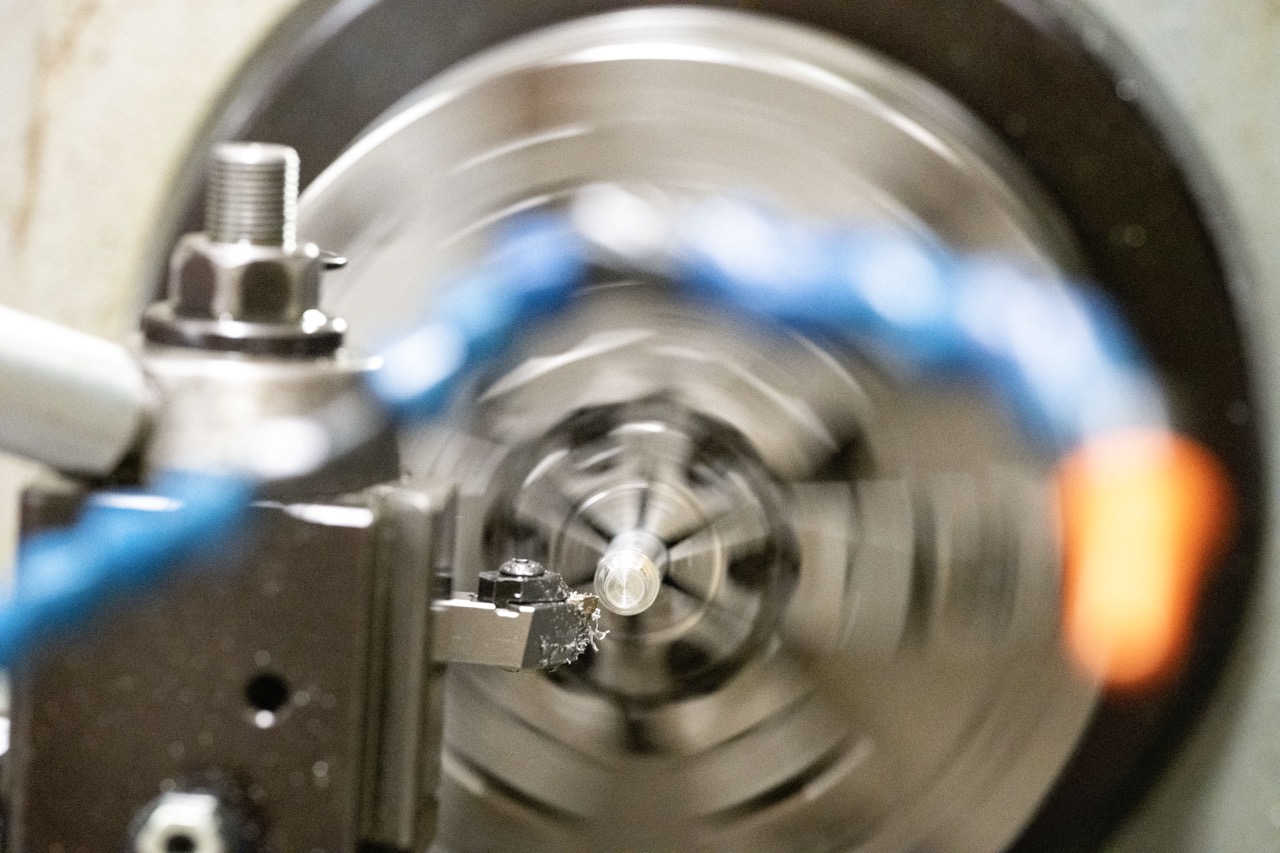
In the early 2010s, Holmes began mentoring Matthew Barry, associate professor in the Department of Mechanical Engineering and Materials Science, who was pursuing his PhD in the Swanson School. “Matt understood the equipment but needed guidance to figure out how to get his stuff done,” Holmes said. “I expedited the learning curve.”
The experience had a profound impact on Barry (BS ME ’10, MS ME ’12, PhD ME ’16) and helped launch his career. “The PhD didn’t get me my first job,” he said. “Knowing how to design around machining got me hired on the spot.”
A new course
For more than a decade, Holmes has wanted to develop a course like Introduction to Manufacturing and Design, but it wasn’t until 2025 that the idea took hold. Pabst, whose PhD research involves engineering education, began collaborating with Barry, his advisor. The two worked with Holmes to create the curriculum for the project-based class.
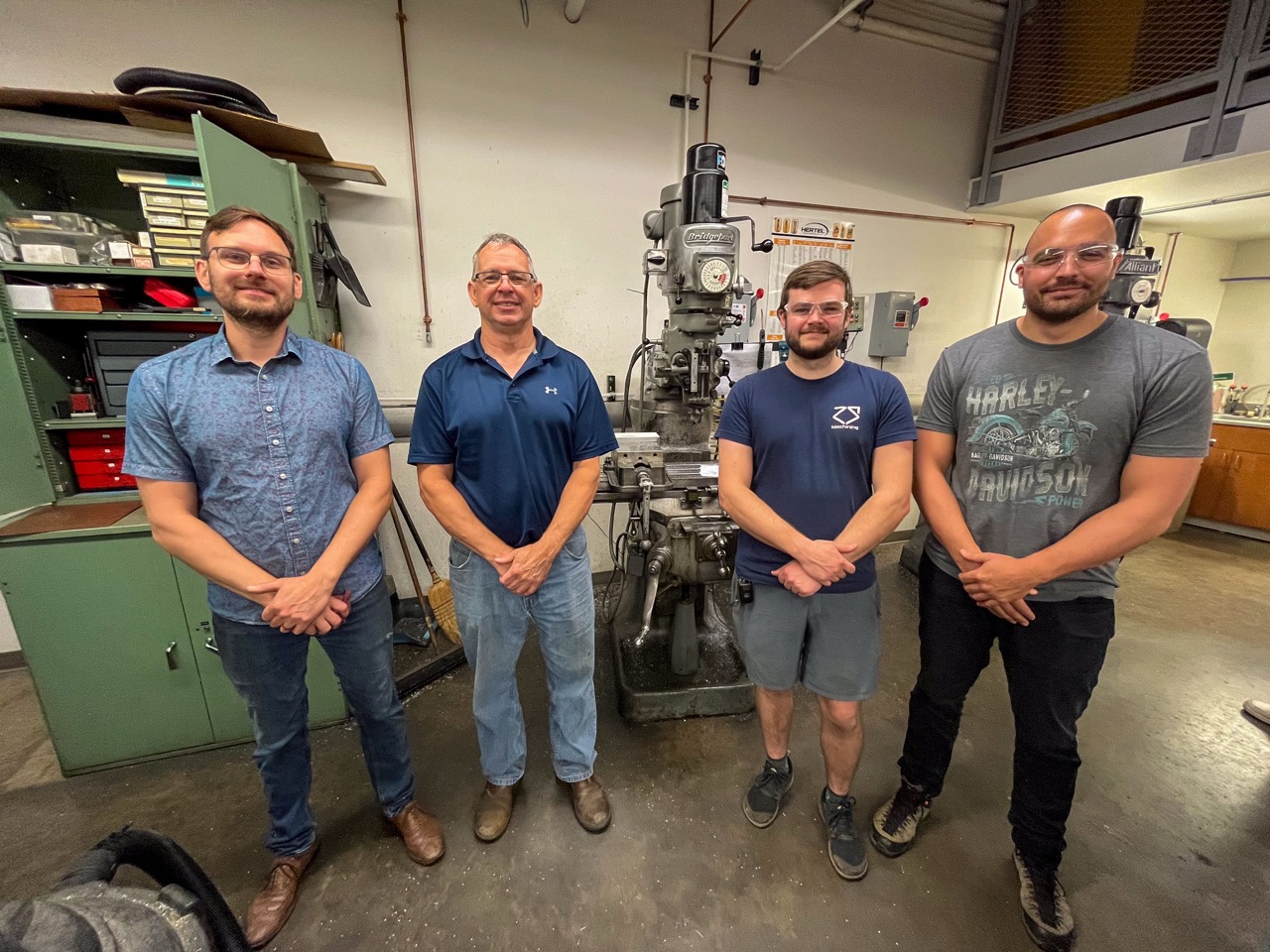
During this process, the team turned to two undergraduate students who worked at SCPI for their input: Miles Rosas and Andrew Mueller (BS ME ’26). Rosas, who graduates this fall, had learned about the shop while serving as a design intern for Pitt’s IDEA Lab. Mueller found it while participating in Pitt’s FSAE club Panther Racing, and he became increasingly interested in machining.
“We start with the fundamentals,” Pabst said. “Students learn about safety, engineering drawing, the lingo of the shop, measurement tools, and basic hand tools. Then we introduce them to the machine tools, which they use to formulate parts of their projects.”
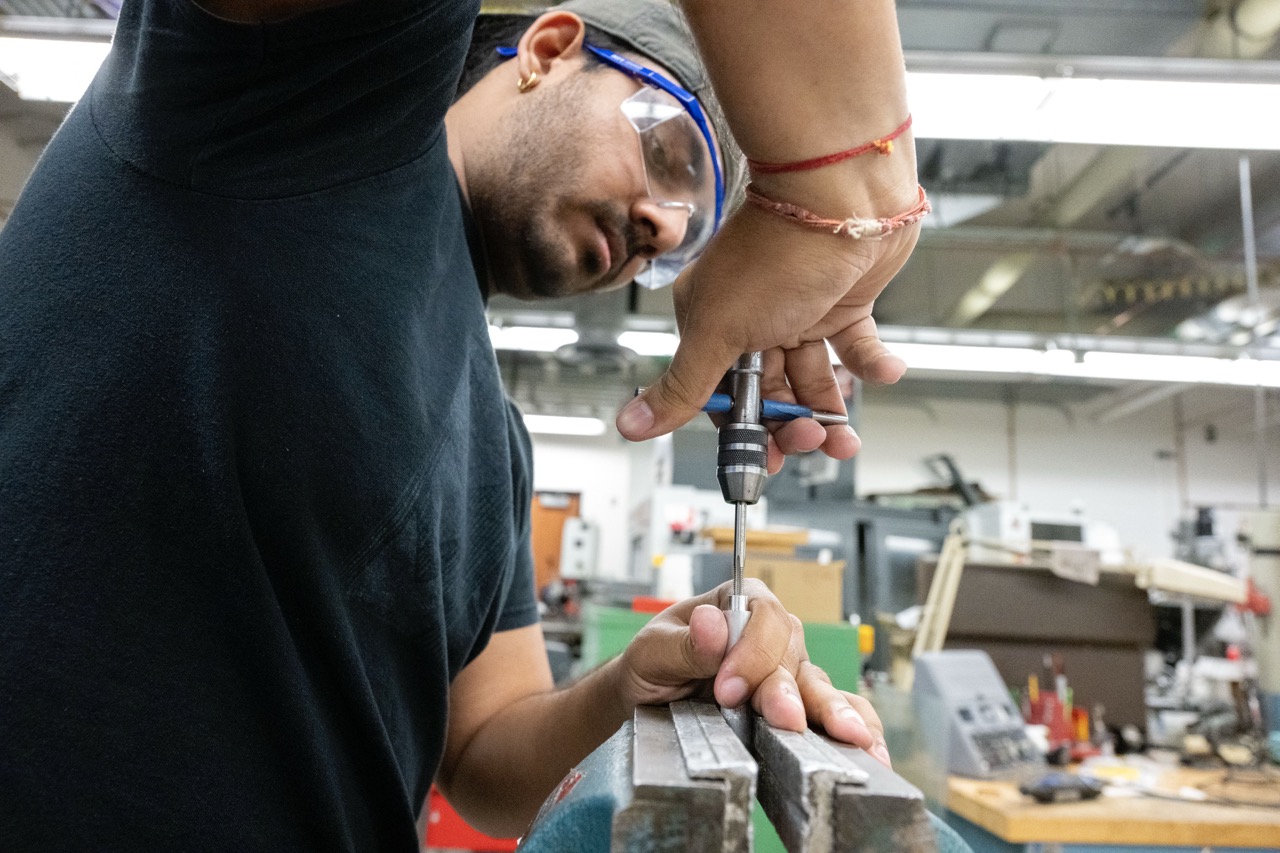
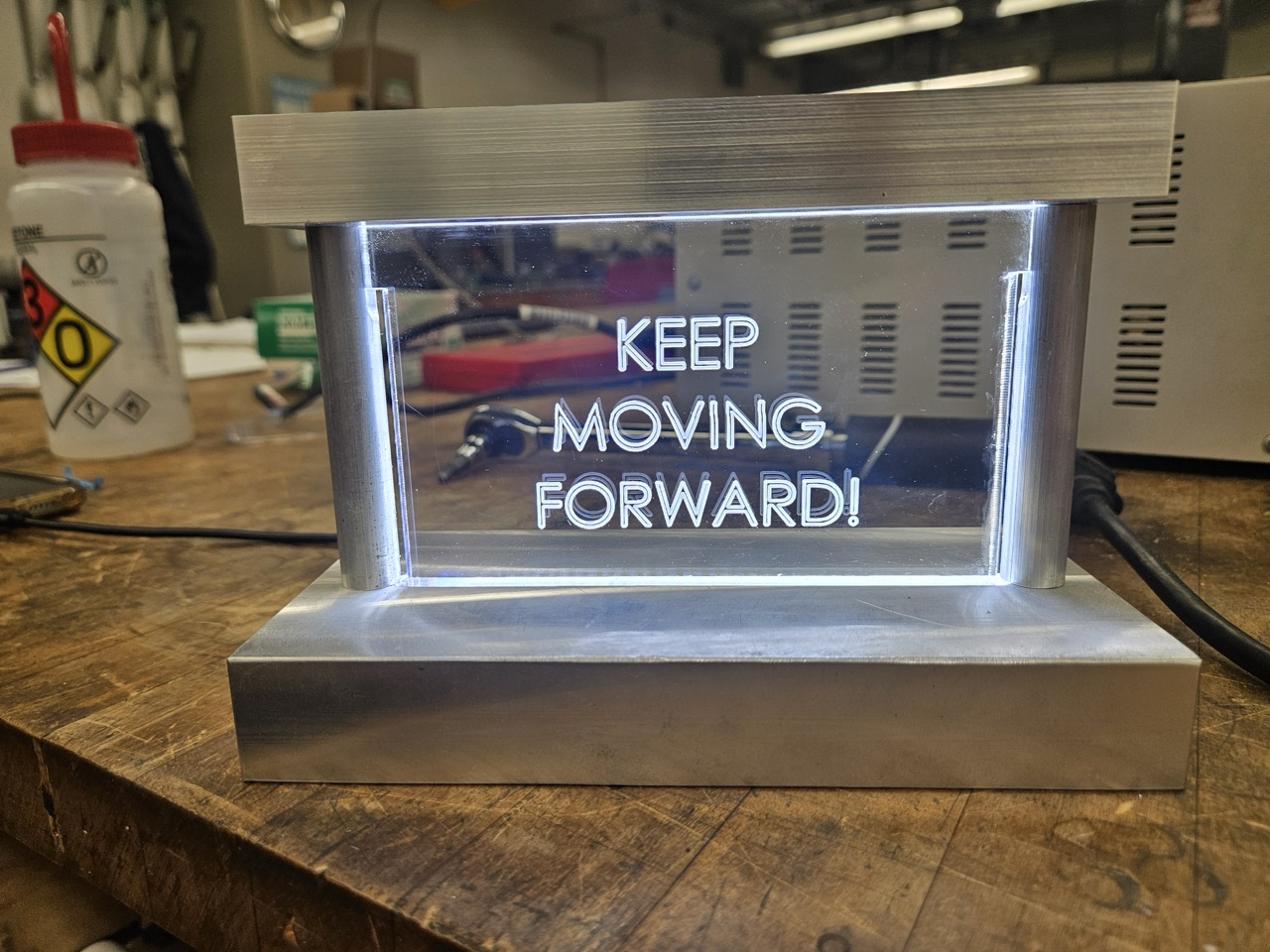
Classes begin with a lecture, followed by a demonstration. Students then learn about a new tool and process as they develop the next part of their projects. For the pilot, nine students enrolled, and they created a metal desk ornament with an etched acrylic sign.
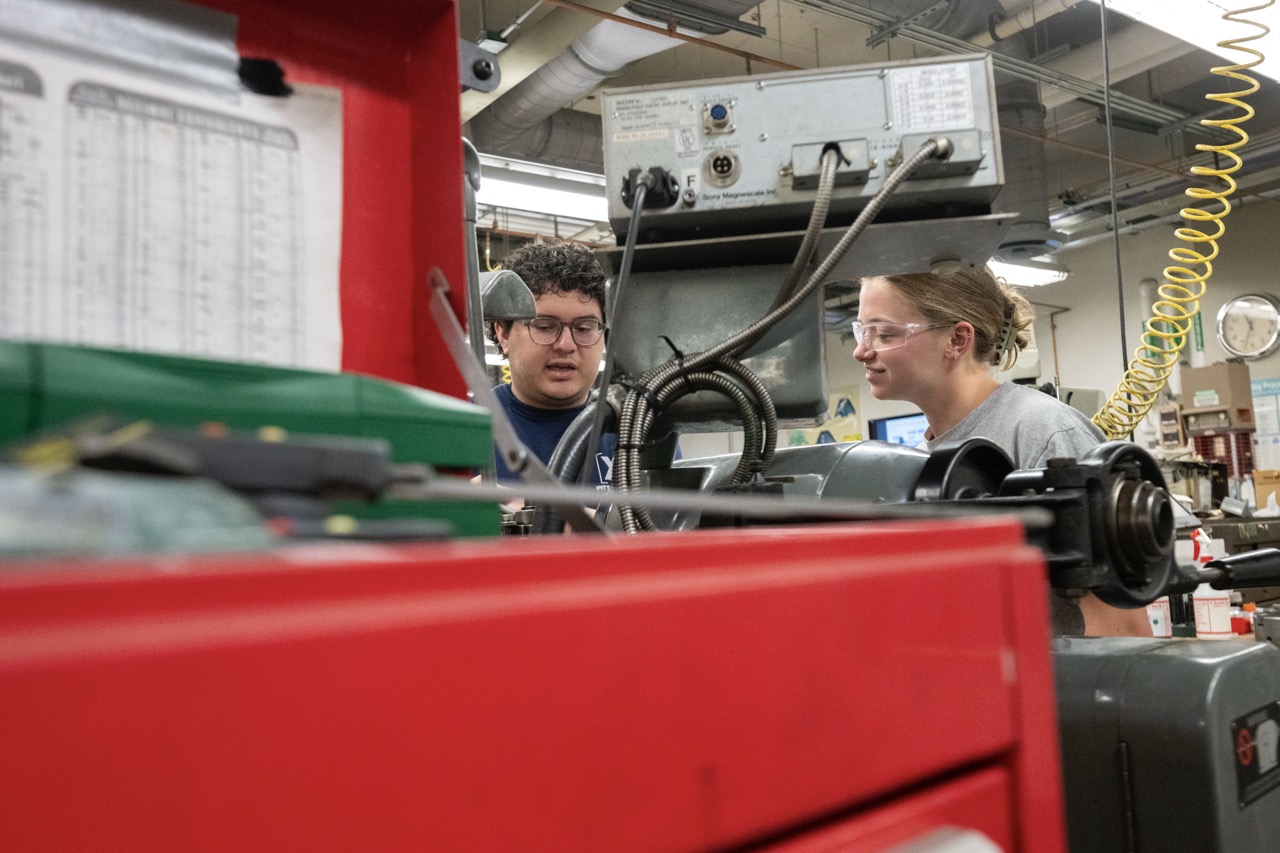
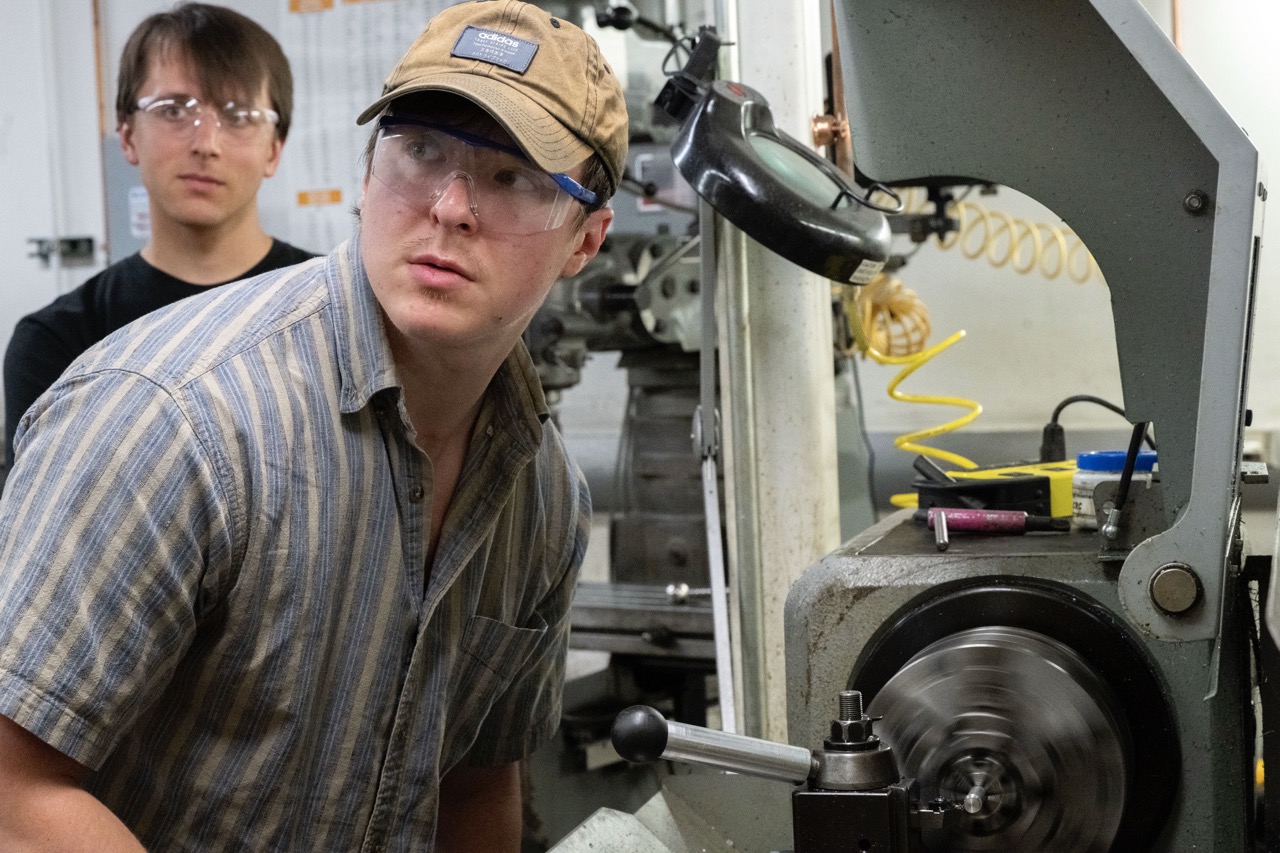
Rosas and Mueller served as TAs, helping students translate what they learned into something tangible. “They used their extensive knowledge of machining and design, along with their industry experience, to provide relevant, real-world examples and applications,” Barry said.
Designing with the shop in mind
For Samantha Bluze (BS ME ’26), the class provided an important window into concepts like geometric dimensioning and tolerancing (GD&T), a system engineers use to define the geometry of parts. She had already completed a co-op with Pittsburgh-based Acutronic USA Inc., which develops aerospace, defense, and transportation technologies. “When I would develop something, my boss would ask how I was going to machine it. I had no idea,” Bluze said. “GD&T is important in engineering, and getting to learn about it by doing is useful.”
Since graduating, Bluze accepted a mechanical engineering position at Acutronic and has seen firsthand the effects of the class. “I’ve learned over the past couple of months that I now have more practical machining experience than some of my coworkers, just from taking this course."
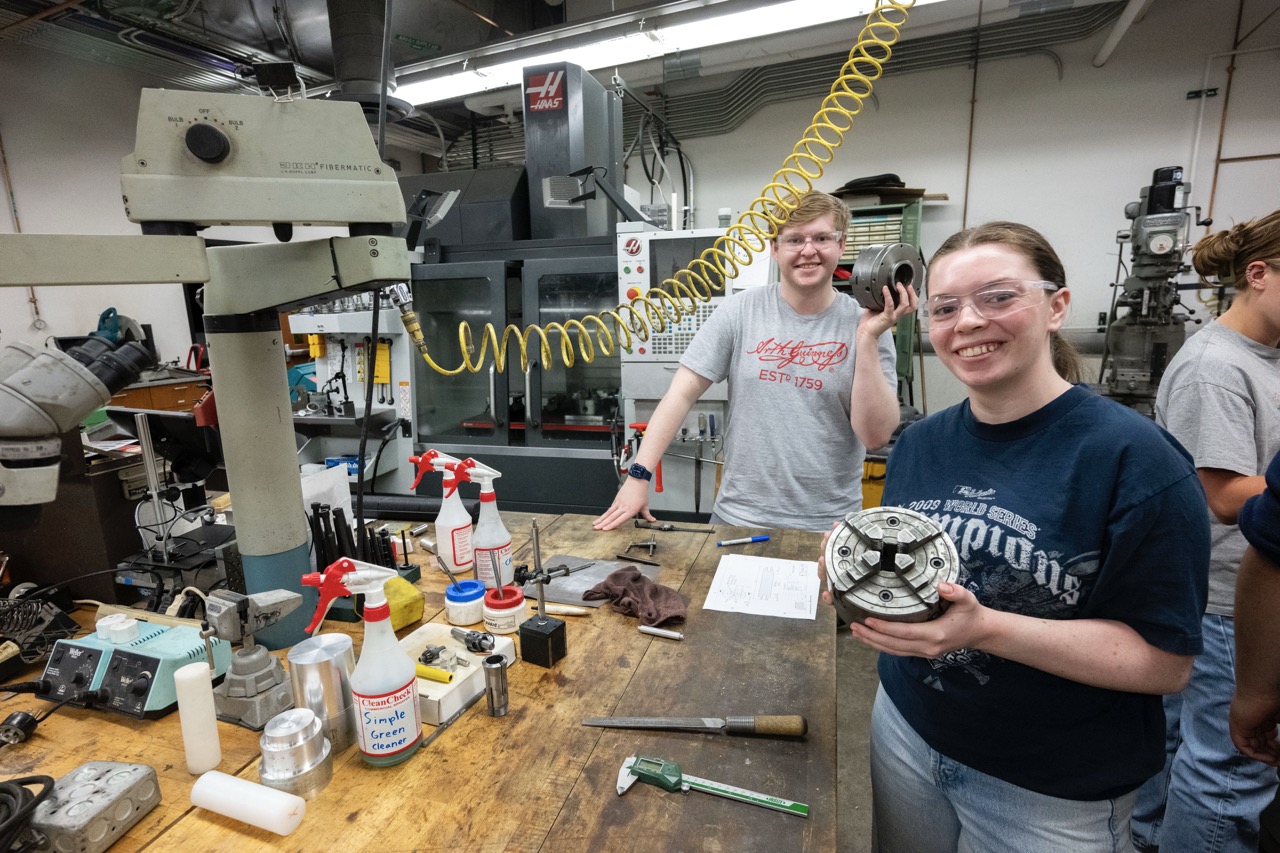
“In mechanical engineering classes, you learn about different material properties, manufacturing methods, design constraints, and mechanical interactions,” said Geoffrey Johnson (BS ME ’26), who also took the course, “but it’s hard to develop an intuitive understanding of those things until you actually work with them, seeing and feeling for yourself.”
“Our goal isn’t to train the students to be machinists but to give them a better understanding of a machine shop and how these machines influence design,” Barry said. “They’ll be better equipped when they enter the workforce.”
For Pabst and Barry, the class is already showing its promise. Not only are 45 students enrolled this fall, but they recently received a message from Johnson, who had accepted a job at Mitsubishi Electric. Their former student wrote, “When I sat down with the engineering manager, he said that the only reason I was sitting across from him was because I had this class listed on my resume.”