Bioengineering Without Boundaries

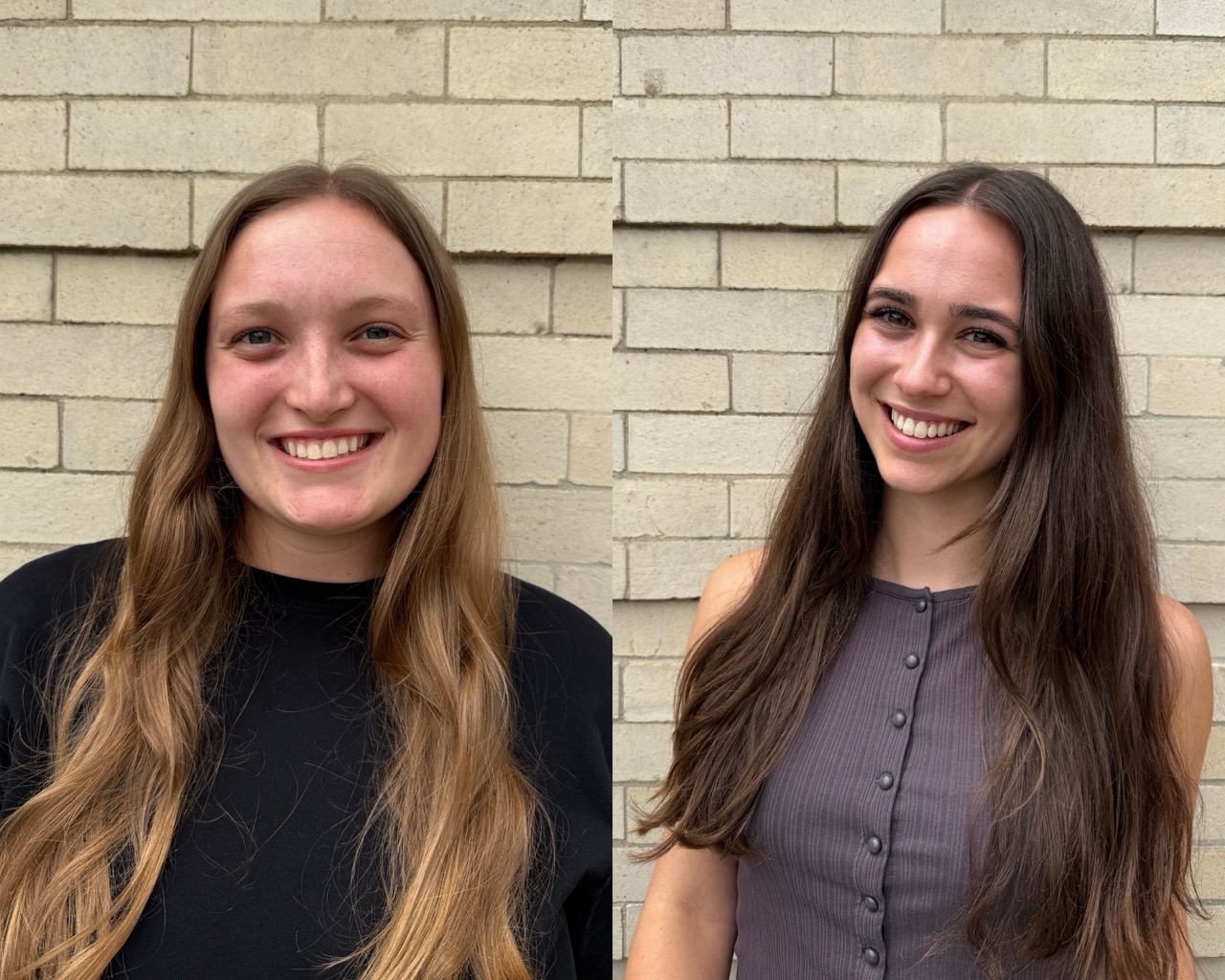
When Mia Maksin decided to pursue a degree in bioengineering at the University of Pittsburgh’s Swanson School of Engineering, she didn’t expect that one day she’d be enclosed inside an exhibit at the Pittsburgh Zoo while on the job. Yet that’s exactly where she was, measuring the noise levels of the enclosure when a penguin waddled over and left an unwelcome surprise.
“I was scientifically documenting what's happening in the enclosure for the job, and there were penguins all around my feet. I felt something, looked down, and unfortunately realized the penguin had pooped directly on my foot.” Maksin (BS BioE ‘24) recalled. “While that was certainly a one-time thing, that scenario just encompasses what I could possibly be doing at my job on any given day."
Maksin is a bioengineer at Biointerphase, a biomaterials startup founded by Noah Snyder (BioE PhD '15) in 2015. Newly housed in a historic Troy Hill firehouse, the company aims to be a long-lasting bioengineering company where science, engineering, art, and passion meet to create impactful products for good.

“Our mission can be summarized very simply: restore and reinforce life.” Snyder said. “For me, that means finding solutions that have a positive impact, not just for humans, but for the broader biological systems that make life possible on this planet. We want our work to matter and leave things better than we found them.”
That philosophy is what landed Maksin inside the penguin exhibit: the team had been hired by the zoo to measure noise levels in and around its enclosures, helping to protect the animals from the stresses of everyday zoo life. It’s also what keeps her colleague, Alyssa Long (BS BioE ‘23), occupied with a myriad of tasks each day.
“We really do anything that fits under our mission statement, especially related to biomaterials and biosignals work,” Long said. “There’s not much that we won’t do.”
Spinning New Solutions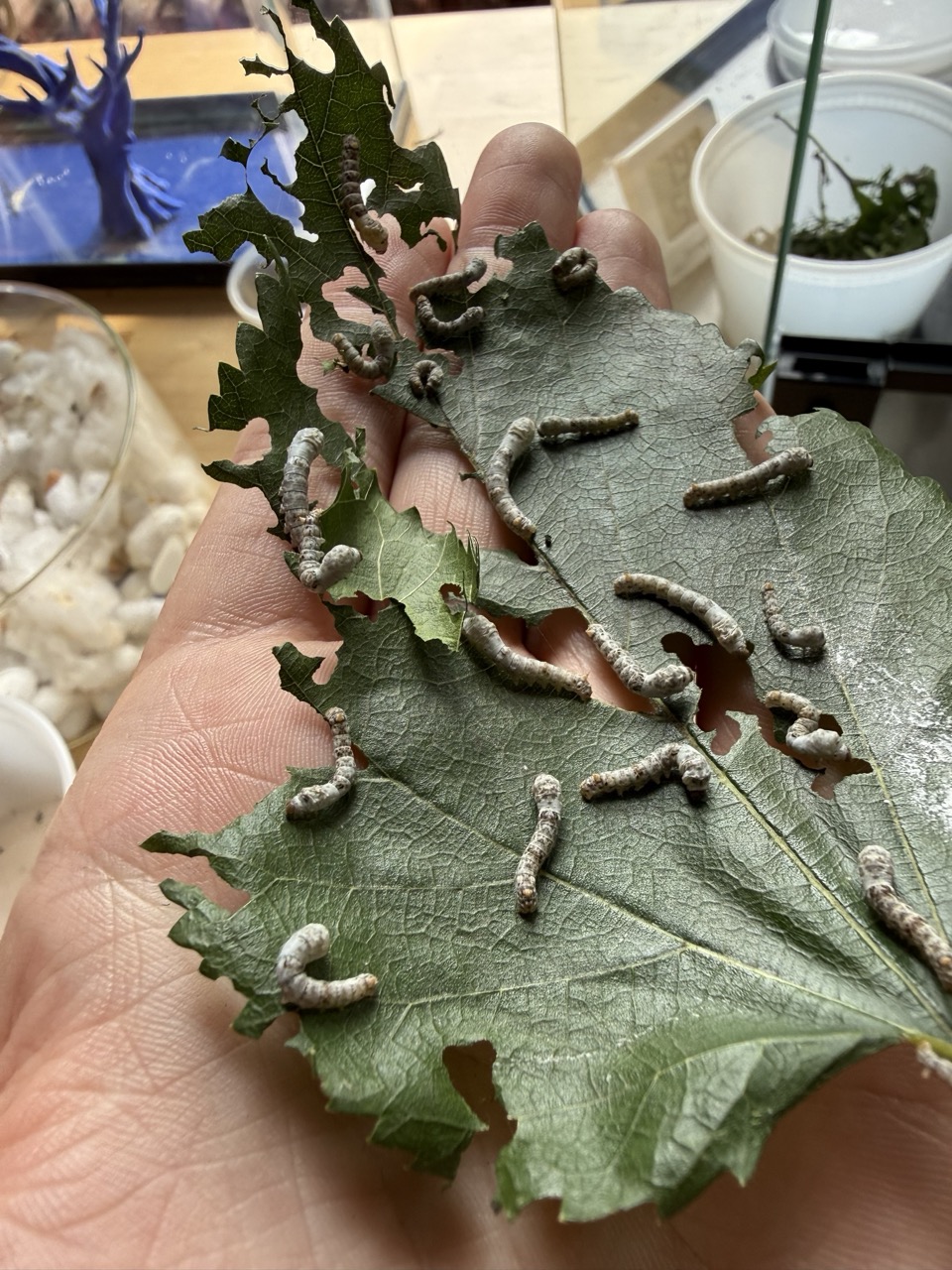
The team returned to the zoo a second time during a holiday concert series to measure what frequencies from orchestras were reaching the polar bears’ underwater environment. They have also developed sensors to detect biocontamination on public buses and textile coatings for the U.S. Army, but one of their most ambitious ongoing projects sits right in their Troy Hill office: a colony of silkworms.
The project grew out of a U.S. Navy solicitation that sought alternatives to white oak, a hard-to-source wood variety used to support submarines in dry dock. "We took kind of a crazy approach and looked at silk thread as a reinforcing fiber to create a composite material that could replace it," Maksin said. "The material showed some promise, and we're looking forward to seeing how we can further develop this as an advanced material solution.”
The silkworms have now been growing for about a year, but the team’s ambition for the insects has since expanded beyond any single contract.
“We're interested in how we can use silk as a biomaterial in different applications, and also in becoming a domestic supplier." Maksin said. “Silk production in the U.S. has largely disappeared, and some of the last known domestic producers were the Harmonists in western Pennsylvania, so we’re looking into potential opportunities there.”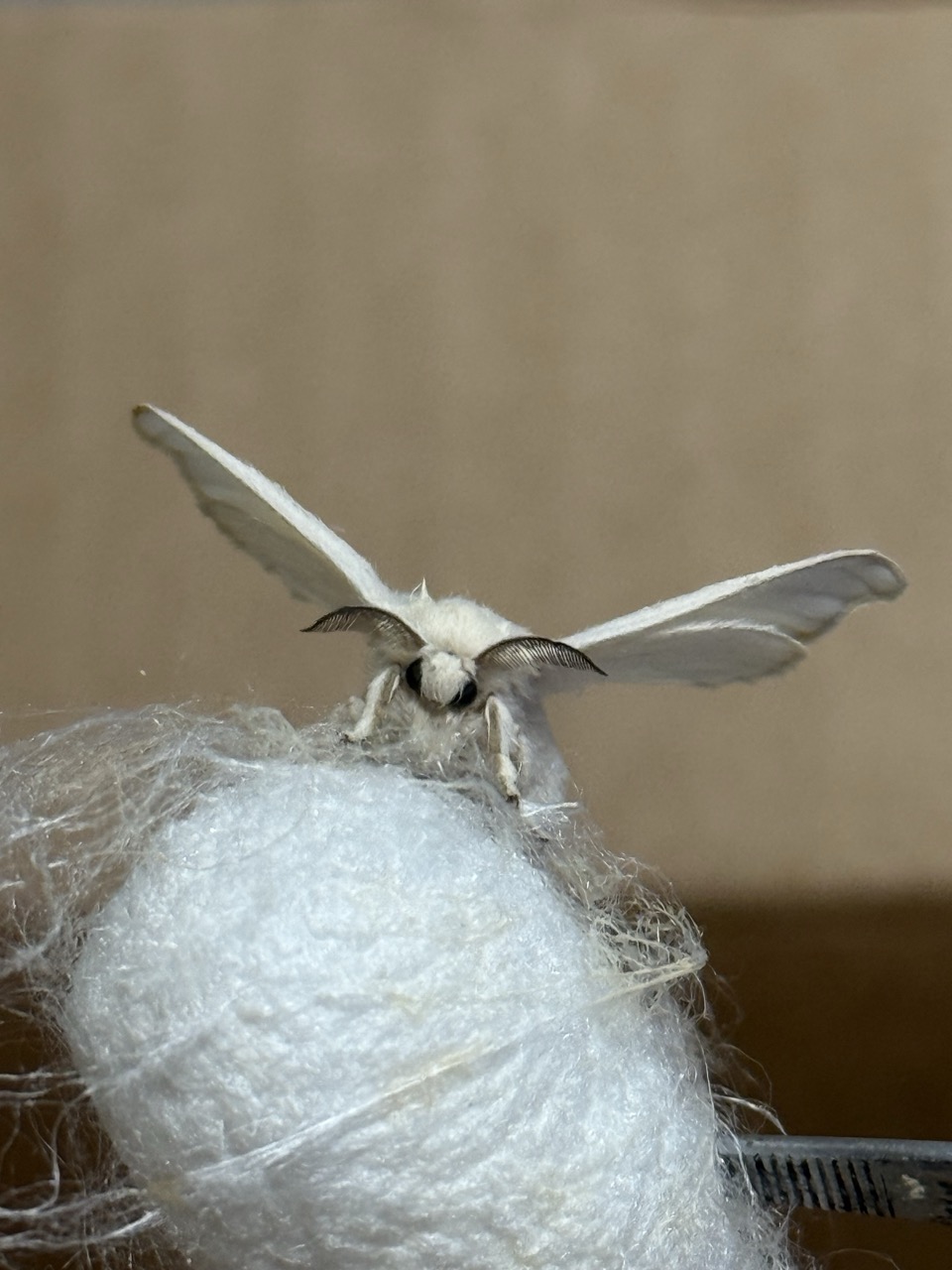
The team is also gearing up for a new phase of their work on Army textiles. A Phase I project tested more than 100 formulations to find a bio-based alternative to PFAS coatings currently used for water and oil resistance. Now, with a Phase II project just beginning, they'll focus on refining the most promising formulation and eventually finding manufacturing partners who can bring it into real-world use.
"There's so much trial and error in every project.” Maksin said. “For our Phase I, I had tried more than 100 material formulations that weren't showing promise, and then number 105 finally worked.”
From the Classroom to the Capital
Both Maksin and Long credit their undergraduate education for helping overcome the obstacles and multifaceted nature of working at a small startup — even when the applications are unexpected.
“We learned so many foundational bioengineering concepts in the classroom, but the way we use them looks very different here since we're not necessarily engineering a medical device product like in our senior design classes.” Long said. “Instead, we’re using those same processes with a little different thinking to create something novel, or answer a solicitation with a biomaterials approach.”
That novelty extends beyond the lab bench, since neither of the two expected how much responsibility would come so quickly in their careers. Maksin and Long write grant proposals, execute technical work, report results directly to government contacts, pitch follow-on funding, and travel to Washington, D.C. to present findings from their own experiments.
"I don't know a lot of other 24 or 25-year-olds who have just graduated and are the ones talking to the government as the expert.” Maksin said. "It's really crazy, and it's just so cool to have that experience right up front and to know that we are doing meaningful work right away."
Whether they’re in D.C, at the lab bench, or inside an exhibit at the Pittsburgh Zoo, Long credits Snyder's philosophy for making that possible.
"Noah doesn’t want people to be pigeonholed into one specific thing, so you get the proposal writing experience, the project management, the technical work, and a lot of times you have to innovate, since there's only three of us and only so much equipment.” Long said. “Working here has really pushed my thinking on what I thought the possibilities were, and what the possibilities actually can be.”