
Scaling a Brain-Inspired Approach to Computing
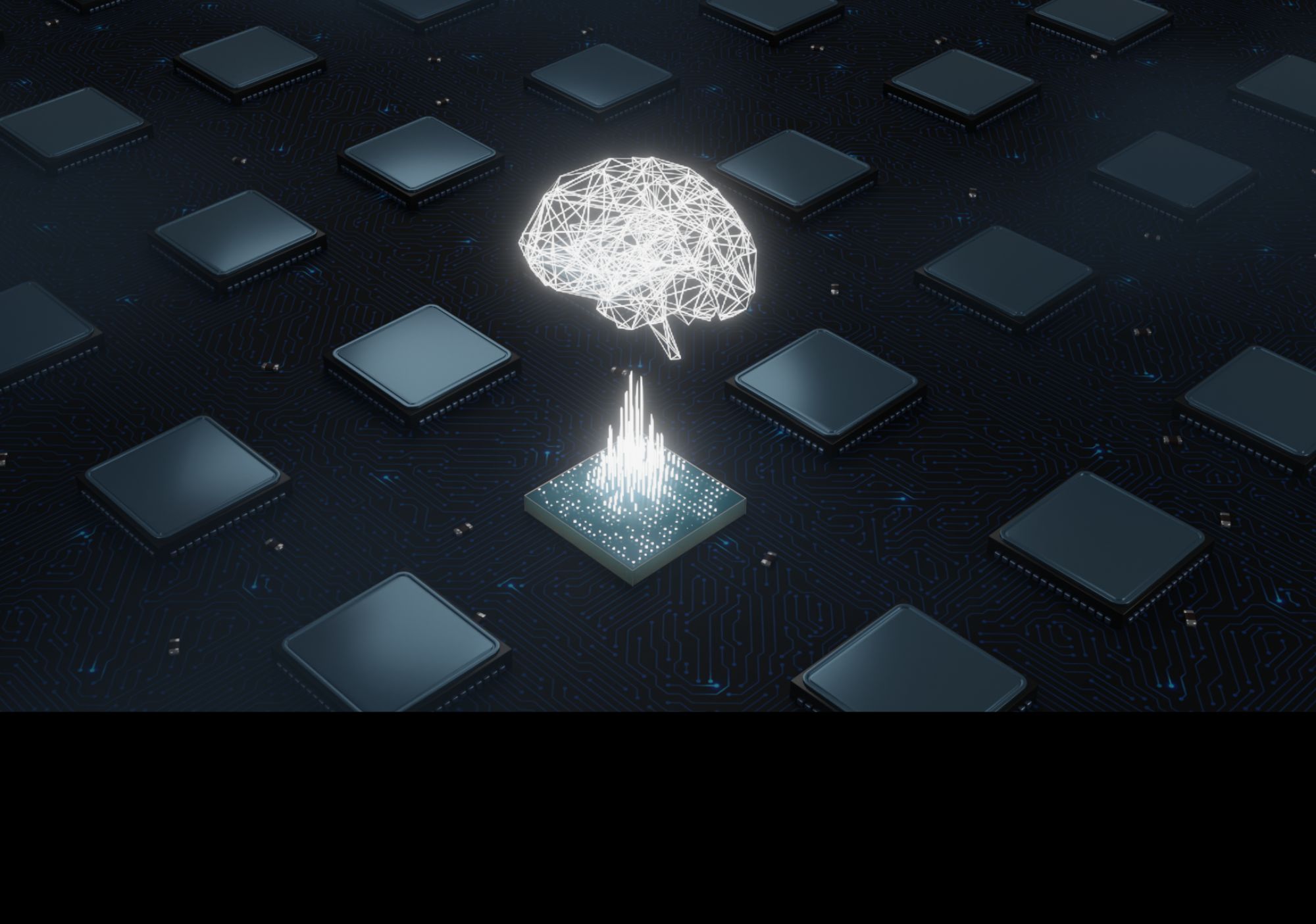
Image above: Tej Pandit and NuAI Lab at University of Texas at San Antonio. Large Scale Neuromorphic Computing.
As neuroscience continues to illuminate the power and efficiency of the human brain, neuromorphic computing researchers are mimicking its biological processes in electronic hardware and software. Novel artificial neural networks now mirror the way biological neurons communicate through synaptic connections.
In the journal Nature article “Neuromorphic computing at scale,” published on January 22, 2025, 23 experts from around the world highlight the promise of this brain-inspired approach and explore challenges and questions that must be considered to successfully develop large-scale neuromorphic systems. (doi: 10.1038/s41586-024-08253-8)
The idea for such a collaborative article originated at a 2022 National Science Foundation (NSF) workshop on large scale neuromorphic computing. Rajkumar Kubendran, associate professor in electrical and computer engineering at the University of Pittsburgh Swanson School of Engineering, was a panelist at the workshop and contributed to the paper. For Kubendran, the collaboration has been hugely rewarding. “The neuromorphic community for the first time ever has come together in such a unified, focused fashion to address the problems that our community is facing and to share its work and plot a path forward.”
Today, tech companies are building massive data centers that require more power to meet the growing demands of mainstream AI systems. Unlike traditional von Neumann and AI models, which have separate memory and processing units, the memory and processing functions in neuromorphic systems are closely connected and use event-driven communication like what happens in the brain.
Through its efficiency and ability to more closely mimic the working of the brain, neuromorphic computing at scale, the authors assert, has the potential to dramatically transform machine learning and advance neuroscience research.
Dhireesha Kudithipudi, Robert F. McDermott Chair in Engineering and Professor in Electrical and Computer Engineering at the University of Texas at San Antonio, who led in the formation of the workshop and in authoring the paper, said, “When I first proposed the idea of publishing an article… it was clear that there was a shared, deep interest in the future of the field and a collective desire to articulate a unified vision.
“As the perspective was on building a sustainable ecosystem, it became essential to capture ideas from a wide range of expertise… to ask the right questions—and, more importantly, avoid missing key insights that might have slipped through if we had worked in a more siloed or fragmented way.”
Pitt’s Kubendran sees neuromorphic computing as a bridge between biological and computer sciences. “Just as the NSF panel connected neuromorphic computing leaders across many time zones to produce this paper, I hope that ongoing advances and collaboration across fields will fuel new discoveries and help realize the full potential of a brain-inspired approach to computing.”
Acknowledgement
We thank A. Kanaev of the National Science Foundation, who has supported the large-scale neuromorphic computing workshop under NSF project #2231027. Other grants supporting the effort are NSF grant #2317706, #2332744 and DOE ASCR.