
After the Storm

Photo above: NTT's Central Office building in Onagawa, Japan, after the 2011 tsunami. The building was structurally okay because of its construction designed to withstand earthquakes as strong as the 1923 Great Kanto earthquake. The nuclear power plant in Onagawa (the other nuclear plant declaring an emergency) is located a few miles away. Fortunately, the outcome of the Onagawa plant was the opposite to Fukushima.

On April 29, watching the classic bow shape of bright red and orange blobs on the weather map move closer to Pittsburgh, Alexis Kwasinski knew the storm would be bad. For more than 20 years, Kwasinski, associate professor of electrical engineering at the University of Pittsburgh Swanson School of Engineering, has studied and documented infrastructure resilience in the face of natural disasters, and he understood what the vivid colors and ominous formation could mean.
“Technically the storm wasn’t a derecho [a violent system that can produce hurricane-force winds], but it was close,” Kwasinski noted. “I knew that Pittsburgh, with all its trees and hills, and its aged power grid, would be affected.”
The unprecedented damage left about 325,000 Duquesne Light customers without power, including 140,000 in Pittsburgh alone. The massive toll—caused by high winds, downed trees, and damaged infrastructure—left thousands without power for several days although many also had neighbors just across the street with their lights still on.
Indeed, as weather around the world grows increasingly unpredictable, so does the need for more resilient grid infrastructure. While solutions are as varied and complex as the places most affected by disasters, Kwasinski has found one consistent way to promote resilience—by building community and helping the public better understand the grid and how to assist each other after disaster strikes.
Restoring connections

Kwasinski’s interest in resilience stems in large part from his early career working in telecommunications, specifically technical support. In Buenos Aires, Argentina, where he earned his BS in Electrical Engineering and a Graduate in Engineering Specialist Telecommunications degree, Kwasinski and his team fielded calls from across Latin America and had to figure out how to restore systems, sometimes as far away as the Rio Grande, so that people could communicate.
“This was in the late 1990s, during the dot.com boom and the growth of data centers and cell towers,” said Kwasinski. “I learned so much about infrastructure and recovery work and what to do when equipment fails. I started to think about resilience and its importance in people’s lives.”
Then came Katrina
In 2003, after ten years working in the field, he enrolled at the University of Illinois at Urbana-Champaign, to pursue a PhD in electrical engineering. In August 2005, as he began his dissertation work on resilience and dependencies (how systems rely on other systems), Hurricane Katrina blew ashore.
“I went to New Orleans and the Gulf Coast for a week to look into the damage,” said Kwasinski. “I wanted to see what grid infrastructure was damaged and how, and what held up. I wanted to see how power was being restored.”
Witnessing the aftermath of Katrina affirmed what his time in the telecom industry had set in motion: he would devote himself to advancing more resilient power infrastructure.
Since Katrina, he has visited and documented numerous disaster sites soon after impact, from Fukushima, Japan, after the 2011 earthquake and tsunami to Puerto Rico after Hurricane Maria. He’s traveled to New York and New Jersey after Superstorm Sandy and to Florida after Irma, Ian, and many other hurricanes have slammed ashore. He’s been to towns across Texas devastated by tornadoes.
Documenting resilience

After a disaster, the media focus most on the devastation—the destroyed houses, buckled roads, flooded neighborhoods. For Kwasinski, he spends as much time documenting the structures that withstand the immense forces of nature as he does those that don’t.
In 2010, two catastrophic earthquakes hit within a month and a half of each other—one in Haiti, the other, which produced a tsunami, in Chile.
“I couldn’t visit both places and ended up going to Chile. They have a much stronger electrical infrastructure, and to see how that fared provides more insight than an already strained infrastructure that fails in a disaster. We gain important clues into developing more resilient grids.”
His own backyard
On April 30, the morning after the storm blew through Pittsburgh, Kwasinski didn’t have to board a plane or drive far to document the aftermath. His own roof and chimney were damaged, though he still had power.
“I knew a few spots where I would encounter problems,” he said. His first stop was a nearby west-facing hill. “Just about where I expected it, a tree had fallen on a house. I was off by about 50 yards.”
While the number of impassable roads surprised Kwasinski, the power outages didn’t. “Like so many places across the country, the main problem with the power grid in Pittsburgh is that it was originally designed to provide the most energy to the most people at the lowest cost,” he said. “It’s not designed to withstand storms like this one. The grid shows its limitations.”
Building a more resilient grid won’t be easy. As Kwasinski says, “Beyond the considerable expense, there’s no one-size-fits-all approach, and there are many trade-offs.”
For example, moving power lines underground could improve resilience. However, as Kwasinski noted, “Even underground, we know for sure the lines will fail—it’s a question of how long before they do.” The expense and time of moving lines underground and then digging them up for repair might outweigh the uncertainty of a storm knocking out power to above-ground lines.

At the University of Texas at Austin, where he taught before coming to Pitt in 2014, Kwasinski received a National Science Foundation CAREER Award to research microgrids. These smaller, localized sources of energy are another option for building resilient infrastructure. Yet, as Kwasinski said, “You must weigh where microgrids receive their energy and what would happen, for instance, if an earthquake damaged a gas line.”
In his recent visits to Florida, Kwasinski has noticed more concrete utility poles, and data from recent storms show they perform better. But as he notes, “Not even concrete is a magic solution. With a hurricane—or any natural disaster—you can’t be 100 percent resilient. There are intrinsic characteristics of a grid that limit what planners can do.”
A key to resilience: community
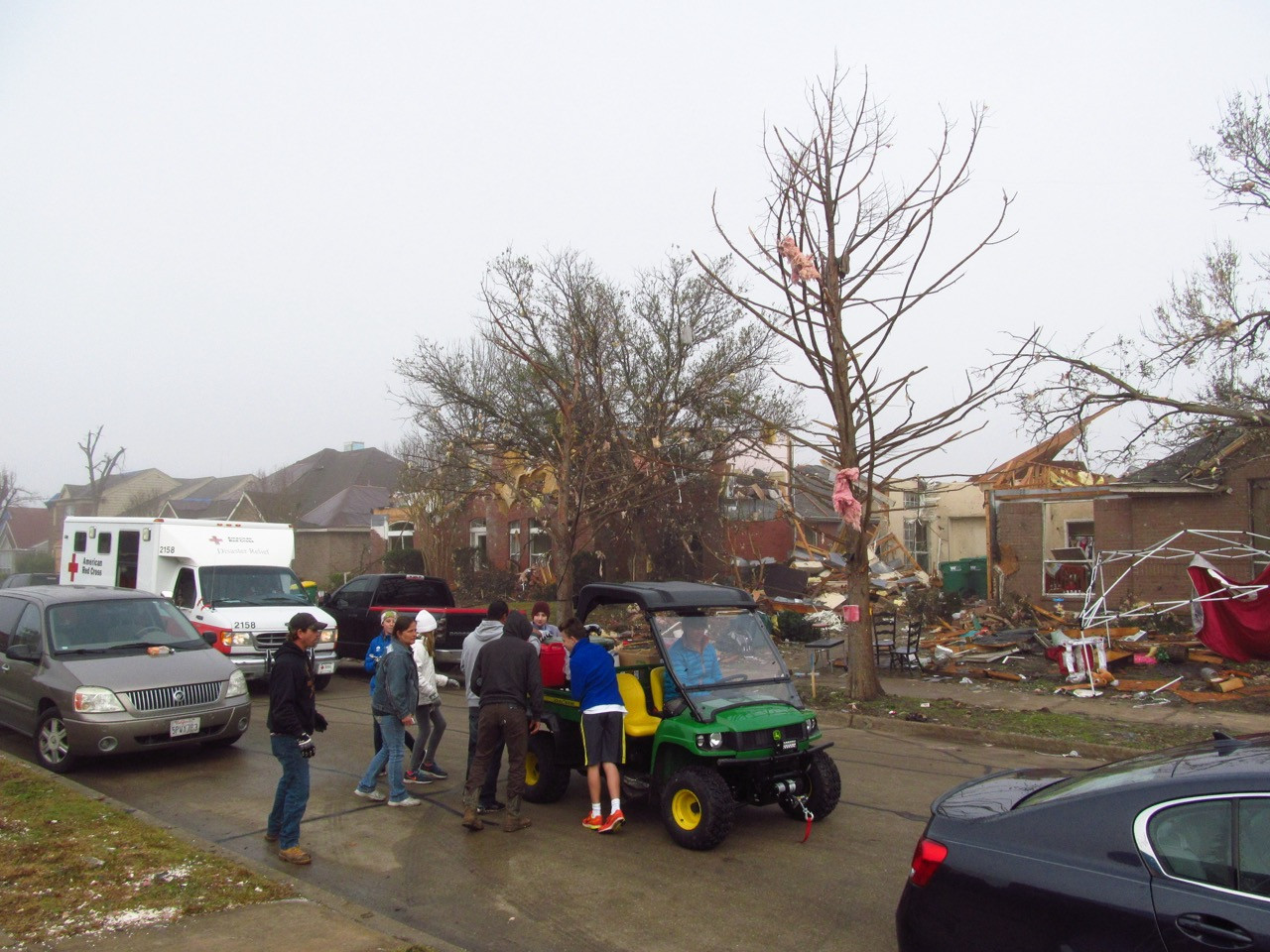
While designing and developing more resilient infrastructure is complex, costly, and can feel out of most people’s control, Kwasinski has found, through his many years of research, something everyone can do. It’s the very thing that first inspired his research: restoring connections.
Kwasinski sees promise in people learning more about their environment and communities and about the infrastructure and systems they rely on. For him, that starts with getting to know people in one’s own neighborhood.
“The negative effects of a natural disaster are mitigated by forming stronger connections, by knowing your neighbors and by reaching out—before and after a storm,” said Kwasinski. “The places that recover more quickly, that are more resilient, tend to be those with a stronger sense of community.”