
Two Heads in the Cloud
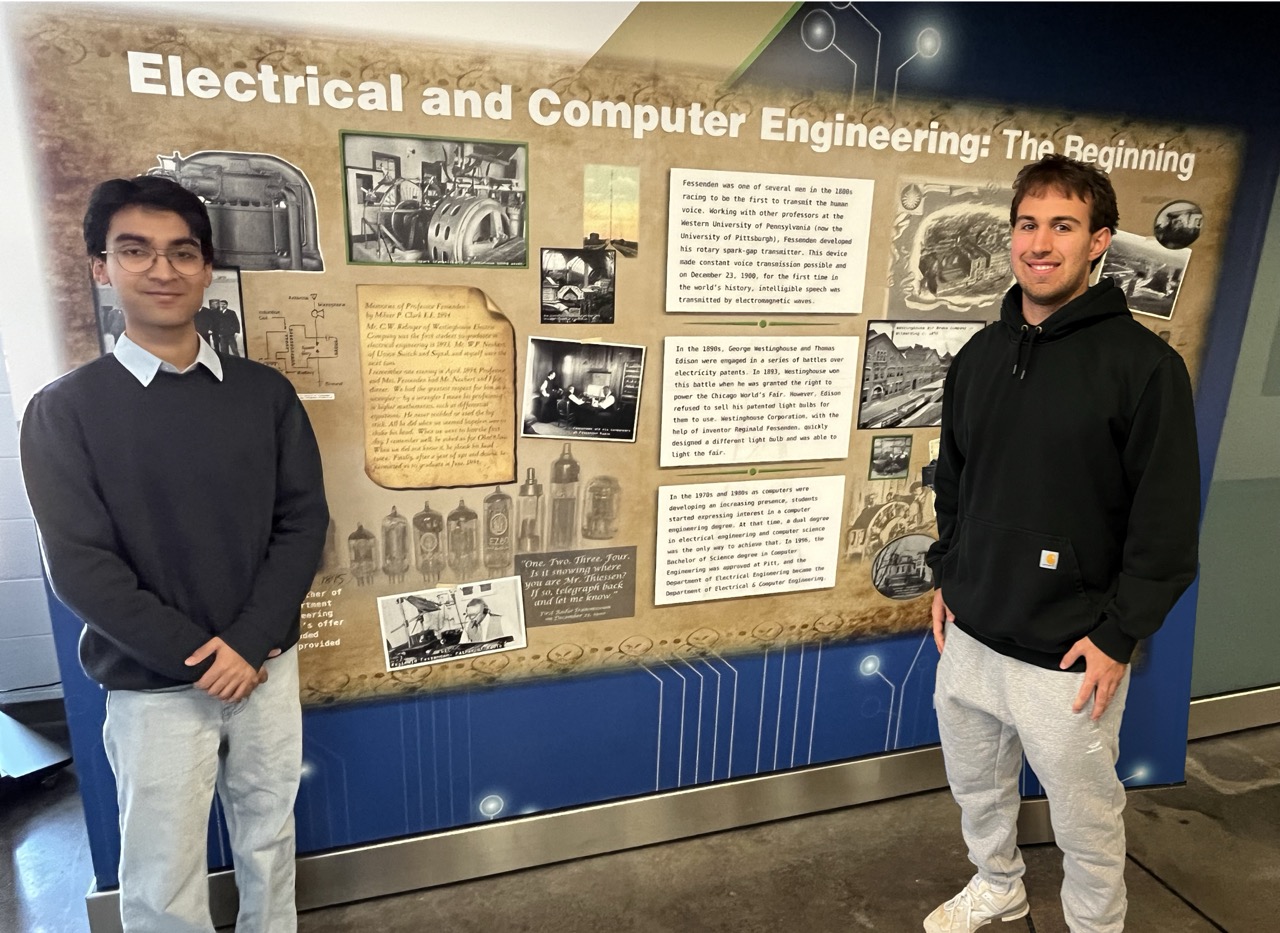
Iyan Nekib (BS ECE ’25) and PJ Granieri regularly use applications like Spotify and Adobe that run on the cloud-native computing platform Kubernetes. But the two University of Pittsburgh Swanson School of Engineering students never considered contributing to the open-source community that would help improve it.
“We didn’t have any hands-on experience working with cloud-native computing or developing actual solutions to issues,” said Granieri.
That changed in the fall of 2025, after the two enrolled in ECE 1894: Industry Projects, a course that provides undergraduate electrical and computer engineering (ECE) students with opportunities to work with industry partners to solve real-world problems.
Nekib and Granieri were soon collaborating with a lead software engineer from Microsoft, diving into a new platform, learning new coding languages, and becoming part of a community of computer engineers dedicated to improving the technology.
Issue #1698
Kubernetes allows companies to store, manage, and run applications across multiple platforms. The system ensures that different parts of an application, each in their own containers, communicate and function correctly.
Open Elastic Block Store (OpenEBS) is an open-source storage system that runs on Kubernetes. Within OpenEBS, developers can use the Mayastor storage engine to create, test, and debug software in a controlled environment.
All this was foreign to Nekib and Granieri, but it wouldn’t be for long. Their professor, Minhee Yun, in the Department of Electrical and Computer Engineering, connected the two with Brian Smyth, Principal Software Engineer Manager at Microsoft’s Pittsburgh office.
Smyth guided the pair to GitHub, where the OpenEBS community manages and shares code and tracks and solves issues.
“We had to find a problem that we could solve over the course of the semester,” said Nekib. “We chose #1698.”
The issue, ”Prometheus Exporter: Provide metrics for Mayastor node status (online, cordoned, etc) #1698,” focused on identifying the status of nodes, the individual units that provide the central processing, memory, and storage to run an application.
“It was difficult to know if the nodes were on or offline, if they were cordoned off, and if they were close to failing,” said Granieri. “As a result, developers could overwrite code and lose important work.”
Joining the open-source community
After conferring with Smyth, the Pitt students reached out to the OpenEBS community, who welcomed their efforts to improve Mayastor.
“It was nerve-racking at first because we were partnering with someone from Microsoft, and we wanted to make a good impression,” Granieri said. “And it was like, ‘here’s a new technology stack, now get to work.’ It was fascinating to explore cloud computing. We used Rust and Go, which were new programming languages for me.”
“We would meet with Brian and exchange design reviews and discuss architectural problems,” said Nekib.
The team developed metrics that allowed users to understand how each node was functioning and take appropriate action as needed.
“Brian was such a great mentor,” said Granieri. “He provided us enough support so that we knew what we were doing, but he gave us freedom throughout the process.”
They also engaged with members of the OpenEBS community, who shared ideas and asked the two students for their input.
If Nekib and Granieri were nervous about making a good impression, their concern proved unnecessary. On December 2, 2025, they presented their solution at the Microsoft office.
“PJ and Iyan did tremendous work,” said Yun, who advised the project. “Their final presentation demonstrated exceptional clarity, technical competency, and industry-level communication skills. The feedback from their mentors reflected appreciation for their professionalism, depth of understanding, and real-world impact of their work.”
“It was like a whole new field,” said Nekib. “We were doing development operations, which I’d always wanted to do.”
“It was cool to be an active member of the OpenEBS community, not just a passive user,” said Granieri. “It was a great experience to solve a problem that will make the technology work better.”