
The Robot Sets Sail
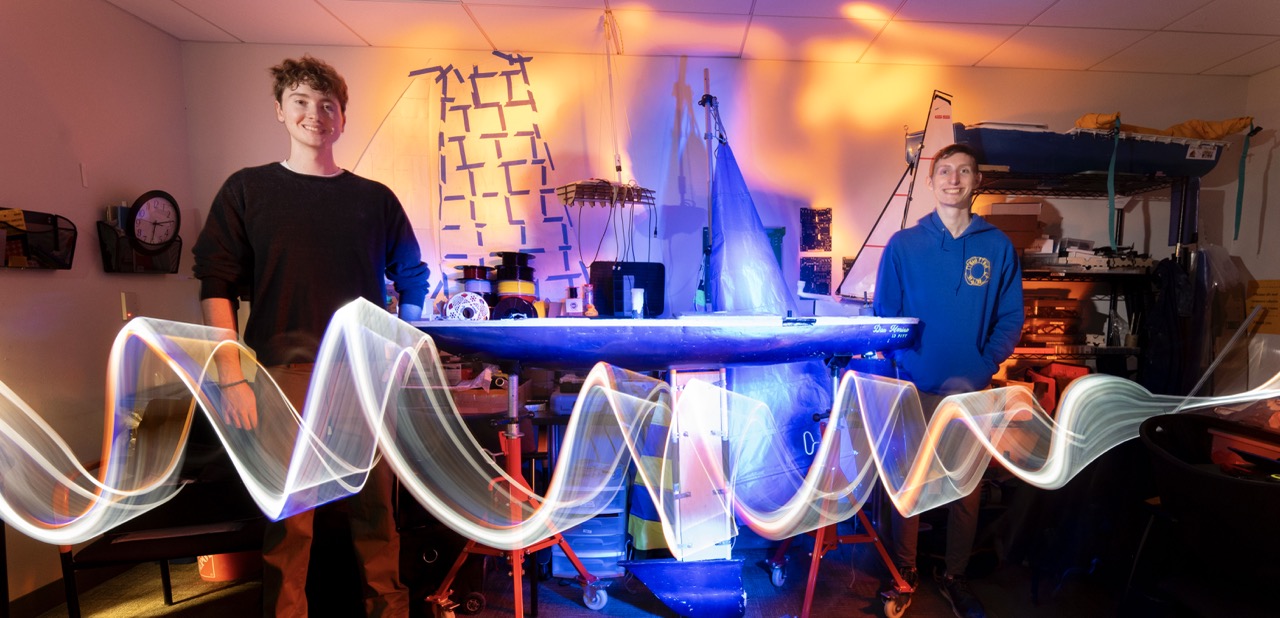
Autonomous robots on solid ground can have trouble enough. Now try putting one in a lake, with a mast and a sail, facing the whims of wind and current.
This challenge of building and racing an autonomous robotic sailboat has intrigued college and high school students for years and led, in 2006, to the creation of the International Robotic Sailing Regatta (SailBot).
In 2019, two University of Pittsburgh Swanson School of Engineering students who’d grown up sailing on the Chesapeake Bay also felt the allure of this challenge and launched Pitt SailBot. Since then, the club has attracted Pitt students of varying majors, backgrounds, and experience with sailing and robotics. What unifies these members is the chance to collaborate, think creatively, use their hands, and build a winning sailbot from scratch.
From nothing to Dan Marina
Although he had little experience with sailboats, Leo Goldberg, president of Pitt SailBot who recently graduated with a degree in computer engineering, joined the club in his first year at Pitt. In high school, he had built a computer and was on a robotics team. “I was intrigued by the challenge of building a robotic sailboat, with all its moving parts and complex problems to solve,” said Goldberg, who grew up in Pittsburgh’s Squirrel Hill neighborhood.
Every two years, Pitt’s SailBot builds a new boat from scratch. As Goldberg said, “This past year, from nothing, we just started with the design process. Everything mechanically is done in house. We don't outsource any manufacturing. Anyone, any year, any level, can come in and help build the boat.”
To build a boat, SailBot relies on two teams, the mechanical and the controls. Using 3D modeling software, the mechanical team designs the boat and runs simulations. They pick out all the materials, and they fiberglass, paint, seal, and sand it.
Throughout the process, the team collaborates with Pitt Makerspace in the Benedum Hall basement. For their new boat, the team used a 3D printer to create the shell for the hull.
The controls team, meanwhile, develops the electrical components and code required to program the boat. They design and test circuits, solder components into place, wire the boat, and integrate sensors and microcontrollers.
The club draws students with little robotics experience to those who have worked on many teams. As Goldberg said, “Whatever their experience, we have space for them.”
He added, “It's a breadth of engineers who make a new boat. You’d expect it to be mechanical and electrical and computer, but our president and our mechanical design lead last year were both bioengineers.”
It’s not all engineers either. The club has had computer science, English, and anthropology majors. Some students have sailed but many haven’t. As Goldberg said, “It gives us a more well-rounded approach.”
Throughout the process, upper-level students provide valuable guidance to newer members of Sailbot. In addition to providing tutorials on everything from soldering to SolidWorks software, the students share insight into classes, internships, and co-ops.
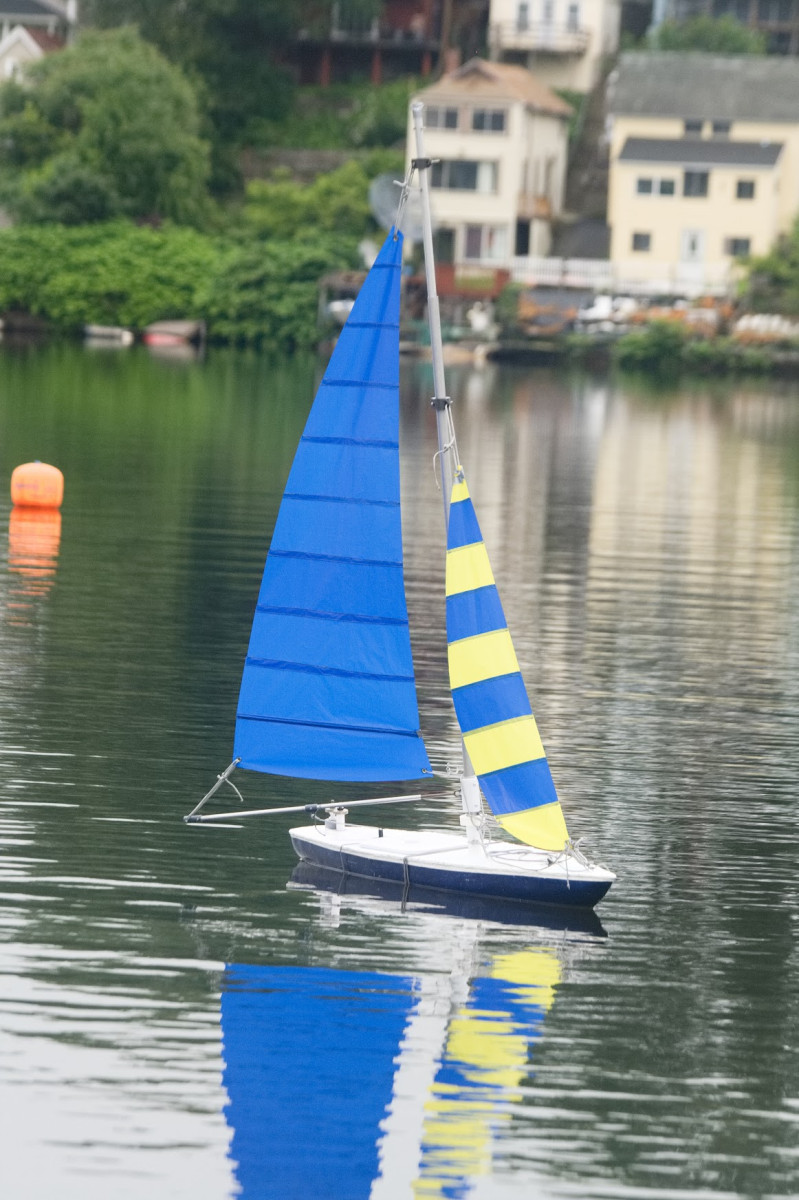
The result of the collaborative, creative, and collective effort of around 25 members is an autonomous sailboat with sensors atop the mast and an ability to adjust its sail and rudder. Last year, the team christened its newest boat. In a nod to Pitt alumnus and legendary Miami Dolphins quarterback, they named it Dan Marina.
Regattas
Once a year, teams from universities and high schools from across the U.S. and Canada, and from as far away as Brazil and Germany, meet to test their sailbots. The regatta is held at the previous winning team’s institution. This June, Cornell University will host the regatta on Cayuga Lake, in Ithaca, New York.
Pitt’s team rents an Airbnb and carpools. When they arrive, the mechanical and controls teams set to work putting their boat back together, testing their systems, and preparing for each event.
Regattas involve four required and three optional challenges. In addition to a fleet race, the boats must navigate buoys, they must enter a 40-meter by 40-meter square and stay in the box for five minutes before exiting, and they must race one nautical mile in a test of endurance. Optional events include taking on a payload and avoiding a collision with an unexpected boat.
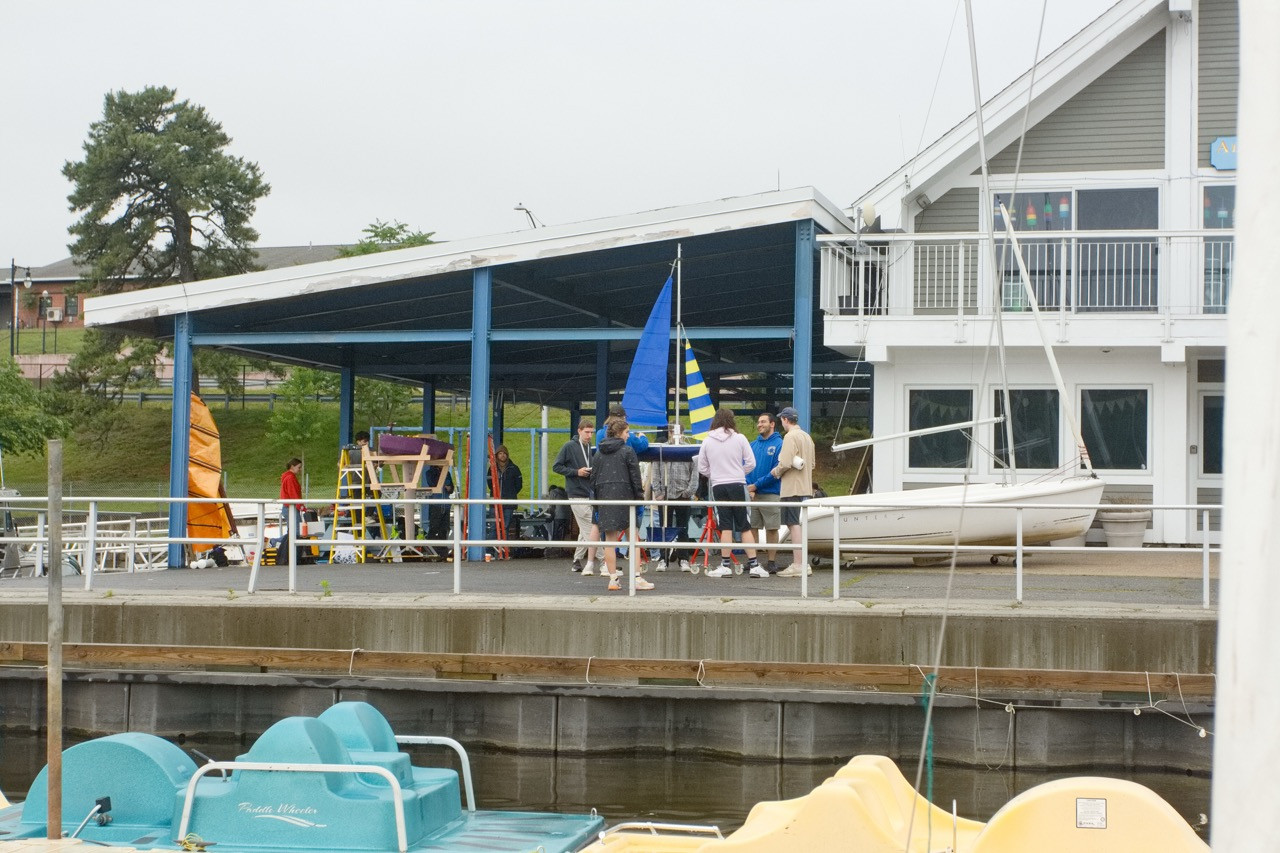
“Even though it’s a competition, it’s a special, friendly environment,” Goldberg said. “You’re putting electronics in the water, so inherently there’s going to be a struggle. Nobody's afraid to say, ‘Hey, I just fried my Raspberry Pi. Can I borrow one of yours?’ It's cool to see how people are willing to work together. There’s a lot of quick thinking involved.”
Last year, when the Dan Marina’s keel didn’t function properly, the team had to race to a nearby hardware store and improvise. In the end, they placed third.
“There are so many factors that can get in your way when designing the boat,” Goldberg said. “Our number one issue is that we’re in Pittsburgh, so it's not as easy to test the boat.” Rivers aren’t ideal.
The challenge of building and troubleshooting a complex system, though, has rippled far beyond Pitt SailBot’s office. As Goldberg said, “It helped me on my co-op rotation. I could take on a long-form project, comfortable that I would be working on it for a while. It also helped me land a full-time job.” In July, Goldberg will begin working at Near Earth Autonomy, a Pittsburgh-based company advancing autonomous flight.
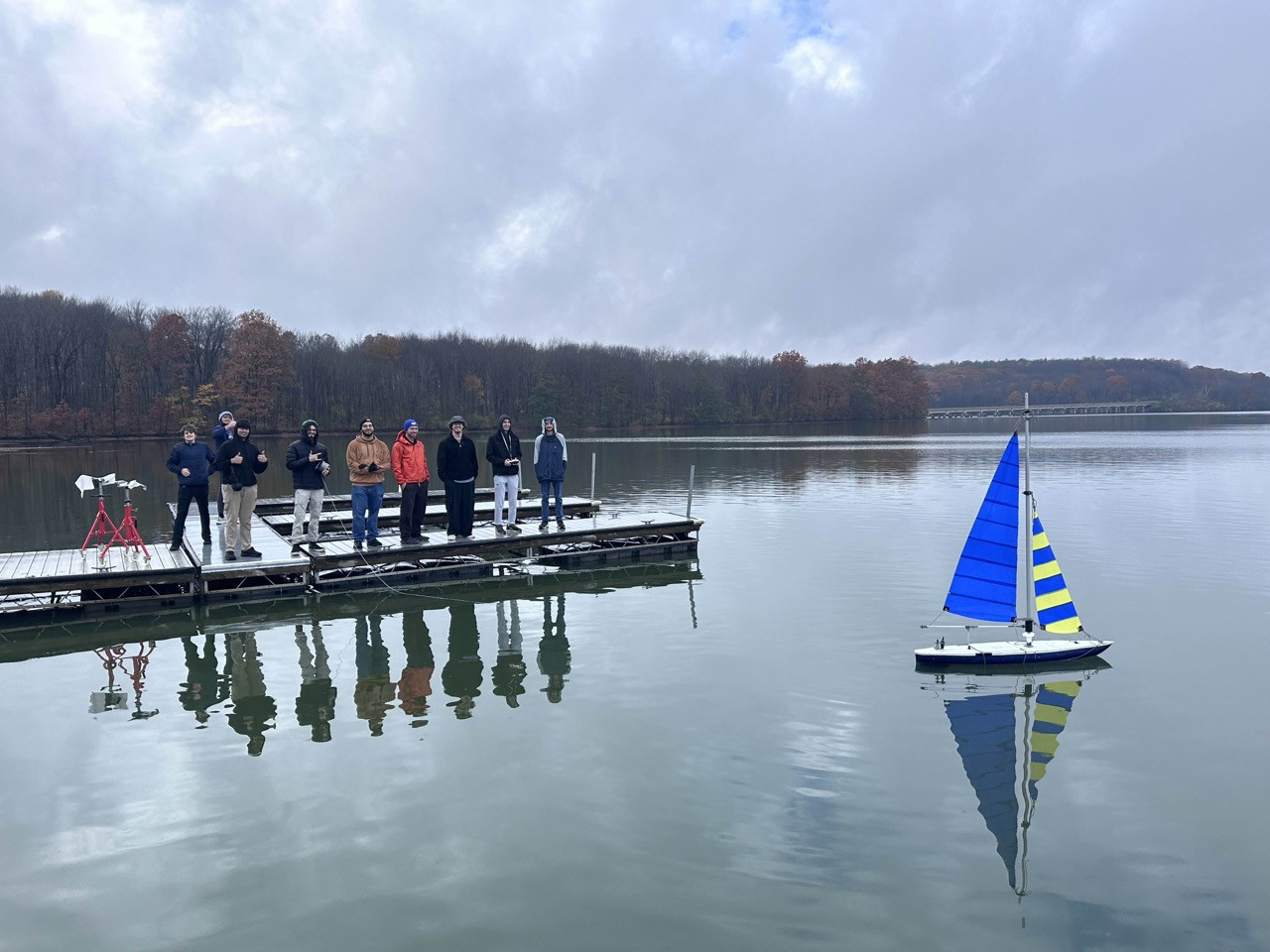
Pitt Sailbot, which started racing in 2022, has placed third in its first four regattas. This year, the team has taken what it has learned from the previous races to fine tune their boat. They’ve driven north, to Lake Arthur, and endured cold and rain to test the Dan Marina. They hope that the spirit of collaborative, creative, and hands-on problem solving that defines their club can propel them to victory.
“If we can win and bring the regatta to Pittsburgh, I’m not sure where we’d race,” Goldberg said. “But that would be another good problem to solve.”