
10 Year Anniversary of Hammond Scholarship—Graduate Students Still Meeting Industry Expectations
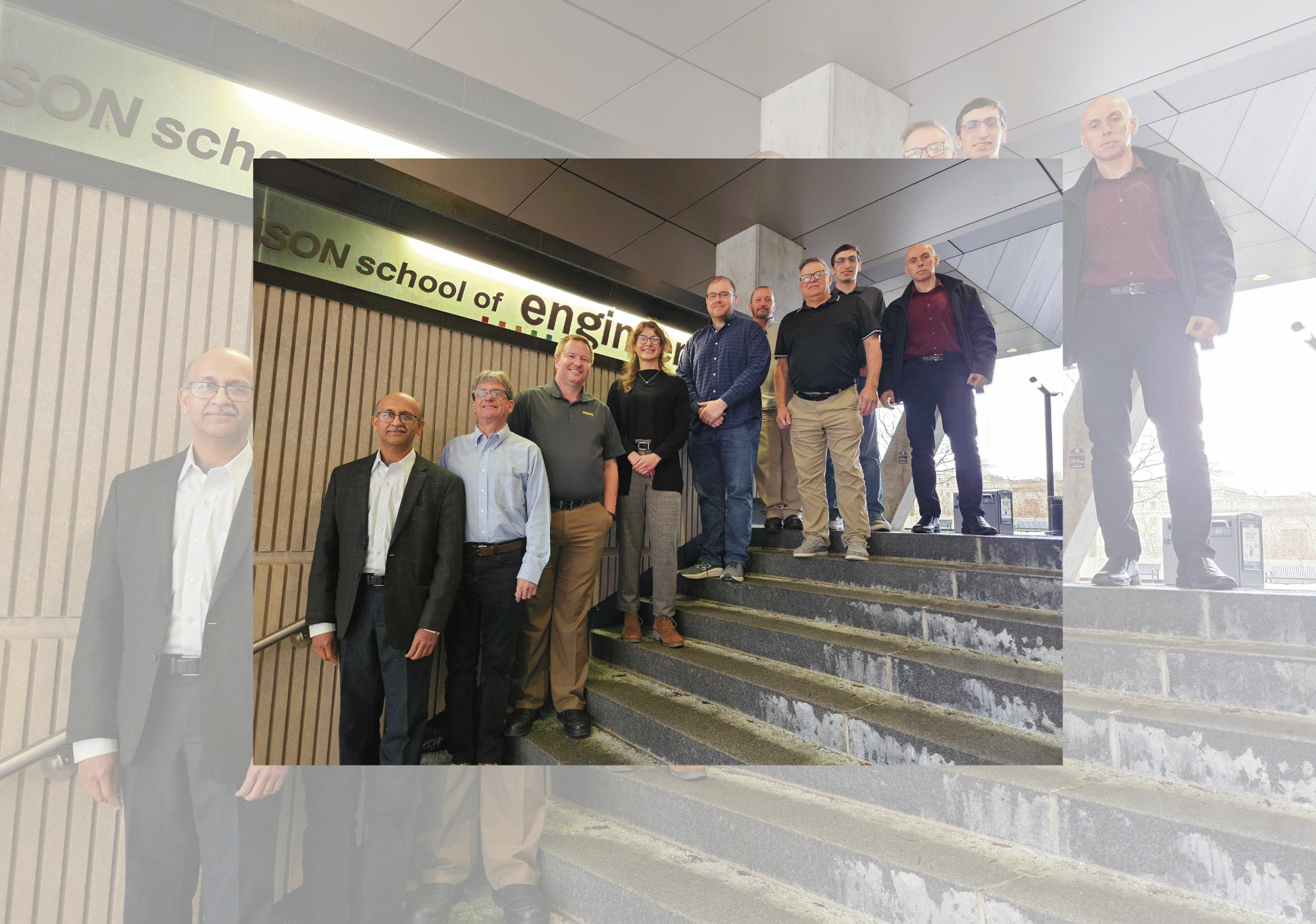
Photo above (L - R): Mukul Rastogi, Frank Santucci (alumnus), Kevin Wissner, Sabrina Helbig, Brandon Grainger, Michael Sullivan (alumnus), Tony Pollice (alumnus), Joshua Lubin (alumnus), and Liviu Mihalache
Innomotics, a leading global company that provides motors and drive systems, has awarded the University of Pittsburgh’s Sabrina Helbig with the 2026 Peter Hammond Scholarship. The $10,000 scholarship annually recognizes a remarkable Pitt graduate student working to advance the field of electric power conversion.
Helbig, a third-year PhD student in the Department of Electrical and Computer Engineering at the Swanson School of Engineering, is researching ways to replace distribution transformers with power electronics to develop more energy efficient, agile, and resilient systems. As one thrust of her research, she is developing a DC-to-DC converter that can boost DC voltage to higher levels for grid applications, which could improve how energy stored in batteries integrates into the grid. Another project, in collaboration with Sandia National Laboratories, aims to advance AC-to-AC solid-state transformers by using new types of transistors as switches in different circuit topologies and incorporating multiple ports to better manage power flows.
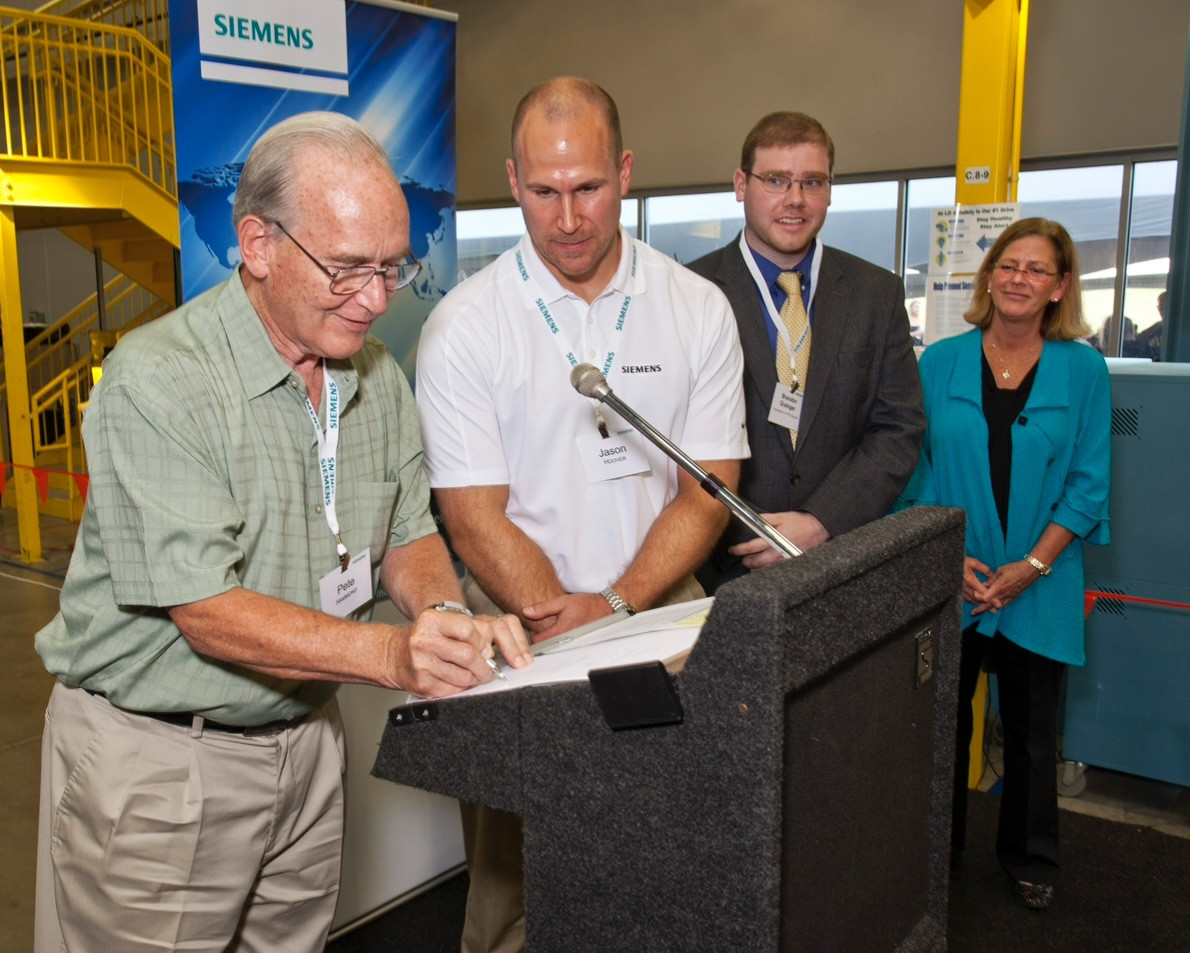
Innomotics launched this scholarship ten years ago to provide valuable financial support to promising electrical engineers and to celebrate inventor Peter Hammond. In 1993, Hammond developed revolutionary motor speed control technology in nearby New Kensington, Pennsylvania, where it is still produced today. The technology helps industrial equipment like large pumps and compressors operate more efficiently.
“As a PhD student working to develop independence, it can be hard to step back and observe research impacts on the future with what we are working on now,” said Helbig. “It’s such an honor to receive this recognition and have Innomotics see my work and how it aligns with their values, which Peter Hammond embodied.”
The Peter Hammond Award is one of many honors Helbig has received since starting at Pitt. While Helbig was an undergraduate, the Institute of Electrical and Electronics Engineers (IEEE) awarded her a Power & Energy Society (PES) scholarship, and later recognized her with a Charles LeGeyt Fortescue Graduate Scholarship while she earned her master’s degree. She was one of 25 female graduate and postdoctoral students invited to participate in the Epistimi-ACG-LUCE Summer Leadership Workshop for Women in Energy in Greece.
Helbig has also held many leadership roles, including serving as president, in Pitt’s IEEE Beta Delta student chapter, helping the organization earn multiple Outstanding Chapter Awards. She was featured on the cover of the Swanson School’s 2025 annual report as part of an article on the School’s interdisciplinary research in energy.
“From the moment Sabrina first stepped foot in Benedum Hall, she has been a tremendous addition to the Swanson School,” said Brandon Grainger, associate professor of electrical and computer engineering and Eaton Faculty Fellow. “She is an exceptional scholar and innovator who is always building community in our program and across the school. She is an ideal recipient of this honor.”
Past awardees of this scholarship have included Jacob Friedrich, Thomas Cook, Ryan Brody, Michael Sullivan, Josh Lubin, and Todd Marzec, all of whom are still active in the electric power conversion business, with two working for Innomotics in their R&D department.
“When manufacturers truly get integrated with university faculty, not only can they impact the lives of younger engineers, but they can easily see the exceptional talent who can be hired to impact their business units,” said Grainger. “This helps ensure the electric power field continues to thrive with the number of electrical engineers needed to solve current and future problems.”