
Translating Research into Life-Saving Devices
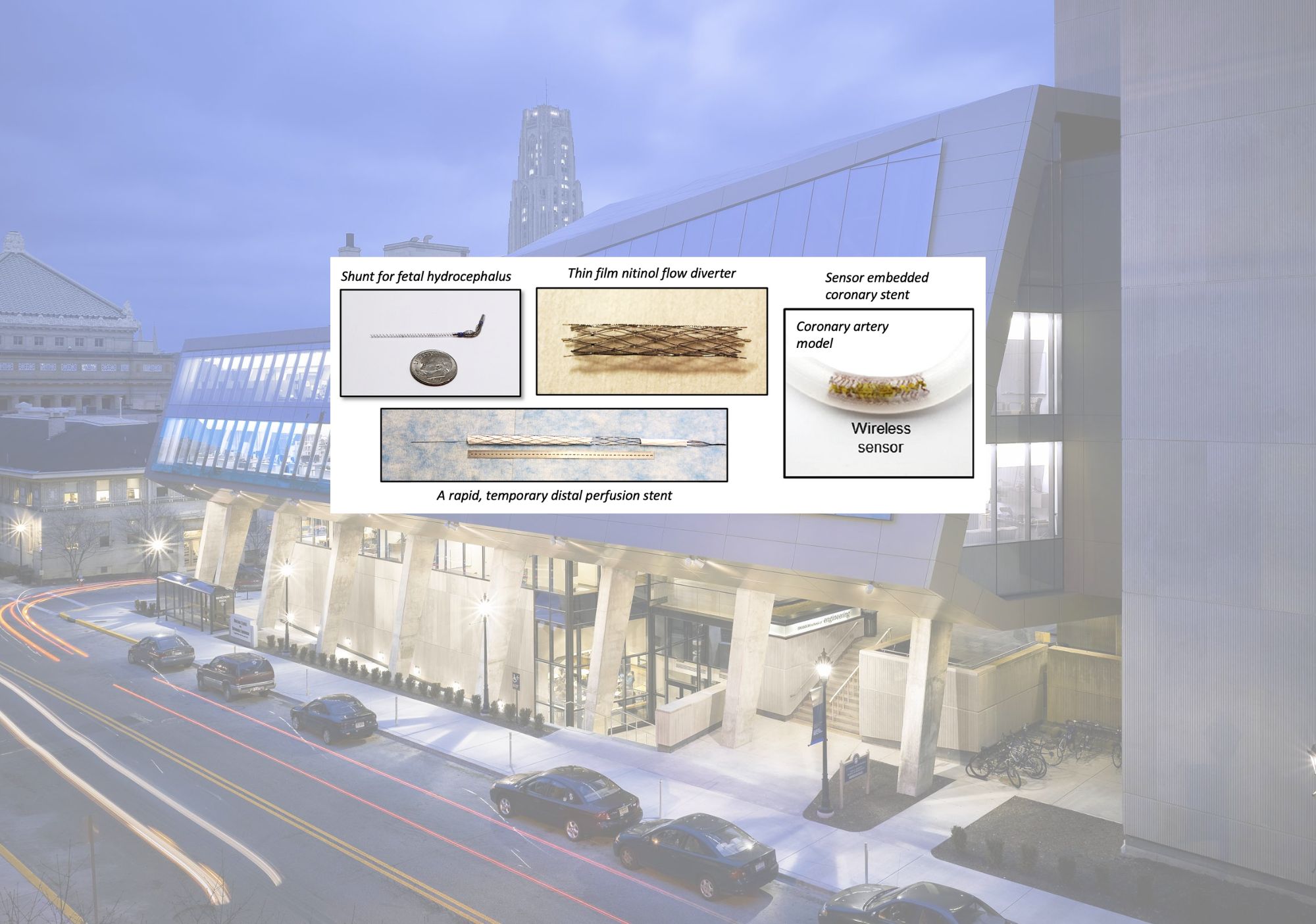
With new technological advances, engineers can develop smaller, minimally invasive medical devices that improve patient outcomes. Realizing the full potential of these devices, however, requires a multidisciplinary approach and the ability to translate academic research into viable commercial products.
The University of Pittsburgh’s Youngjae Chun understands well the power of a multidisciplinary, translational approach. This summer, at the Annual Scientific Meeting of the Korean Vascular Society, he received the First Place Outstanding Abstract Award for his presentation “New Endovascular Devices for Neuro, Cardiac, and Abdominal Vascular Disease and Injury Treatment.” Chun also gave an invited lecture at the Medical Device Center of Ajou University Hospital entitled “Next-Generation Medical Devices for Minimally Invasive Procedures: Design, Manufacturing, and Translation.” He received a certificate in recognition of this lecture and initiated an interactive international collaboration that will strengthen ties between Pitt and leading institutions in Korea.
“Today important academic research is making it possible to create devices that can be implanted into the brain, heart, or other organs through a tiny tube inserted into the body,” said Chun, a professor in the Department of Industrial Engineering and the principal investigator at Pitt’s Chun Lab. “But if the technology never reaches patients, if it’s not commercially viable, what good does it do?”
In Seoul, Chun outlined the “bench to bedside” process he uses, which starts by determining the clinical need. “To ensure that we’re solving the most pressing problems,” he said, “we work closely with medical professionals across multiple disciplines.”
The design and manufacturing of minimally invasive devices incorporate many kinds of engineering. “We’re using diverse materials like gold, silicone, nitinol, and ePTFE,” Chun said. “We’re considering anatomy, mechanics, geometry, and design. To prototype these devices, we’re using processes such as micro and nano fabrication, laser processing, and thermal annealing.
"We need to leverage the best of many disciplines.”
Essential to the process is rigorous testing of the devices before they go through federal evaluation. Through in vivo preclinical studies using small and large animal models, Chun and his team have demonstrated the potential of these next-generation devices, including a neurovascular device to treat cerebral aneurysms; a microsensor-embedded coronary artery stent that can monitor in-stent restenosis (ISR) progression; and a smart stent graft engineered for the rapid control of non-compressible torso hemorrhage.
“These devices are addressing serious medical issues,” Chun said. “They can minimize patient recovery and maximize the efficacy of the procedure. That’s why it’s essential to translate them into commercial products available to people in need. It’s vital they reach the bedside.”