
Reinventing the (Lubricant for Hard Disk Drives) Wheel
The University of Pittsburgh’s Lei Li has received a one-year, $50,000 industry grant from Seagate for his project “Non-PFAS media lubricant for hard disk drives (HDDs).” Through his research, Li hopes to develop a new nanometer-thick lubricant for HDDs that is free of per- and polyfluoroalkyl substances (PFAS).
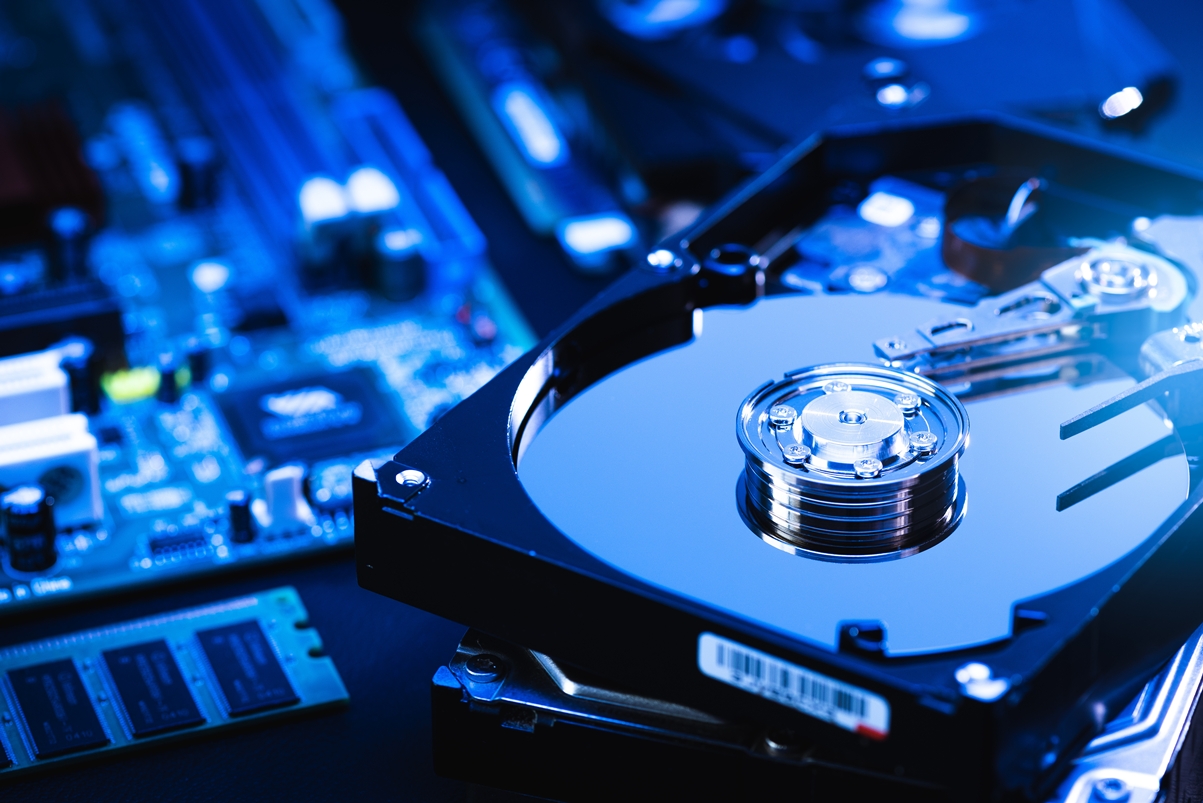
Essential to most computers today are HDDs, storage devices that can read and write data to a magnetic platter. Essential to HDDs, because they involve platters spinning in the air at a high rate, is a nanometer-thick lubricant that helps ensure the HDD will not fail if the platter were to contact the reader. This lubricant serves as an essential protective coating.
“The best nanometer-thick lubricants for HDDs have low surface tension and low friction,” said Lei Li, professor of Chemical and Petroleum Engineering at Pitt’s Swanson School of Engineering. “And right now, those are made with fluoroalkyl materials, or PFAS.”
PFAS, dubbed “forever chemicals,” are man-made chemicals used in producing everything from non-stick frying pans to computers to carpets. They break down slowly and, because they are used in so many products, are found throughout the environment and even in the human body.
As concerns increase around their prevalence and the adverse health effects caused by PFAS, many companies are searching for alternatives, and some European countries are even beginning to restrict these chemicals.
To address these growing concerns, Li is seeking to develop a new nanometer-thick lubricant for HDDs. For almost two decades, he has worked in the private sector and at Pitt to improve this technology. At his lab in the Swanson School of Engineering, he is currently developing an ionic lubricant for HDDs through a National Science Foundation grant, but this new effort, to create a non-PFAS lubricant, will mean starting from scratch.
As Li said, “This is more than reengineering the lubricant. It will be reinventing it. We need to find a completely different material that can serve the same function. This is a very challenging project, but it’s exciting.
“If we can find a material that serves the same function, with similar low surface tension and low friction, it could have important implications for other applications. It could help show a path forward to the reduction of PFAS.”