
MEMS Associate Professor Matthew Barry receives Chancellor’s Distinguished Teaching Award
"This wouldn't have been possible without the efforts of our tremendous undergraduate and graduate teaching assistants, our department’s continued commitment to improving our courses and the students' educational experience, and Department Chair Brian Gleeson's unwavering support," Barry said.
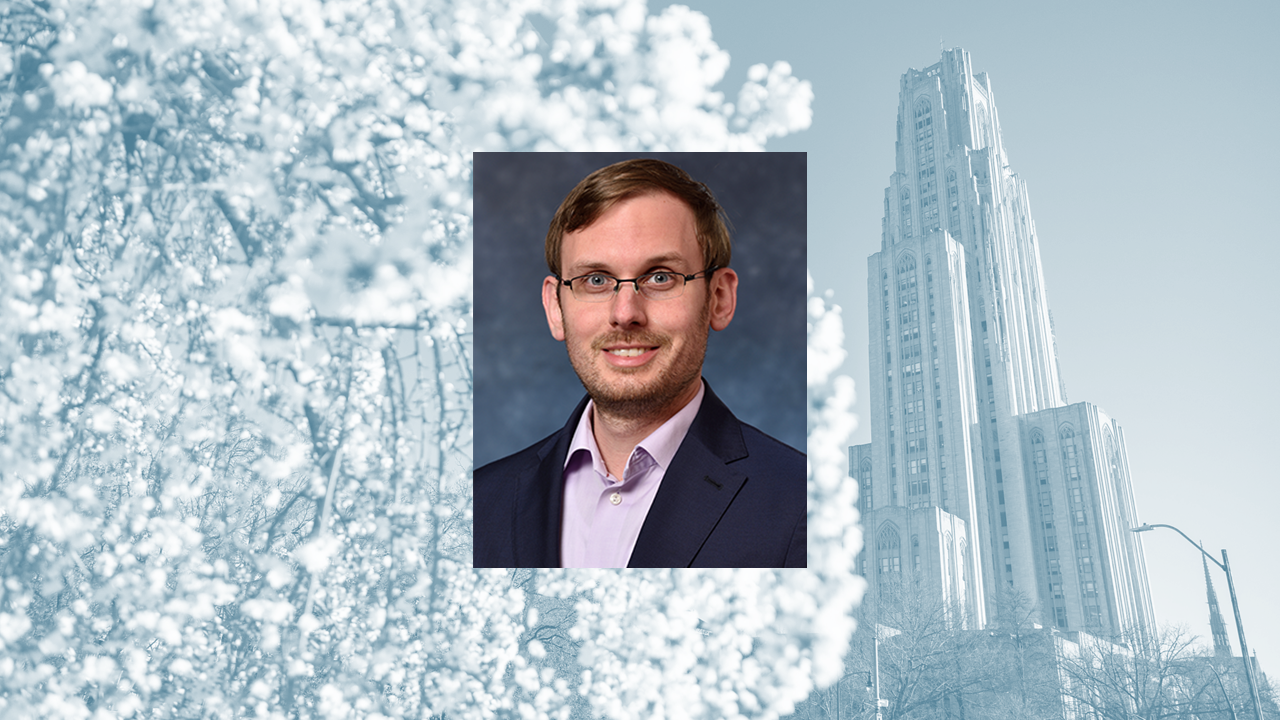
MEMS associate professor Matthew Barry has received the 2025 Chancellor’s Distinguished Teaching Award, marking the second year in a row that a MEMS professor has won. Barry was selected for this honor due to his dedication to innovative teaching and his efforts to enhance educational experiences for students. His creation of an interactive Top Hat textbook and his work in transforming engineering courses were key to him receiving this recognition.
In courses like ENGR 0135, MEMS 0031 and MEMS 0051, Barry introduced a range of educational tools, including lecture videos, in-class worksheets, homework assignments on Top Hat, and the use of MATLAB. In MEMS 0071, the course used an online homework system via Top Hat. The platform was specifically designed to enhance student learning, offering hints for incorrect answers and providing detailed explanations. The homework problems were structured in a scaffolded manner to help guide students through the learning process, supporting their progress at each step. For ENGR 0135, a six-week term project allowed students to use MATLAB, SolidWorks, and Makerspaces to design, model, optimize, and construct a balsa wood bridge, providing real-world applications to their learning.
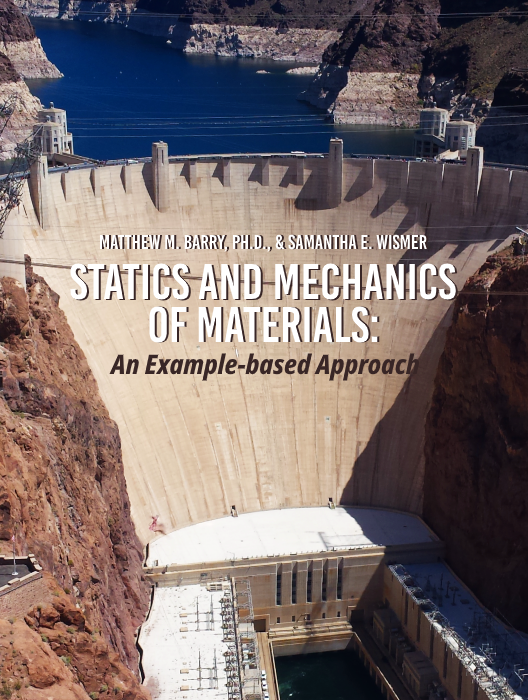
Barry also developed a textbook with co-authors Samantha Wismer and Lee Dosse, Statics and Mechanics of Materials: An Example-Based Approach, which presents material in a clear, conversational style. The textbook follows Cognitive Load Theory, breaking down content into manageable chunks: each section introduces the topic, presents a detailed example, and concludes with questions that allow students to check their understanding. The book includes over 70 worked-out examples, many featuring MATLAB code, as well as more than 800 practice problems. Unlike traditional textbooks, this resource is highly interactive, encouraging student engagement.
"This wouldn't have been possible without the efforts of our tremendous undergraduate and graduate teaching assistants, our department’s continued commitment to improving our courses and the students' educational experience, and Department Chair Brian Gleeson's unwavering support," Barry said.

Beyond the classroom, Barry created a spring break course focused on sustainable engineering in Iceland. This course took SSoE students on a trip to Iceland, where they explored the country’s renewable and sustainable engineering technologies, (e.g. geothermal energy production). The course was designed to be inclusive and engaging for students across various disciplines, helping them connect Iceland’s rich history and culture to its sustainable engineering technologies and practices.
“It’s been a pleasure teaching so many courses for so long,” he shared. “The students have made this experience worthwhile, and they inspire all the changes we are trying to make to improve their educational experience. This award goes not only to the fantastic undergraduate and graduate students who helped me with these transformations but also to the students in the classroom who motivated me to make these changes.” Through his dedication to innovation and student engagement, Barry’s work continues to make a lasting impact on both his department and the wider engineering community.
Each award recipient receives a letter from Chancellor Joan Gabel, a $2,000 cash prize and a $3,000 grant to support their work. Awardees will be recognized at the Faculty Honors Convocation at 3 p.m. April 3 in Alumni Hall.