
Hitting the Road to Retirement with a Legacy in the Rear View

Leonard Casson’s research into wastewater and disinfection has garnered him prestigious grants, publications, awards, and even a golden toilet seat, but it has always been his students who matter most. For 38 years, the University of Pittsburgh Civil Engineering professor has valued the opportunity to make a difference in the lives of his students.
This past spring, after teaching his last class as an associate professor, Casson retired. With his wife and their Airstream travel trailer, he hit the road, heading north into Canada. But his many years at Pitt have left an indelible mark on him, and Casson plans to continue promoting an engineering education.
The way my brain works
Engineering always came naturally to Casson. His father was a civil engineer in New Port Richey, Florida, where Casson grew up.
“Working for my father’s company, I did some surveying and knew I would be an engineer,” he said. “It’s just the way my brain works, whether I’m organizing a closet, planning a trip, or researching wastewater removal.”
Casson earned his BE in Civil Engineering and his MS in Environmental and Water Resources Engineering from Vanderbilt University. At the University of Texas at Austin, he received his PhD in Civil Engineering.
What happened next was serendipity. Chuck Sorber, associate dean at the University of Texas at Austin College of Engineering, was headed to Pitt to serve as Dean of the School of Engineering. He recruited Casson to join him.
Casson has never regretted the decision to follow Sorber to Pittsburgh. As he said, “It’s been great to influence young engineers and to teach them and do something so worthwhile.”
Making an impact
“What I especially liked about being at Pitt was the opportunity to work with Dr. Karl Lewis,” Casson said. “Karl developed the IMPACT program [now EXCEL], helping underrepresented students come to Pitt and succeed.
“Karl was also a civil engineer, and working with him on the program he started was one of the most important things I could do in my small part. I could help students. That tradition and history of caring for people is what kept me at Pitt.”
Among many advisor roles, Casson served as Graduate and Undergraduate Coordinator for the Department of Civil and Environmental Engineering. “The best part of that job,” he said, “was helping students graduate and achieve their career goals.”
Casson’s approach to teaching and advising has inspired countless students, like Isaiah Spencer, who earned his BS, MS, and PhD in civil and environmental engineering at Pitt and who is currently a Postdoctoral Fellow at the University of Texas at Austin’s Center for Water and the Environment.
“Dr. Casson was (and still is) a mentor to me, all the way from my start at Pitt through my PhD studies. He is one of the reasons I became absolutely fascinated with water disinfection,” said Spencer.
“What struck me about Dr. Casson was the time he spent holistically mentoring me and providing opportunities to develop and enhance the skills needed to succeed in the field,” he added. “I will always be grateful for him, and I look forward to doing my part in carrying the torch of disinfection and water treatment forward.”
A dinosaur of disinfection
“My research has been at the interface of biology, microbiology, and processes,” said Casson. “If I had to cast myself in one light, it would be as a disinfection person. In fact, at a conference, a student once joked that I was ‘one of the dinosaurs of disinfection.’”
Soon after coming to Pitt, Casson conducted research funded by the National Science Foundation (NSF) into the survivability of human immunodeficiency virus (HIV) in wastewater. For another NSF-funded project, he researched the presence of Ebola in wastewater and different techniques of disinfecting it.
In 2008, Casson received a secondary appointment in Pitt’s Department of Environmental and Occupational Health in the Graduate School of Public Health.
He was recognized as a Water Hero for his extensive work on the Disinfection Committee at the Water Environment Federation, a non-profit organization dedicated to protecting public health, water quality, and the environment.
“If you do enough work for the Disinfection Committee, you get a golden toilet seat. I put mine up in the back of my office,” Casson noted. “It confused some students.”
The Yellow Submarine
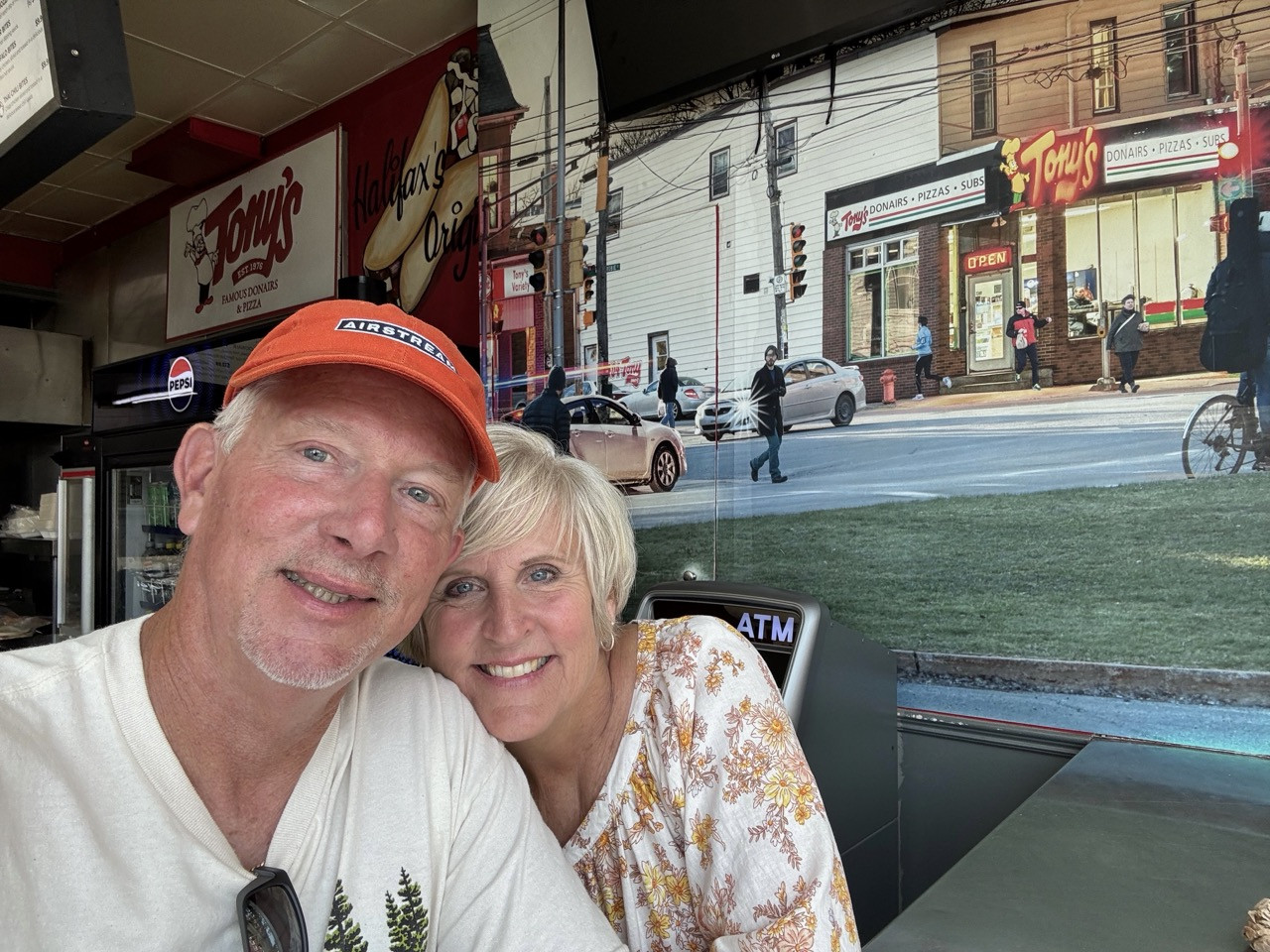
The Cassons’ daughter is a doctor of audiology in Indiana, and their son a TOPGUN pilot for the U.S. Navy. In 2022, their son was stationed in California. To visit their children and grandchildren, the Cassons bought an Airstream travel trailer, named it the Yellow Submarine, and hit the road.
Since 2022, they have crossed America twice. This summer, to kick off retirement, the Cassons set out again, into Canada, visiting places like Nova Scotia and Prince Edward Island. Casson’s wife, Susan, documents their travels in her Yellow Submarine Adventures blog.
“I’m in retirement transition now,” Casson said. “I hope to get back to fishing and golfing.”
But he also plans to keep promoting an engineering education. “I’m an ABET commissioner, a team chair, and a program evaluator, so I get to visit other schools and engage with their programs,” Casson said. “It keeps me professionally active and allows me to give back to the profession.”
For Casson, it’s all about giving back and helping students excel. As he said, “That’s the goal of teaching, empowering others to achieve more than you achieved.”