
Bridging Minds

Much like the inner workings of the brain itself, neural engineers from various departments at the University of Pittsburgh work together to study fundamental neuroscience and create translational applications that directly impact human brain and psychological health. These innovations have the potential to diagnose, assess, and treat brain injury and disease— and even allow people with tetraplegia to control robotics with their minds.
At the Swanson School of Engineering Department of Bioengineering, more than 30 primary and secondary faculty members collaborate on interdisciplinary research and mentor students in the department’s graduate programs in neural engineering. Their work spans five core areas of research:
- Neural stimulation and modulation
- Neural imaging and computation
- Neurodegenerative diseases and neurological rehabilitation
- Neural interface development
- Neuroethics, training, policy, and global health

Brain Computer Interface
One of the most impactful areas of neural engineering research at Pitt is brain-computer interface (BCI) technology—a system that detects brain activity and translates it into real-time outputs. Pioneered by Andrew Schwartz, distinguished professor of neurobiology, BCI technology has laid the foundation for modern neural prosthetics. Using BCI, Schwartz and his team decoded signals from the motor cortex in primates to enable actions like reaching and grasping, demonstrating that primates could use their brain activity to control robotic arms with remarkable precision.
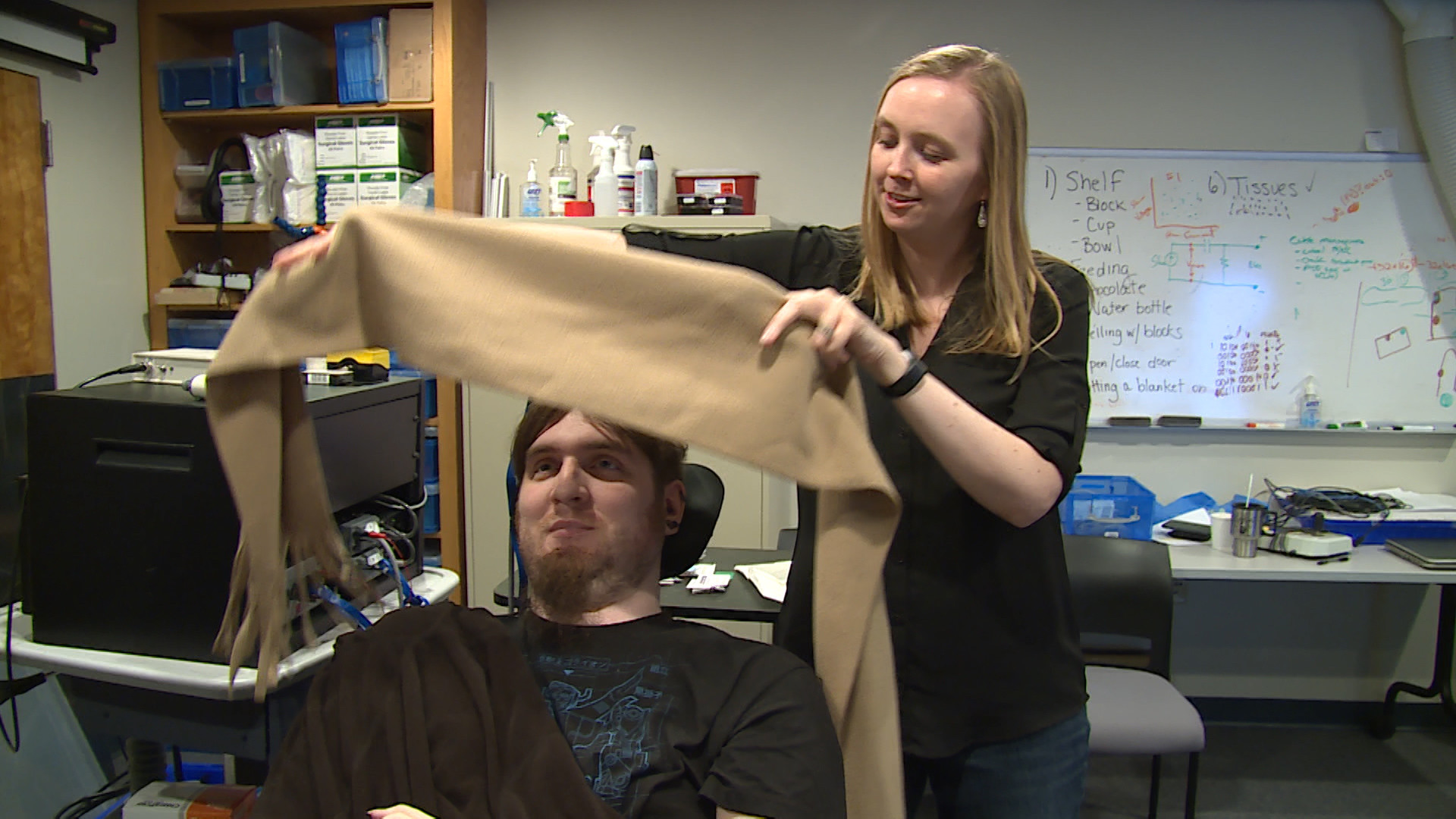
BCI technology at Pitt has since led to groundbreaking clinical breakthroughs, including a 2012 study where Jan Scheuermann controlled a robotic limb using only her thoughts—one of the first demonstrations of this kind in humans—and a clinical trial where Nathan Copeland has been able to experience the sensation of touch through a robotic arm. Researchers like Aaron Batista, professor of bioengineering who recently leveraged BCI technology to understand the sequences of neural populations, or Jennifer Collinger, professor of physical medicine and rehabilitation who uses BCIs to restore movement for people with spinal cord injury and amputation at the Rehab Neural Engineering Labs (RNEL), continue to utilize BCI technology in their research to better understand the behavior of the brain itself and to directly benefit patients.
“I am deeply committed to a clinical trial that is developing an intracortical brain-computer interface,” Collinger said. “The BCI is implanted into the motor and somatosensory cortex, and we are working with people who have tetraplegia to try to understand how the brain controls movement, how it is impacted by sensory feedback, and how we can restore sensory feedback that's been lost. Ultimately, our goal is to develop BCIs that restore upper limb function and increase independence and participation after injury.”
Neural Stimulation & Neural Interface Development
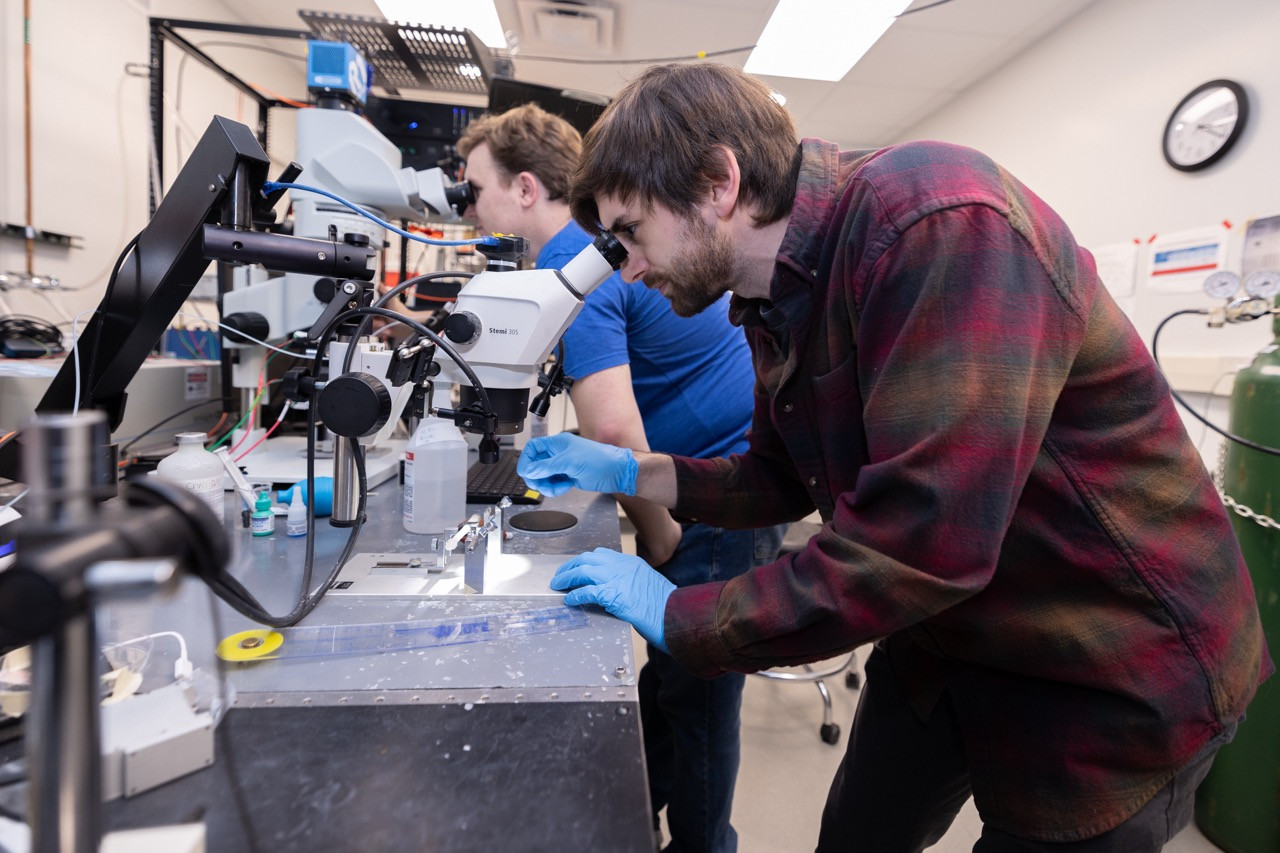
While BCIs offer a powerful way to decode brain signals, complementary approaches like neural stimulation are also expanding what’s possible in sensory restoration. Researchers like Takashi Kozai, associate professor of bioengineering, are advancing techniques such as intracortical microstimulation (ICMS) to restore sensory experiences, offering new possibilities for patients with brain injuries, neurodegenerative diseases, and other sensory impairments. ICMS stimulates specific regions of the brain responsible for sensory processing, but the challenge of neurostimulation goes beyond simply activating neural circuits.
"ICMS works by activating both neuronal and non-neuronal cells, but understanding how these responses change over time is critical," Kozai said. “One challenge we face is perceptual fading, where the system’s effectiveness diminishes. Our goal is to understand the factors that contribute to this fading and design systems that maintain long-term, reliable function.”

Addressing these challenges requires not only advances in stimulation techniques, but also innovations in the physical interfaces between technology and the brain. Xinyan (Tracy) Cui, professor of bioengineering and a leader in neural interface development, designs biocompatible materials and coatings that improve the longevity and function of brain-machine interfaces.
“As neural engineers, we are tool developers,” Cui said. “We develop the tools for neuroscientists and clinicians to study a wide variety of diseases, and we design the implantable devices that clinicians are using to directly help patients.”
Cui and other neural engineers in her field develop implantable devices that record neural signals, stimulate the nervous system, sense neural transmitters, and deliver therapeutics. They also work to optimize how the brain interacts with these devices using novel techniques such as ultrasound to reduce scarring inside the brain when devices are implanted.
Sharper Imaging, Deeper Understanding
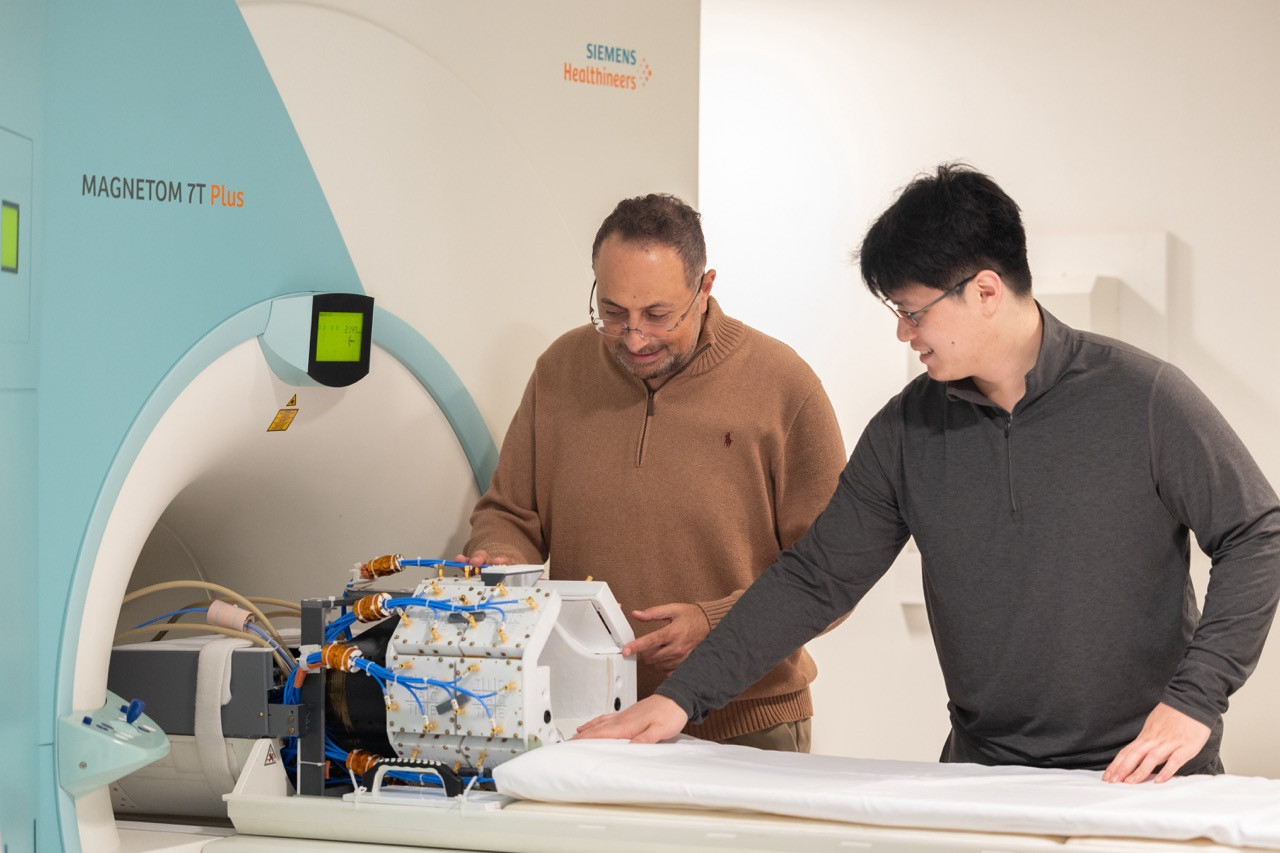
Neural engineering researchers at Pitt also have the ability to see detailed images of the brain and its activity through the work of Tamer Ibrahim, professor of bioengineering who develops ultrahigh field human imaging techniques using the 7 Tesla magnetic resonance imager (7T MRI). Consistently optimized by Ibrahim’s graduate students through “Tic-Tac-Toe” radiofrequency coil technology, the 7T MRI imager is frequently used for projects in bioengineering, psychiatry, neurology, and pathology, and helps researchers understand how a variety of conditions like aging, dementia, sickle cell disease, and depression appear in the brain. The 7 Tesla is the most complex MRIs in use, with extremely high resolution capabilities.
“Interventional studies on depression and Alzheimer’s disease can assess how neuroimaging biomarkers correlate with the medications that patients are taking, and help us determine whether they're improving on the medication or not,” Ibrahim said. “Getting homogeneous excitation in the human brain at 7 Tesla is quite difficult from a physics point of view, but the 2nd Generation Anti-claustrophobia Tic Tac Toe coil system developed by the 7 Tesla Bioengineering Research Program (7TBRP) gives us and our collaborators the ability to visualize the brain structures and connectivity with minimal artifacts.”
Clinical Collaborations Enhancing Patient Outcomes
Clinical translation of neural engineering technology directly impacts clinicians like Jorge González-Martínez, vice-chair of the department of neurological surgery and board-certified neurosurgeon, who studies brain electrophysiology, cognition, and language in patients undergoing epilepsy and movement disorder surgery. He also operates on many of these patients, providing direct treatment using Stereo-electroencephalography (SEEG), a minimally invasive procedure that uses electrodes placed directly into the brain to identify the source of epileptic seizures.
"In order to advance medicine, especially in my field of epilepsy and functional neurosurgery, we need to collaborate with bioengineers,” González-Martínez said. “Progress simply won’t happen if we don’t join forces. Neural engineering is fundamental—it allows me to use signal processing to better understand where seizures originate in the brain, enabling safer and more effective surgeries. Bioengineers help us develop new methods, instruments, and treatment approaches, from device design to signal interpretation, and I will continue to rely on these collaborations because they are essential to advancing the field and improving patient care."

Whether it’s for improving methods in neurosurgery with clinicians like González-Martínez, collaborating with industry partners and the FDA for translational technology development, or using basic science approaches to better understand chronic pain and psychiatric conditions, tackling the complex challenges of neural engineering requires a multidisciplinary approach. For Collinger, collaboration across the university is the driving force that allows researchers at Pitt to take these challenges head-on.
“Neural engineering requires an understanding of biology, neuroscience, and medicine, and one person can't really be an expert in all of those things,” Collinger said. “But here, I think collaboration with each other is just part of our culture, and people are looking to work with other laboratories and try to make collaborations as seamless as possible, which I think is a major strength of this department and makes us really unique.”
A Legacy of Innovation and Student-Driven Research
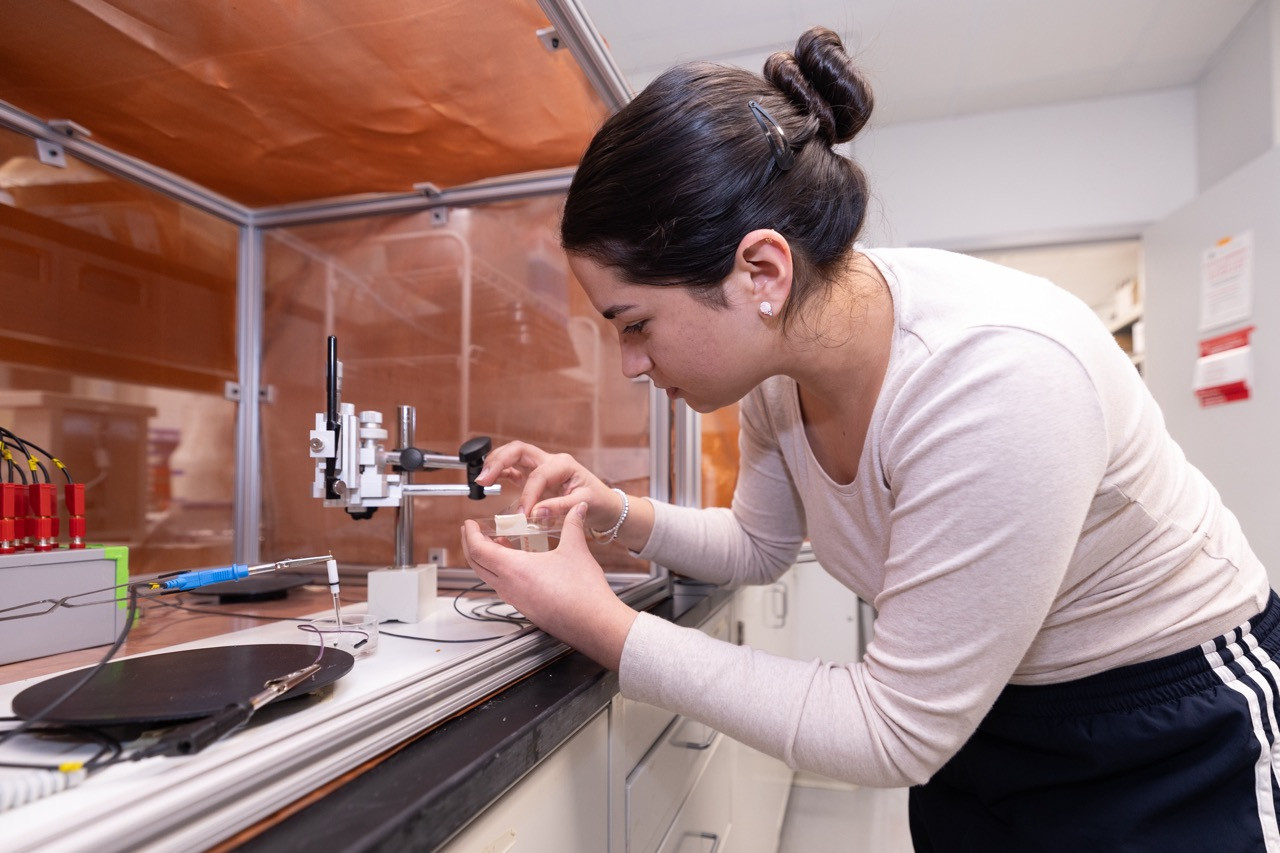
Collinger arrived at Pitt in 1999 when she joined one of the earliest cohorts of undergraduate students in the bioengineering department. Her passion for biomechanics and rehabilitation ultimately led her to the bioengineering department’s PhD program, and since graduating, she’s been working at the university . As a former Pitt Bioengineering student herself, Collinger credits current students in the department for pushing cutting-edge neural engineering research forward each day.
“Graduate and undergraduate students design studies and collect and analyze data; they are doing the work and driving the science forward,” Collinger said. “They are also great at helping us connect with other happenings in the department. That often evokes who we might be able to collaborate with or who we can ask about a particular challenge that we are having in the laboratory.”
Since its inception in 1998, Pitt’s Department of Bioengineering has grown from just four faculty members and a handful of students to more than 200 faculty members (45 primary and 158 secondary) and thousands of alumni. For Batista, one of the first neural engineers hired in the department, watching these novel breakthroughs emerge has been nothing short of spectacular. Having seen the department grow in both size and scope throughout the years, Batista credits the University’s physical environment and culture for fostering the essential collaborations that have cemented Pitt as a hub for neural engineering innovation.
“The physical and intellectual environment here really sets us apart from other universities,” Batista said. “The fact that Pitt’s schools of medicine, rehabilitation sciences, and engineering are just minutes away from each other, our proximity to Carnegie Mellon University, and our leadership that fosters a culture of collaboration helps brain research at the University flourish."
.