
Associate Professor Renee Clark Thrives in the Classroom, Recognized as Engineering Educator of the Year
In 2012, before she accepted a position as an assessment data analyst at the University of Pittsburgh Swanson School of Engineering, Renee Clark had one stipulation: she preferred to focus on analytics rather than teach.
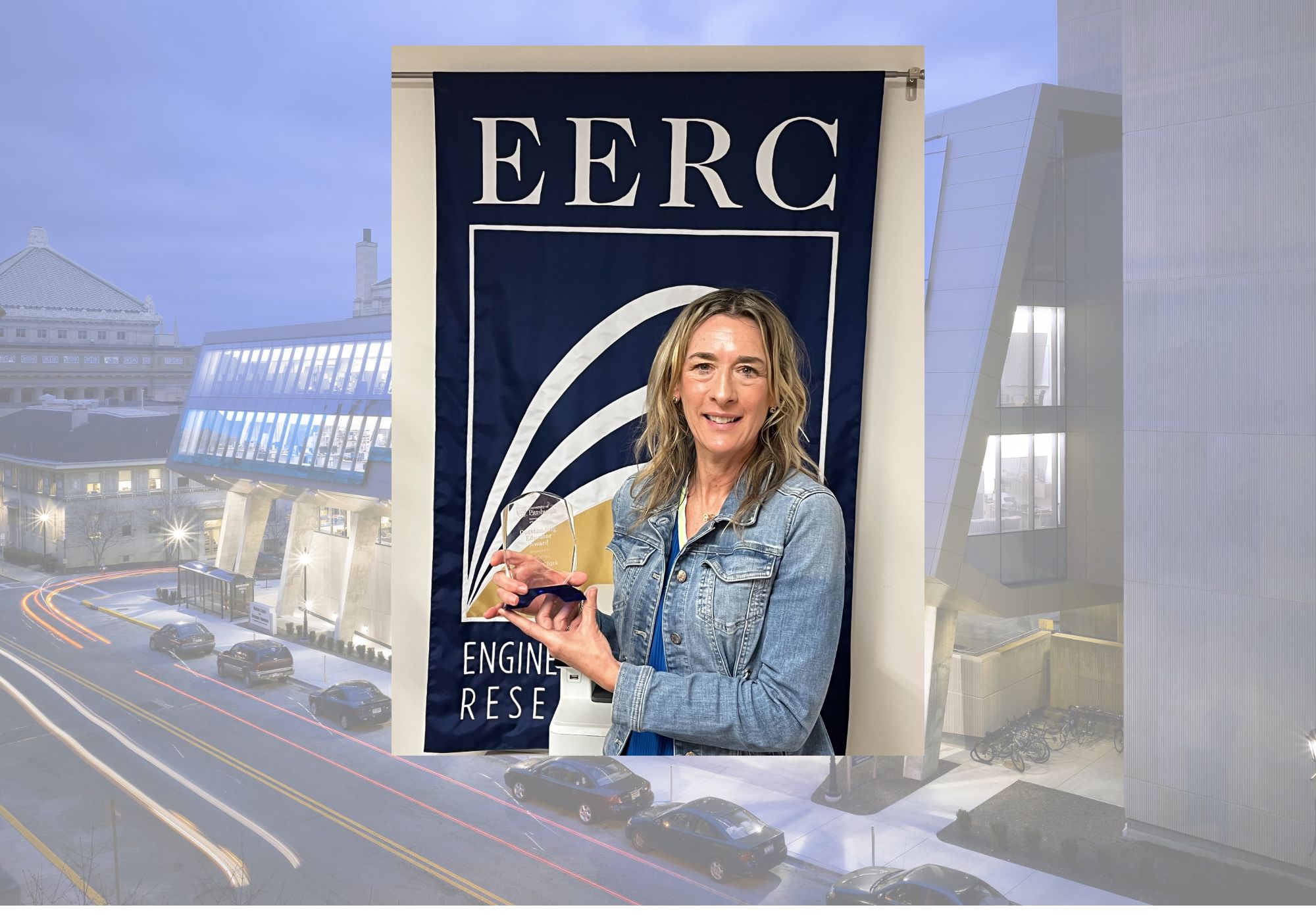
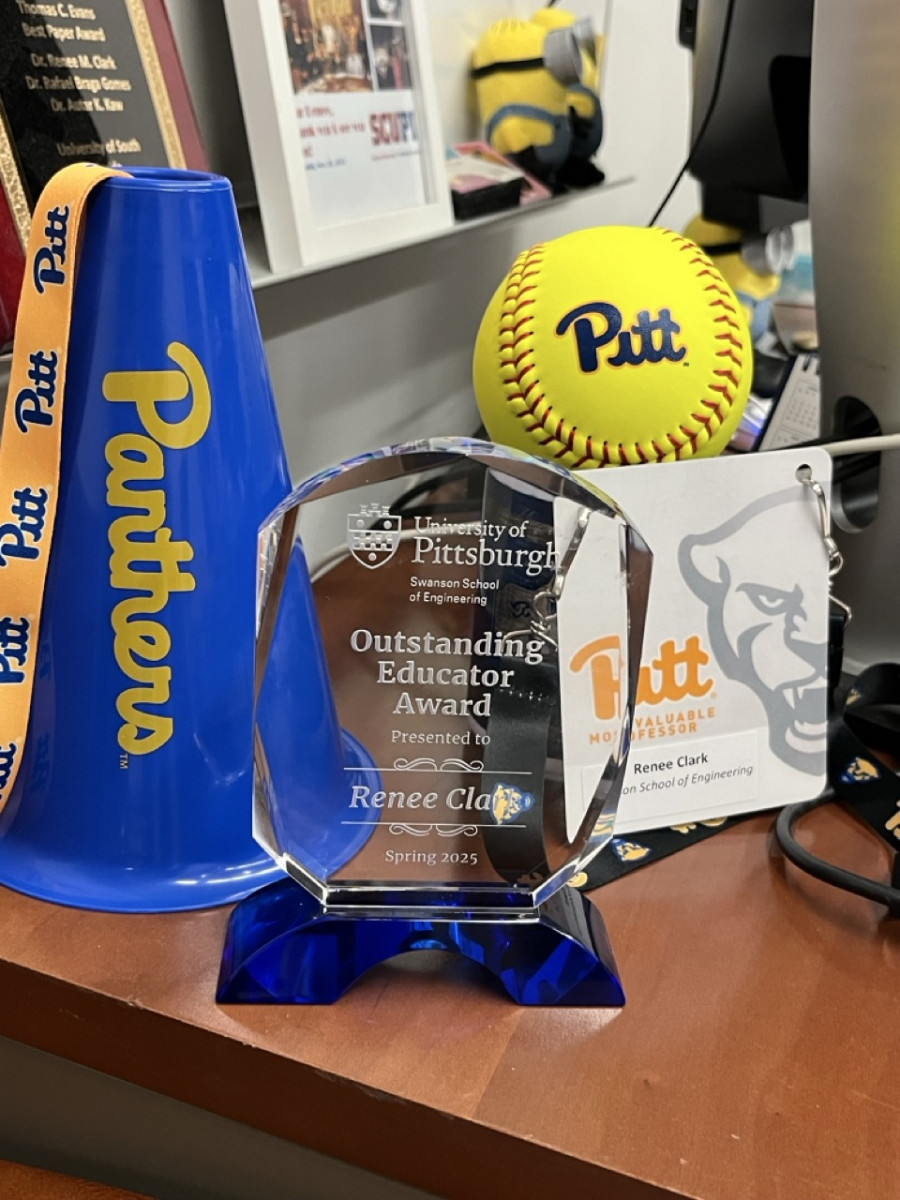
However, in 2019, Clark did walk into a classroom—and not just to observe it. On April 28, 2025, she was recognized as the Swanson School’s Educator of the Year for her commitment to teaching and her ability to make a difference in the lives of her students.
Math always came easy
“Growing up, math always came easy for me,” Clark said. “My father taught middle school math, and he’d make me do worksheets over the summer. I helped him grade papers.”
In 1983, her father encouraged her to take a programming course in her first year of high school, and she learned how to program on a Commodore 64 computer. He also encouraged her to pursue engineering, but, as she said, “I knew math, and that felt safer.”
As an undergraduate, she studied applied math and computer science, and after graduating from Pitt with her bachelor’s degree, she started working for Mellon Bank as a programmer.
The move to engineering
Math may have at first felt safer, but it’s not what she studied in graduate school. While working at Mellon Bank, she decided to pursue a master’s degree in industrial engineering at Pitt.
With her master’s degree, she moved on to manufacturing and a job in Ohio as a quality engineer and programmer for General Motors and later its spin-off company, Delphi Automotive Systems. She met her husband there and began working toward her PhD in industrial engineering part time at Pitt.
After graduation, when the U.S. auto industry was bottoming out in the 2000s, Clark accepted an engineering postdoctoral position at Pitt. Although she would teach a graduate statistics course, she felt that teaching wasn’t her forte, no matter the wealth of her real-world and educational insight. When the postdoc ended, Clark left academia, taking an analyst job at Walgreens.
But in 2012, Mary Besterfield-Sacre—director of the Engineering Education Research Center, Nickolas A. DeCecco Professor of Industrial Engineering, and senior associate dean for academic affairs—offered her the opportunity to return to her alma mater as a data analyst, noting that teaching was not a requirement for the position
“Maybe I can do that too”
For the first seven years, Clark observed classes, collected data, published on engineering education, and promoted active learning. In addition to Pitt’s Oakland campus, she visited classrooms at the Sichuan University-Pittsburgh Institute, a joint engineering institute, in Chengdu, China.
Though she never taught, she witnessed amazing teaching and learning. “Seeing my friends and colleagues, I drew inspiration,” she said. “I thought, maybe I can do that too.”
Fortuitously, in 2018, Clark stepped in to serve as a Plus 3 program assistant for Professor Karen Bursic, whom she says has been an invaluable mentor and support. Soon after this confidence-boosting study abroad experience, Renee started advising industrial engineering undergraduate students with Bursic’s support.
Then, in 2019, an opportunity to teach statistics opened, and as Clark recounts, “I said, ‘I think I want to do this.’” A few months later, she found herself at the front of a classroom.
But not exactly the front
Clark made it through the semester and, as she said, “As each year went by, I have become more and more comfortable.”
It has helped that her approach to teaching is so student focused. Through her work with Besterfield-Sacre and the Engineering Education Research Center, Clark has promoted a model where students play a more active role in their learning—where, in the classroom, they collaborate, solve problems, and present their work, and where they are expected to participate and interact.
“I want my students to understand what they’re doing,” Clark said. “It would be easy to just ‘plug and chug’ with statistics—to just enter the numbers and calculate—but then their ability to extend and apply their learning in the future diminishes.”
Beyond statistics, as an advisor Renee helps students identify their interests and pursue their education intentionally. She models reflection, and helps students take ownership of their education. “I can also recognize when students are struggling,” she said, “and I can help them put things into perspective and focus on what’s important.”
Extending her impact beyond her classroom
In 2024, Clark took another risk. She began taking students abroad, to Cyprus, as part of the Pitt Plus 3 Program to learn firsthand about supply-chain management and Cypriot culture and history.
She has also collaborated with colleagues to transform learning throughout the Swanson School. Through a National Science Foundation grant, she and colleague Ahmed Dallal, an associate professor in electrical and computer engineering, are collaborating with a researcher from the University of South Florida to make STEM education more adaptive and personalized.
She has also received grant funding with Samuel Dickerson, an associate professor and vice chair for education in the computer engineering program, to define and teach engineering judgement, to study the impact of reflection on learning, and to promote active learning in engineering classrooms.
“Renee is a leader in advancing how engineering is taught at Pitt,” said Besterfield-Sacre. “Through her extensive experience in the industry and at the university, and through her ability to connect with students and engage them in active learning, she has made such a difference in so many lives.”
Two awards, and a first pitch
The same week that the Swanson School recognized Clark as Educator of the Year, one of her students, who plays outfield for the Pitt Panthers women’s softball team, nominated her for Most Valuable Professor. At a recent game against Louisville, Clark threw out a ceremonial first pitch to her student.
The dual recognition, from her colleagues and administrators and from an individual student, means so much to Clark. While initially hesitant about teaching, she knows she has found the place she’s meant to be, surrounded by the right people.
“If you have people around you who let you grow at your pace and let things develop organically, and who believe in and truly support you,” Clark said, “great things can happen.”