
Ryan Brody, ECE Graduate, Uses His PhD for Dream Career in Sustainable Satellite Launching Systems
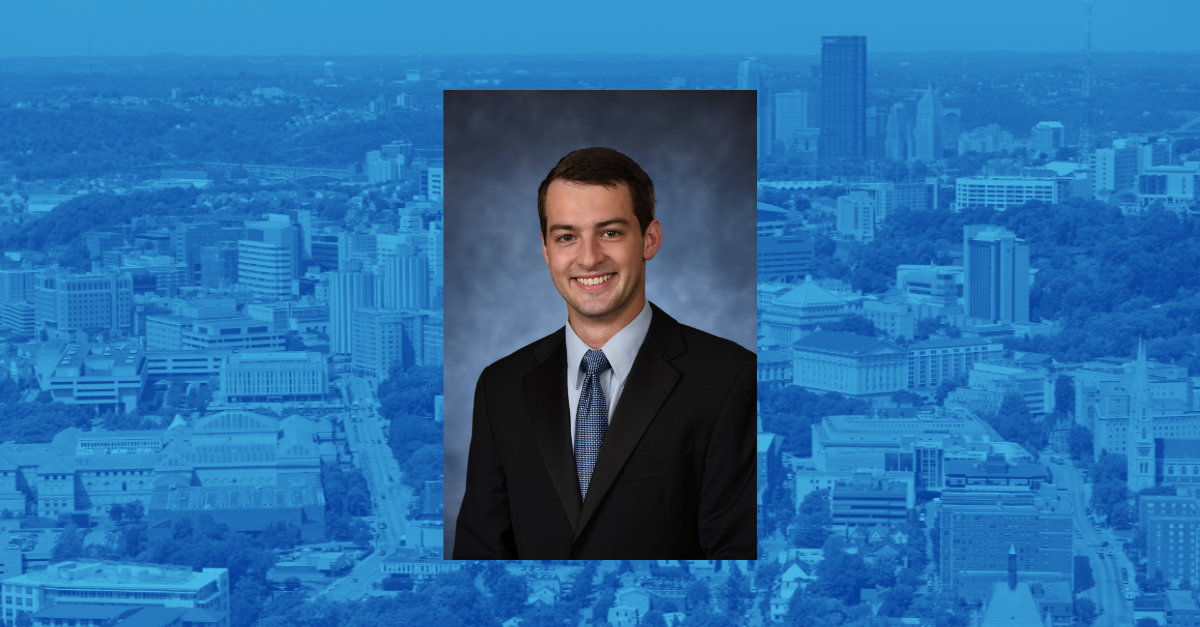
Ryan Brody, a graduate of the University of Pittsburgh’s Electrical and Computer Engineering PhD program, had a longstanding interest in climate change and renewable energy, which led him to an extended stay at Pitt.
And it paid off, as he’s now working at a tech startup in Los Angeles, California focused on sustainable satellite launching systems.
Brody pursued not only his PhD at Pitt’s Swanson School of Engineering, but also his master’s and bachelor’s degrees. He decided to stay not only for financial and health reasons, but because of his interest in Pitt’s electric power engineering program. He knew it would open doors for him in the energy sector.
"I wasn't impressed with the job offers and opportunities others were getting with their master's or bachelor's degrees—at least not for me," Brody said. "I knew that if I wanted to break into a specialized industry and receive a higher salary, I had to push my education as far as possible, and Pitt’s program was just really unique and offered significant funding.”
While working under advisor Brandon Grainger, associate professor and Eaton Faculty Fellow of electrical and computer engineering, Brody developed a keen interest in replacing Rare Earth Elements (REE) in the permanent magnet machines often used in electrical vehicles. Electrified transportation systems rely on magnets made from REEs to operate, but REE material supply chains are dominated by other countries and regions, creating a need for sustainable and affordable alternatives. An SBIR grant from the Department of Energy (DoE) helped Brody investigate the use of magnesium bismuth as a replacement of the state-of-the-art permanent magnets. The results weren’t only promising from the scientific perspective, but it put a spotlight on Brody’s capabilities as an industry researcher and built him a large network throughout the country.
“The Pitt power program was never recognized as a program that worked on next generation motor designs. Through the AMPED consortium leadership, working closely with Paul Ohodnicki (associate professor of mechanical engineering and materials science, and having the technical leadership skill sets that Ryan possesses, we were able to set a foundation to successfully complete our first DoE program in the electric machine area with great success,” Grainger said. “We even had international exposure in a recent issue of the IEEE spectrum magazine that each IEEE member receives monthly.”
During his time at Pitt, Brody explored as many internship opportunities and co-ops as possible, working at Eaton, Nikola Motor Company, Curtiss-Wright EMD, and Wolfspeed.
“Even though I stayed at Pitt for my education, I still received opportunities to live in Phoenix, Arizona and Durham, North Carolina while being a student,” Brody said. “This gave me an idea of where I wanted to go and why I wanted to be there.”
After completing his PhD program, Brody began receiving job offers nearly everyday through LinkedIn. He accepted his current position as an electromagnetic design engineer for Auriga Space in California for the state’s start-up culture, economy and opportunities in the energy sector.
Brody acknowledged that the decision to pursue a graduate degree is not an easy one, considering the emotional and financial challenges that come with it. But it has clearly paid off. He was able to expand his network through various graduate level internships, attend many IEEE conferences annually to showcase his work supported by the DoE, was able to work on cutting edge and high demand research with faculty, submit many journal manuscripts, and filed one provisional patent on his machine design efforts. Grainger and Ohodnicki believe Brody is one of the success stories of educating advanced students through multidisciplinary education - in this case, electrical engineering and magnetic materials.
“You need to focus on your interests and future goals,” Brody said. “Instead of just relying on rankings, I strongly recommend finding a school that fits your needs and offers a supportive environment—you’re going to need that.”