
Pitt Appoints Distinguished Professor Steven Little as the Bevier Endowed Chair
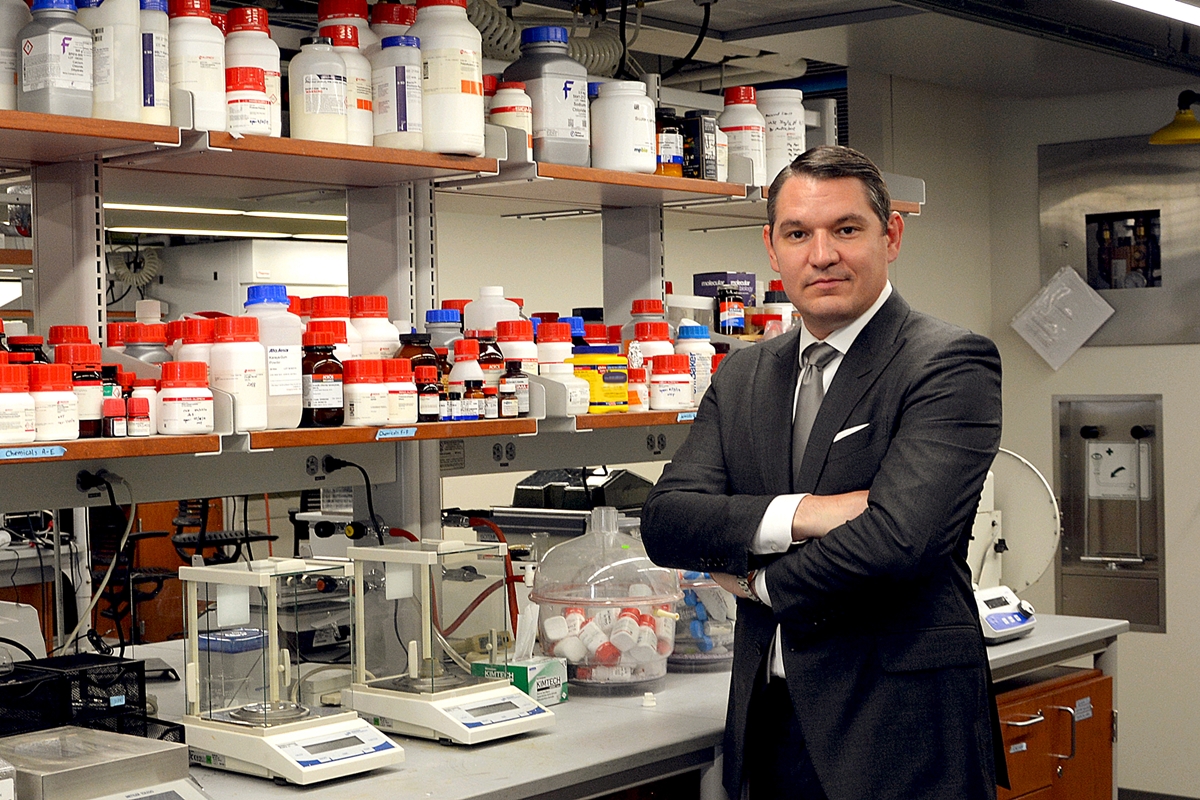
Steven R. Little, Distinguished Professor and Chair of the Department of Chemical and Petroleum Engineering at the University of Pittsburgh, was recently appointed the George M. and Eva M. Bevier Endowed Chair in the Swanson School of Engineering.
Little previously held the title of William Kepler Whiteford Endowed Professor in the Swanson School of Engineering, and has secondary appointments in Bioengineering, Pharmaceutical Sciences, Immunology, Ophthalmology, and the McGowan Institute for Regenerative Medicine. His expertise is in controlled drug delivery systems and drug formulation.
“This is a particularly humbling appointment as it bears the name of one of the Swanson School’s most outstanding innovators and philanthropists,” Little said. I am grateful to Chancellor Gabel for her support, and I look forward to my continued contributions to making advances and training the next generation of leaders in fields of pharmaceutics and biomimetic drug delivery systems.”
The chair is funded through the Bevier Estate at Pitt, in honor of George M. Bevier BS ’1913, a graduate of Pitt’s then-School of Mines. Bevier utilized his expertise in exploration geophysics to develop highly sensitive seismic detectors used in the oil and gas industries, and later in his own business in the Conroe Oilfield in Montgomery County, Texas. In recognition of his success in geology and seismology, Pitt awarded Bevier and honorary Doctor of Science in 1937, and the Swanson School named him a Distinguished Alumnus in 1964. The Swanson School’s library is named in his honor.
“I congratulate Steve on this achievement and testament to his career at Pitt,” noted Michele V. Manuel, U. S. Steel Dean of Engineering. “He continues on a remarkable trajectory both nationally and internationally, and I anticipate many more accolades lay ahead.”
###
More about Steve Little
Since receiving his PhD in 2005 – with his thesis winning the AAAS Excellence in Research Award – he has developed numerous new drug formulations including controlled drug release that mimics the body’s own mechanisms of healing and resolving inflammation. Unlike traditional medications that require large doses administered via ingestion, inoculation or intravenously, biomimetic treatments recruit a patient’s own cells to treat disease at the source. Little’s research shows potential new applications for diseases of inflammation, glaucoma, gum disease, and even transplant organ rejection.
Little is internationally recognized for his research in pharmaceutics and biomimetic drug delivery systems. He was appointed Distinguished Professor in 2021, Pitt’s highest faculty honor, and is the only University professor to receive the Chancellor’s Distinguished Teaching, Research, and Public Service awards.
Little’s fellow titles include the American Association of Pharmaceutical Scientists (AAPS, 2024), the Controlled Release Society (CRS, 2020), the Biomedical Engineering Society (BMES, 2015), the American Institute for Medical and Biological Engineering (AIMBE, 2016), the American Association for the Advancement of Science (AAAS, 2022), and the National Academy of Inventors (NAI, 2021), the highest professional distinction accorded to academic inventors. Some of his other honors include the Curtis W. McGraw Research Award from the ASEE, the Coulter Translational Research Award, two Carnegie Science Award’s for both Research and Teaching, the Society for Biomaterials’ Young Investigator Award, the Innovative Ophthalmic Research Award from Research to Prevent Blindness, the AHA Career Development Award, the NIH’s K-Award, the University of Pittsburgh’s Chancellor’s Distinguished Research Award, being named a Camille Dreyfus Teacher Scholar, being named an Arnold and Mabel Beckman Young Investigator, and being elected to the Board of Directors of the Society for Biomaterials and the Controlled Release Society. The Controlled Release Society (CRS) awarded Little with two of its top honors, the Distinguished Service Award (2021) and the Young Investigator Award (2018).
###