
Making Space for Hands-On Learning
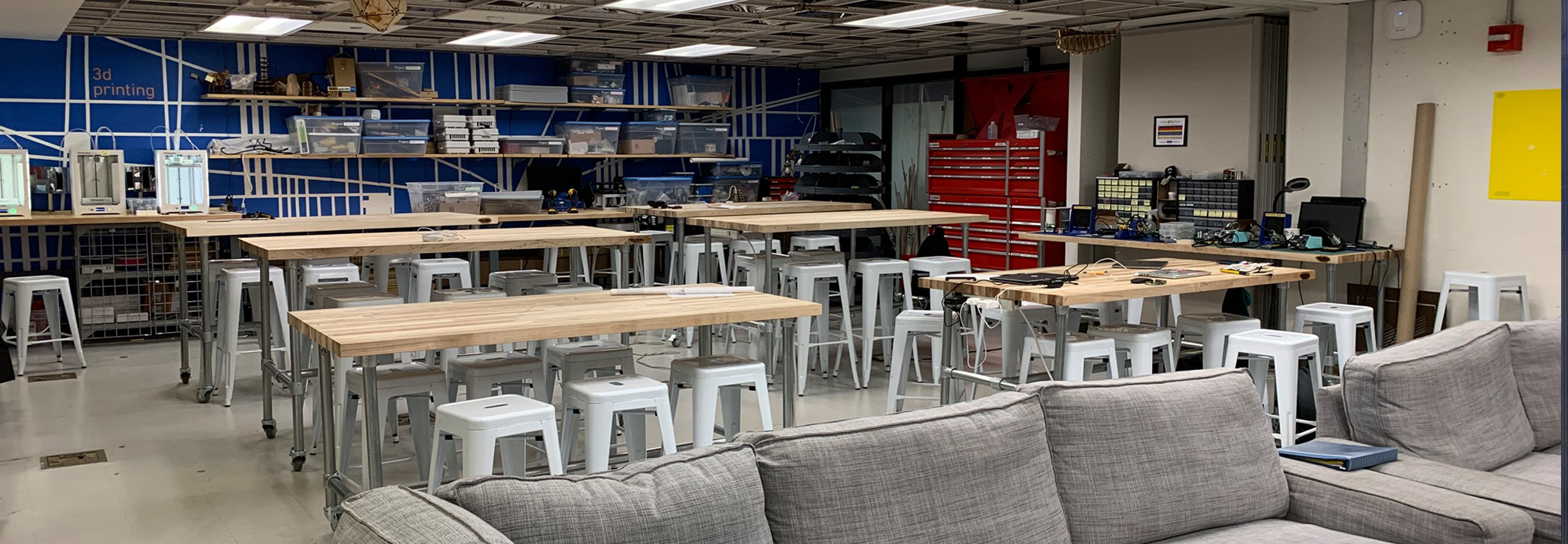
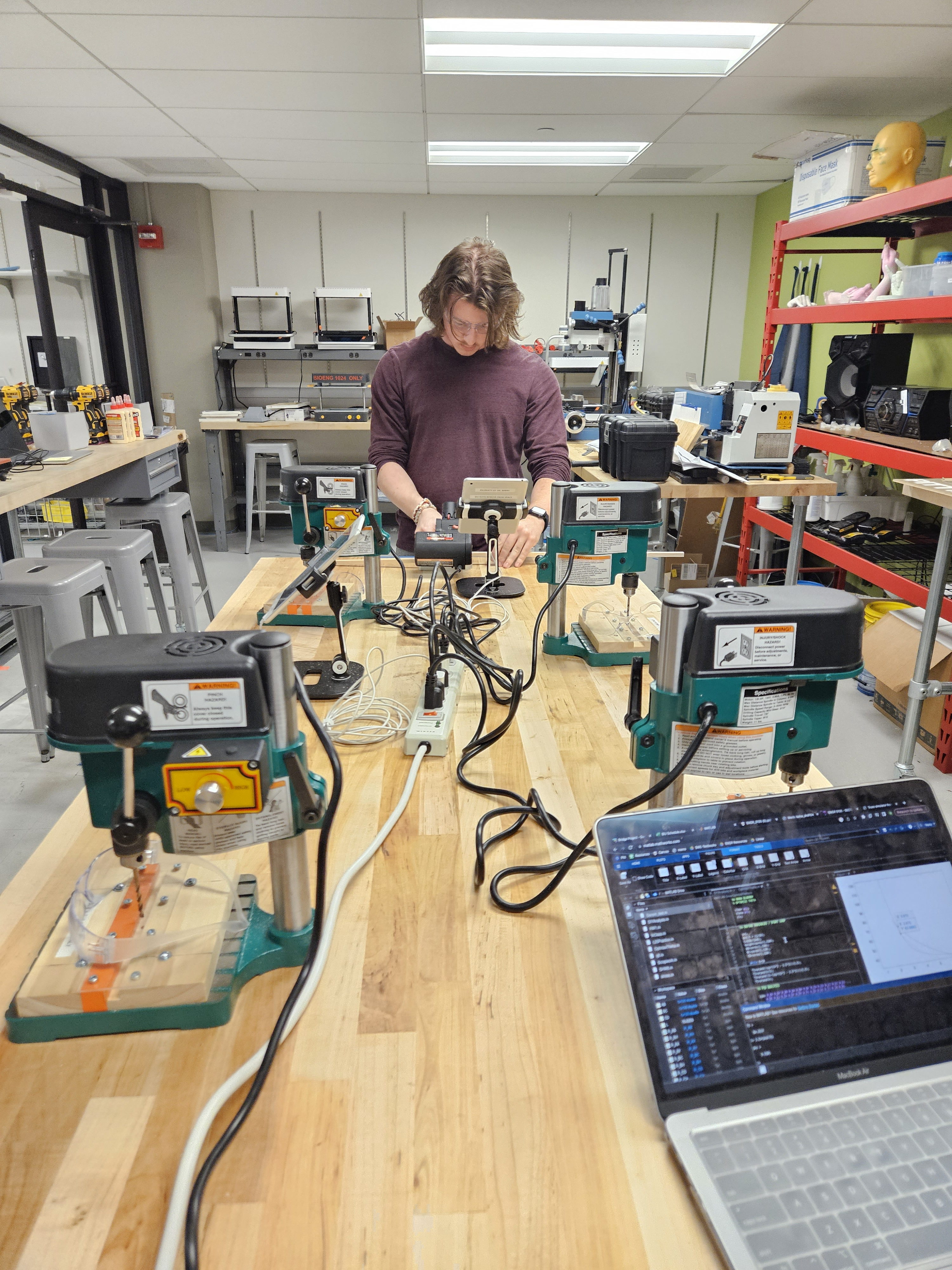
Above: MS1 Makerspace in the University of Pittsburgh's Benedum Hall.
The University of Pittsburgh Swanson School of Engineering Makerspaces since their inception have been dedicated to support creativity and hands-on learning. Two engineers hope that new award funding with help to further expand the spaces’ reach to more students.
In Pitt’s Department of Mechanical Engineering and Materials Science (MEMS), Associate Professor Matthew Barry and PhD candidate Lee Dosse received $24,834 from the 2024 Pitt Innovation in Education Awards for their proposal, “Bridging the Gap in ENGR 0135: Experiential Learning in Large Enrollment Classes using Makerspaces.” The award will help Barry and Dosse improve the utility of the Benedum Hall Makerspace.
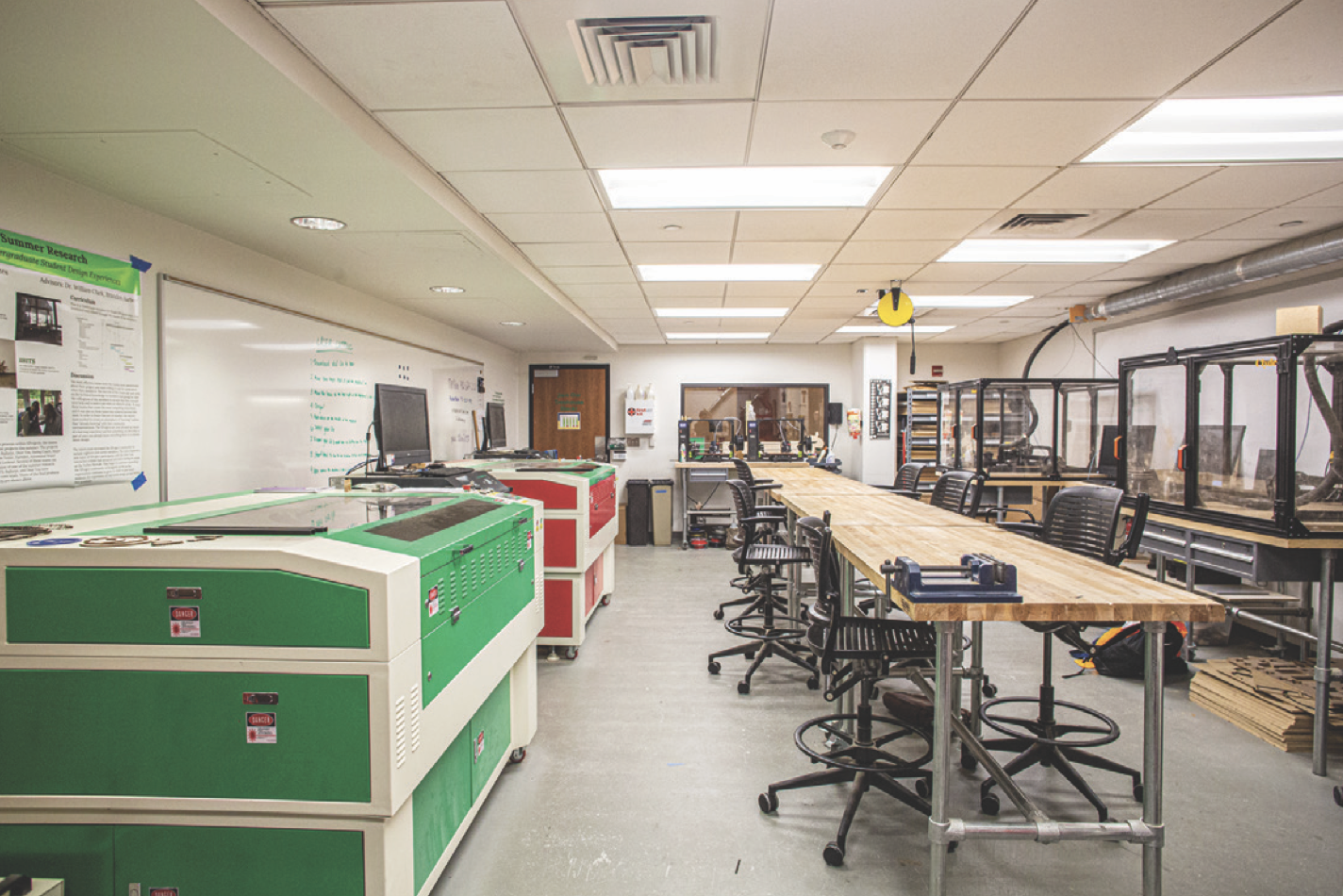
The Makerspace helps students design, build, and test their engineering projects and inventions throughout the semester; however, a finite amount of resources such as saws, drill presses, wrenches, and clamps can present a challenge during high-demand periods such as Design Expo or senior projects. A portion of the award will be used to purchase more tools – so that more students can utilize the Makerspace.
“Lee started his PhD on makerspaces and how to incorporate them into coursework,” Barry said. “It’s a great way to address more useful hands-on engineering education.”
Building Bridges from Classrooms to the Makerspace
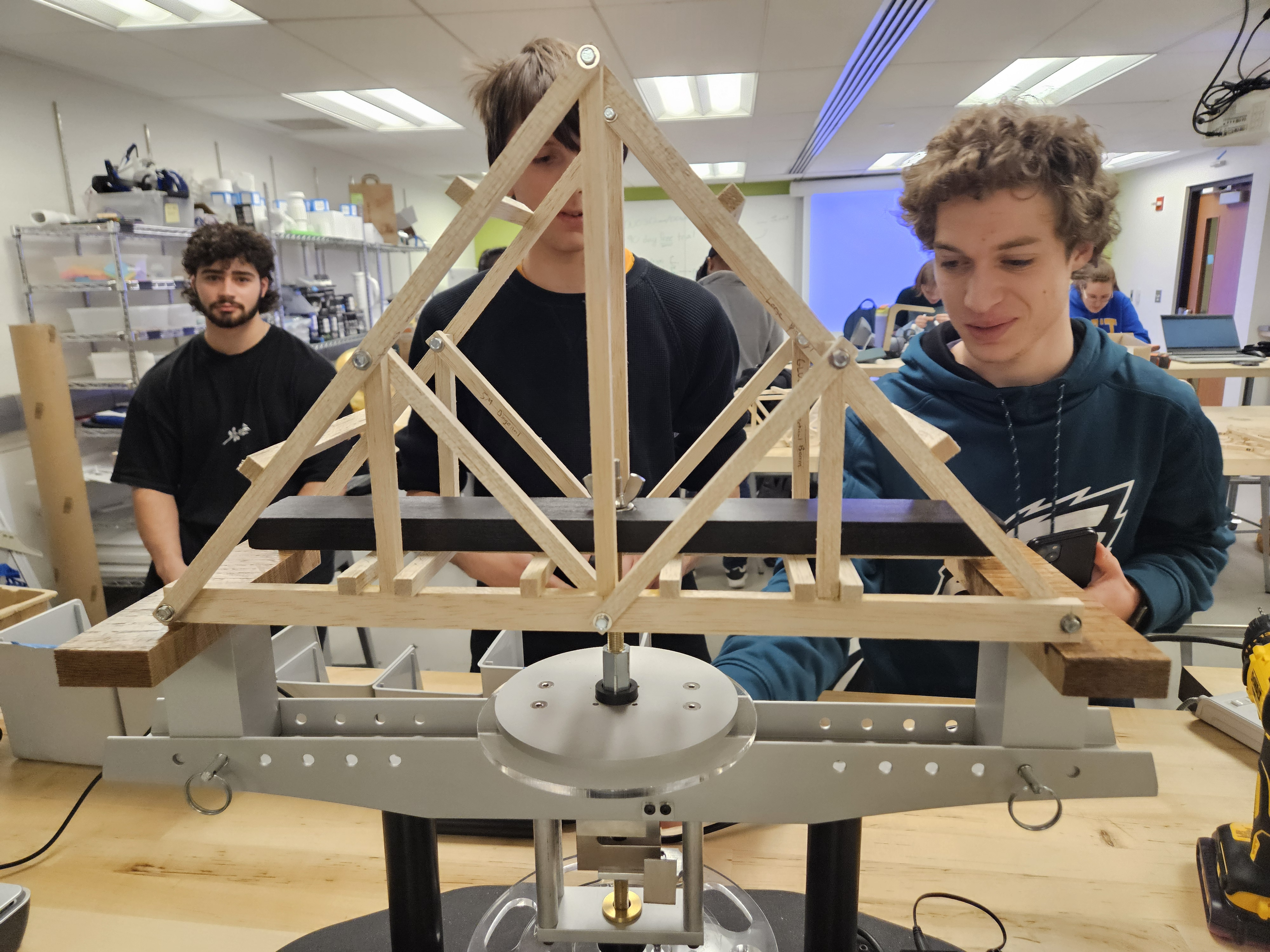
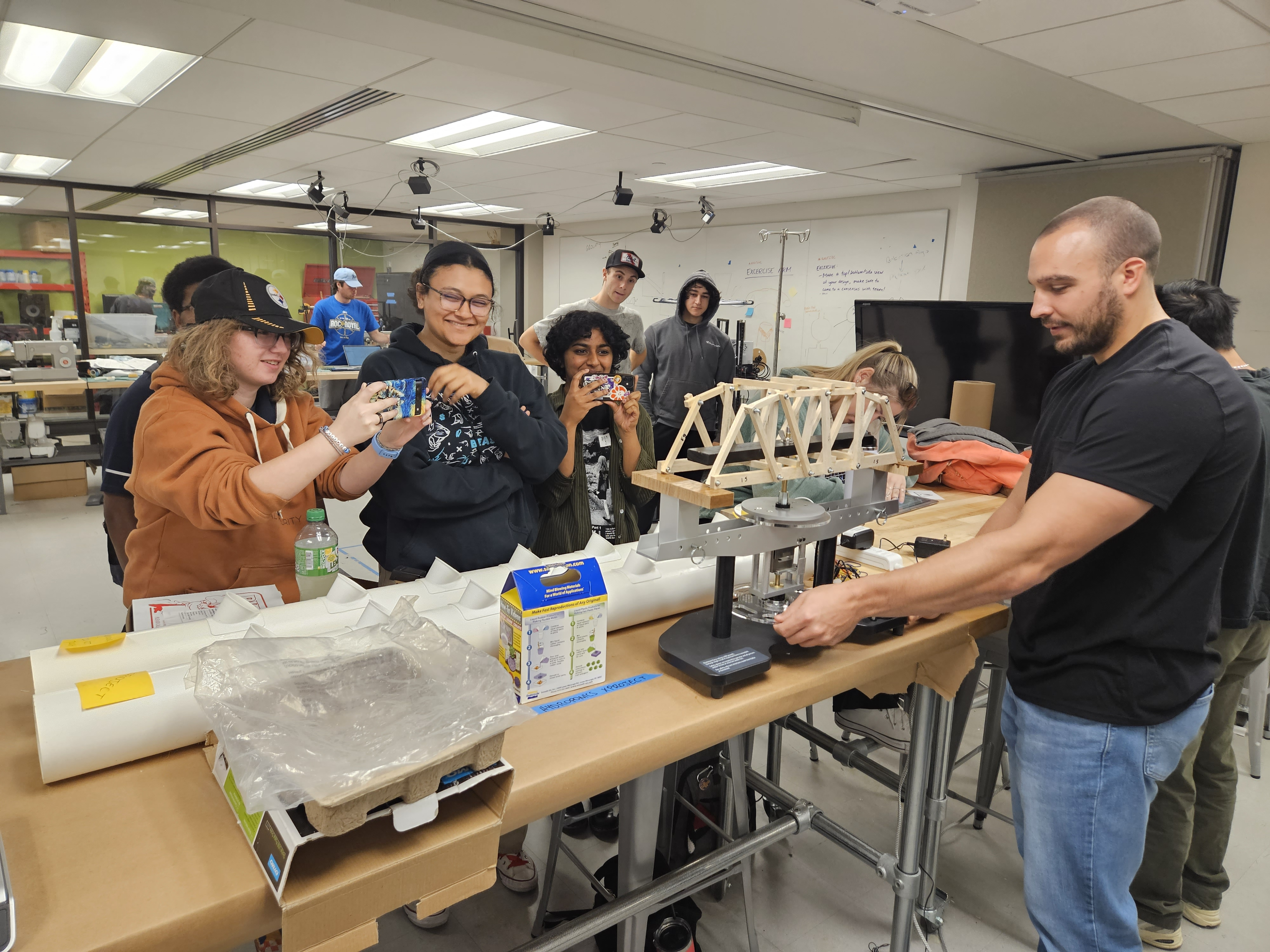
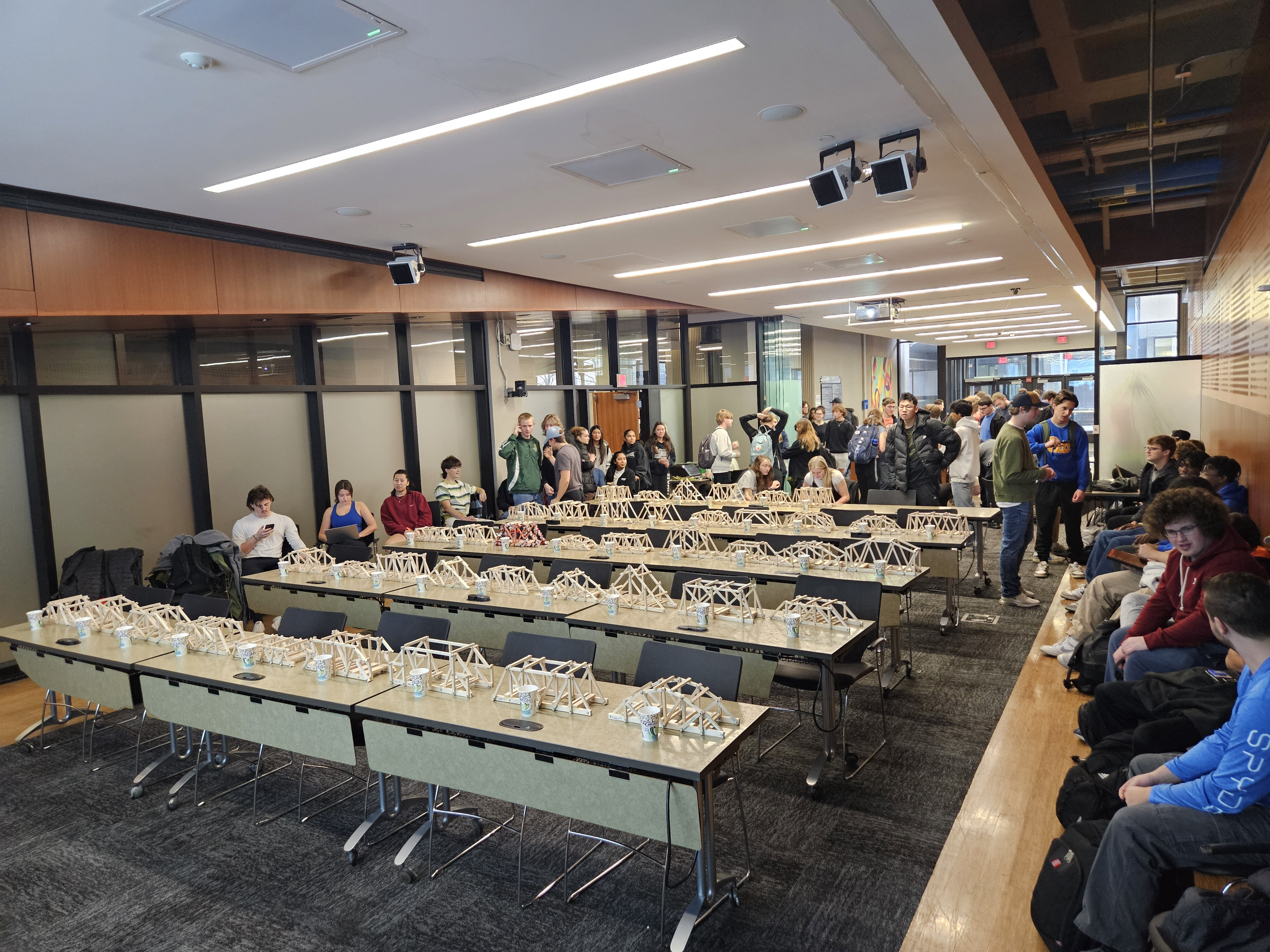
For the past five years, Barry and Dosse have observed the benefits for students who used the makerspace for their capstone projects in ENGR 0135 - Statics & Mechanics of Materials 1. Part of the course includes building bridges - both metaphorically in working as teams, but also in creating miniature structures.
“Students who build bridge models in the makerspace are often miles ahead in understanding key concepts,” Dosse said. “They spend weeks designing, building and testing what they create, and so they’re invested in building something they want to succeed and be proud of. They are also happier when writing technical reports and discussing the learning process. However, students who only used simulation software for their bridge don’t have the same tangible details or experience to review.”
Barry and Dosse are also creating an integrated, standardized curriculum so future students have the tools needed to flourish in school and enter the workforce. Their team will create instructional YouTube videos and other reference material to help teach core engineering concepts – like simulation software – and how to apply them to the capabilities of the makerspace.
Barry plans to leverage the affinity that women engineering students have had for the Makerspaces since their opening.
“Our Pitt women truly embrace the mission of the Makerspace and often find themselves growing into leadership and mentorship roles as they progress toward their final year,” Barry said. “We’re partnering with department alumnae who can bridge the classroom experience with the Makerspace experience.”
Three young MEMS alumnae serve on the instructional team: Bailey Cassler BSMechE ’20, thermal engineering lead at the NASA Jet Propulsion Laboratory; Sarah Wielgosz BSMechE ’22, Clark Doctoral Fellow in Aerospace Engineering at the University of Maryland A. James School of Engineering; and Samantha Wismer BSMechE ’22, PhD candidate in reliability engineering at the University of Maryland Department of Mechanical Engineering.
After demonstrating how a dedicated space for invention successfully impacts a large class, they believe other faculty members will integrate it into the curriculum. Wielgosz emphasized the importance of students experiencing scenarios where theoretical expectations do not align with measured results. These experiences, successes, and failures help students gain engineering intuition they will carry on to future careers.
“Working in the Makerspace was crucial to my learning process because it ensured that I fully understood what I was doing and why,” Wielgosz said. “There were times I thought I understood a topic by only reviewing notes, but when it came time to apply that knowledge to a project, I realized there were gaps in my understanding. Working in the Makerspace with my peers and instructors helped immensely in clarifying what I didn’t know.
“Whether it’s building a balsa wood bridge, wiring an electrical circuit by hand, or constructing a solar-powered rover, work completed in the Makerspace gives students a chance to apply engineering concepts in a way that builds a deeper understanding of their coursework.”
Each year, the Pitt Provost’s Advisory Council on Instructional Excellence (ACIE) invites proposals from faculty that represent advances over existing methods to promote and support student learning. All full- and part-time faculty members at each campus can submit proposals. Specific areas of interest for this year’s proposals included the application of artificial intelligence to support and assess student learning; innovative approaches to facilitating meaningful dialogue and discourse; student emotional, mental, and physical well-being; experiential learning; and student engagement in high-enrollment courses.
Funding for this project extends from May 1, 2024, to April 30, 2025.