Finding Resiliency in Ecosystems
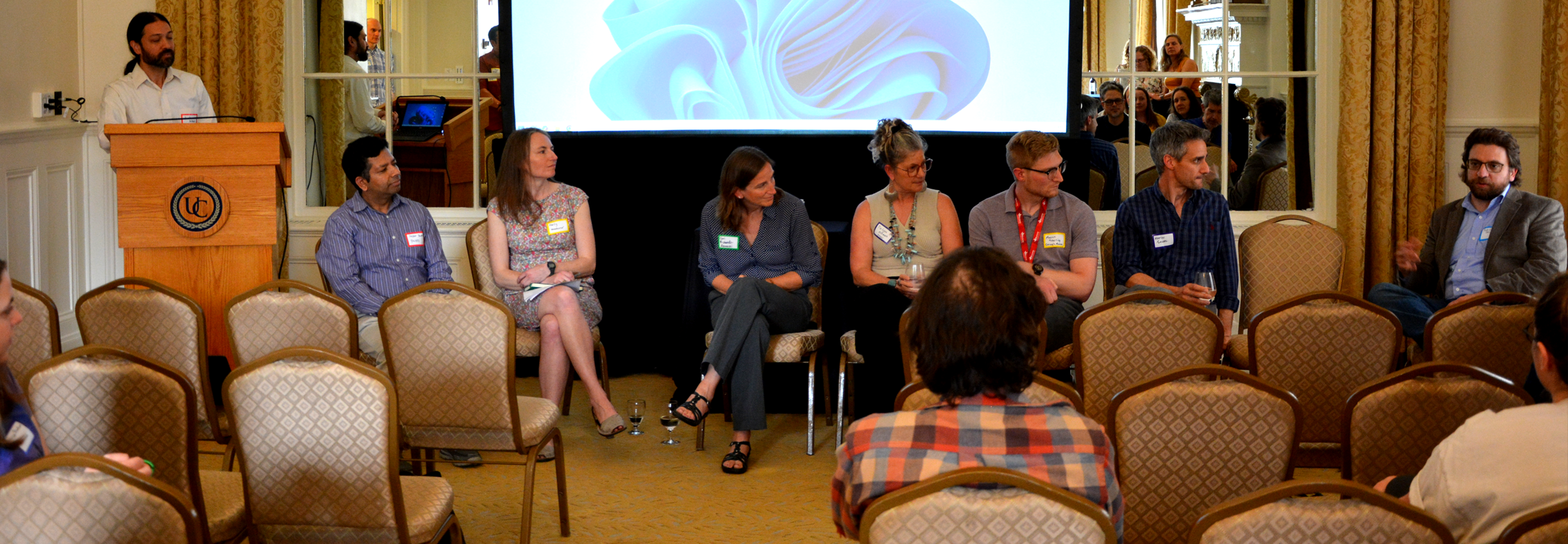
Above, from left to right: Justin Kitzes, assistant professor of biological sciences; Shishir Paudel, plant ecologist at Phipps Conservatory and Botanical Gardens; Emily Wanderer, associate professor of anthropology; Corinne Richards-Zawacki, director of the Pymatuning Laboratory of Ecology and professor of biological sciences; Tia-Lynn Ashman, distinguished professor of biological sciences; Mason Heberling, associate curator of botany at the Carnegie Museum of Natural History; Martin Turcotte, assistant professor of biological sciences; Patrick Shirey, assistant professor of geology and environmental science.
Losing species in an ecosystem is equivalent to removing the rivets and bolts that hold a plane together. Losing one or two may not be detrimental, but at what point do these losses lead to system failure?
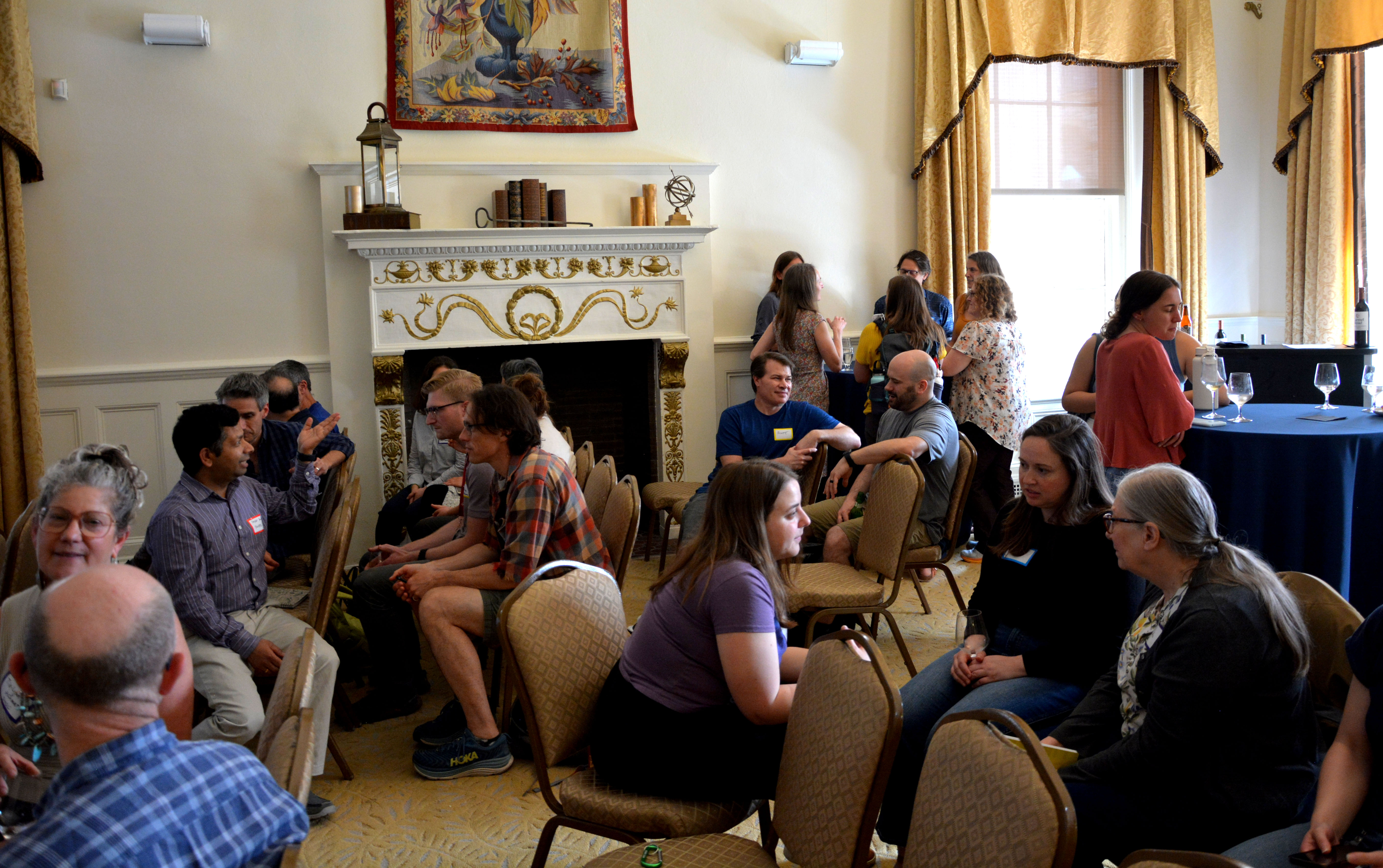
The University of Pittsburgh’s Mascaro Center for Sustainable Innovation (MCSI) hosted the third installment of the Green Speakeasy Research Series on May 7, 2024 to explore the theme ‘Resilient Ecological Systems’ and understand how ecosystems can return to their original function after a disturbance. The event was moderated by Corinne Richards-Zawacki, director of the Pymatuning Laboratory of Ecology and professor of biological sciences, and Justin Kitzes, assistant professor of biological sciences.
Pitt researchers are working together to understand the level of stress caused by factors like climate change or how much human-induced habitat modification ecosystems can endure without undermining how their species interact. The speakeasy streamlined the research collaboration process and advanced impactful initiatives through casual discussion and networking.
“I was particularly intrigued by what my colleagues in the Departments of Anthropology and Geology and Environmental Science had to say,” Richards-Zawicki said. “They have different viewpoints on sustainability in living systems than we typically do in the biological sciences.”
Making Sustainable Connections
Speakers began with brief research presentations stating their openness to multidisciplinary collaboration and integrating students and the community in their work in ecological resiliency.
The presentations emphasized the importance of integrated training and explored novel methods – such as acoustic sensors and machine learning – to assess ecological sustainability amidst urbanization and climate change impacts on ecosystem services, like plant-pollinator interactions. They also discussed research on duckweed and its applications in biotechnology, biofuel and bioremediation. Speakers underscored the relationship between urban environments, agriculture, and ecosystem health. They also stressed the need for environmental justice and sustainable land management practices to effectively tackle modern challenges.
After a networking session, speakers answered questions from the audience as part of a panel, prompting conversations about local wetland ecosystem resiliency, effective vs. ineffective ways of raising awareness, influencing policy decisions, and community perception.
“The networking and subsequent discussion seeded many questions for our panelists,” Kitzes said. “It helps build confidence when you’re able to do a practice run asking a question to a small group before asking it to everyone in the room.”
Martha Miskanic, a research specialist in Pitt’s Department of Anesthesiology and Perioperative Medicine, is working on earning a certificate in sustainability. She said this was the perfect event for her to attend.
“I’ve been looking for events like this to get involved with sustainability research again,” Miskanic said. “As an undergraduate at Chatham University, I did sustainability research and interviewed Mason Heberling about the herbarium. This was a great way for me to reconnect with him and others in the field I want to be involved in.”
The speakeasy concluded with a discussion of positive cultural traditions in western Pennsylvania for sustaining biodiversity and establishing a positive community view of land management practices. Practices include refraining from lawn mowing during May to help springtime pollinators and deer hunting to manage deer populations and maintain forest biodiversity.
The Green Speakeasy Research Series originated after findings by a Faculty Ad Hoc Committee for sustainability strategic planning – led by Melissa Bilec, MCSI co-director and William Kepler Whiteford Professor of Civil and Environmental Engineering – showed University research strengths in four broad areas with an overarching theme of environmental and climate justice. These research strengths include environmental discourse, resilient ecological systems, regenerative solutions respecting planetary boundaries, and thriving futures in the face of regional change. Each research area has a speakeasy showcasing faculty expertise that helps prompt connections with faculty and students interested in contributing to that community.
Speakers for this event included:
- Corinne Richards-Zawacki, director of the Pymatuning Laboratory of Ecology and professor of biological sciences
- Justin Kitzes, assistant professor of biological sciences
- Tia-Lynn Ashman, distinguished professor of biological sciences
- Mason Heberling, associate curator of botany, Carnegie Museum of Natural History
- Shishir Paudel, plant ecologist, Phipps Conservatory and Botanical Gardens
- Patrick Shirey, assistant professor of geology and environmental science
- Martin Turcotte, assistant professor of biological sciences
- Emily Wanderer, associate professor of anthropology
The Green Speakeasy Research Series will conclude with “Regenerative Solutions Respecting Planetary Boundaries” early in the fall 2024 semester. It is open to Pitt faculty, staff and graduate students.